Walk into a theater to see a Shakespearean tragedy, and you’ll witness grand, poetic pronouncements and precise, powerful movements. The next night, watch an indie film and see an actor mumbling, fidgeting, and conveying a world of emotion with a single glance. Both are masterful performances, yet they operate on entirely different principles. Understanding the vast spectrum of the styles of acting is the key to unlocking not just a character, but the entire world of the story. It’s about choosing the right tool for the right job.
This isn’t just academic theory; it’s the practical foundation for every choice you make on stage or screen. The style dictates how you use your voice, body, and emotional core to serve the script and the director’s vision.
At a Glance: Your Guide to Acting Styles
This article will break down the essential styles of acting so you can:
- Distinguish between major performance frameworks, from the externalized power of Classical acting to the internalized truth of Realism.
- Understand how each style serves a different kind of storytelling, whether it’s mirroring society or distorting it to reveal a deeper truth.
- Identify the physical and vocal demands associated with each approach.
- Learn a practical framework for selecting the right style for your next audition or role.
- Clarify the crucial difference between a performance style and an actor’s method.
The Foundational Divide: Presentational vs. Representational Acting
Before we dive into specific styles, it’s helpful to understand the core distinction that separates them. Think of it as a spectrum. On one end, you have Presentational acting, and on the other, Representational.
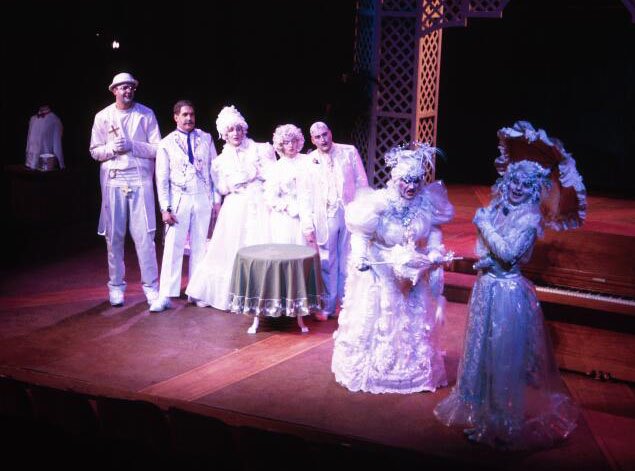
- Presentational Acting: This style acknowledges the audience. The performance is a conscious presentation of the story, often with heightened language, gestures, and emotions. The actor isn’t pretending the audience isn’t there; they are actively performing for them. Classical and Expressionistic acting fall into this category.
- Representational Acting: This style seeks to create the illusion of reality, asking the audience to be a fly on the wall. The actor behaves as if they are in a private moment, ignoring the audience completely. The goal is authenticity and psychological truth. Realism and Naturalism are the prime examples.
Most modern acting, especially for film and television, leans heavily toward the representational. However, understanding both ends of the spectrum is crucial, as many performances blend elements of each.
A Tour Through the Major Styles of Acting
Think of these styles not as rigid boxes, but as different languages of performance. Each was developed in a specific time and place to tell stories in a new way.
The Theatrical Powerhouses: Classical and Expressionism
These styles were born on the stage, designed to fill large spaces and convey epic ideas without the aid of microphones or camera close-ups.
Classical Acting: Precision, Power, and Poetry
Rooted in the traditions of Greek and Shakespearean theater, Classical Acting is an externally focused discipline. The emphasis is on control, clarity, and form. The actor builds the character from the outside in, using a powerful, articulate voice and precise, often grand, physical movements to convey meaning.
- Key Characteristics:
- Vocal Supremacy: Exceptional command of voice, breath, and articulation is non-negotiable. Text is paramount.
- Physical Control: Movements are intentional and disciplined, not accidental. This includes everything from stage combat to carrying oneself with royal poise.
- Action over Emotion: While emotion is present, it’s expressed through the character’s actions and the delivery of the text, rather than raw, internal feeling.
- In Practice: Think of Sir Patrick Stewart’s commanding presence as Captain Picard or Judi Dench’s sharp, incisive delivery as “M.” They don’t just say the lines; they orchestrate them with vocal and physical precision. For an actor, this means rigorous training in voice, movement, and text analysis.
Expressionism: The Inner World Made Visible
Developed in early 20th-century Germany as a rebellion against realism, Expressionism throws authentic external reality out the window. Instead, it seeks to portray a subjective, often distorted, inner state. The world on stage is a projection of the character’s psyche.
- Key Characteristics:
- Distorted Reality: Sets are often angular and strange; lighting is stark and dramatic.
- Heightened Performance: Gestures are intense, energetic, and non-naturalistic. Dialogue can be poetic, clipped, or delivered in broad, rhetorical strokes.
- Psychological Focus: The truth isn’t in what’s happening, but in what the character feels is happening. Characters often appear tormented or driven by intense internal forces.
- In Practice: The acting style in films like The Cabinet of Dr. Caligari is a perfect visual example—jerky, almost puppet-like movements and exaggerated facial expressions that mirror the madness of the story. An actor working in this style must be physically bold and vocally adventurous, unafraid to appear grotesque or “over the top” to serve the character’s internal chaos.
The Search for Truth: Realism and Naturalism
By the late 19th century, a seismic shift occurred. Playwrights and actors began to reject the perceived artifice of classical styles, aiming instead to create a “slice of life” on stage. This impulse is the foundation of almost all modern screen acting.
Realism: A Mirror to Society
Realism aims to replicate the surface of everyday life and authentic human behavior. Characters speak in natural language, grapple with relatable social and domestic problems, and interact in a way that feels genuine and unstaged.
- Key Characteristics:
- Psychological Depth: Characters are complex, contradictory, and driven by believable motivations.
- Subtext: Much of the meaning lies beneath the words. What a character doesn’t say is often more important than what they do.
- Relatability: The goal is for the audience to see themselves and their own world reflected in the performance.
This pursuit of inner truth led to the development of systematic approaches to actor training. The work of Konstantin Stanislavski, for example, was a direct response to the need for a reliable way to create believable, psychologically grounded characters. His system became the bedrock for many modern Acting methods and performance styles.
Naturalism: Realism Under a Microscope
Naturalism is a more extreme, almost scientific, form of Realism. It suggests that characters are inescapable products of their environment, heredity, and social conditions. Naturalistic plays often unfold in real-time and adhere strictly to what Aristotle called the “three unities”—a single action in a single location on a single day.
- Key Characteristics:
- Unflinching Honesty: Often focuses on the grittier, darker aspects of life without sentimentality.
- Verisimilitude: The performance aims for absolute, moment-to-moment believability.
- Determinism: The characters often feel trapped by their circumstances, with little control over their destinies.
- In Practice: An actor working in a naturalistic style might meticulously research the dialect, habits, and physical life of their character’s profession and social class. The goal is to “become” rather than to “perform.”
Bending the Rules: Avant-Garde and Postmodern Styles
As the 20th century progressed, artists began to question the very nature of reality and performance, leading to styles that challenge audiences and break established conventions.
Surrealism & Theatre of the Absurd
Appearing in the wake of world wars and existential philosophy, these styles reject logic and traditional narrative.
- Surrealism (emerged 1920s) delves into the subconscious, creating dream-like, often illogical scenarios to uncover hidden truths. An actor might use robotic movements or nonsensical dialogue to create a disjointed, unsettling atmosphere.
- Theatre of the Absurd (emerged 1950s) posits that human existence is meaningless and without purpose. Plays by writers like Samuel Beckett feature plotless situations, repetitive or nonsensical dialogue, and characters in a state of existential crisis. The acting challenge here is to play the absurd situations with utter sincerity.
Postmodernism: The Self-Aware Performance
Postmodernism takes things a step further by deconstructing storytelling itself. This style is often ironic, self-referential, and playfully aware that it is a performance.
- Key Characteristics:
- Breaking the Fourth Wall: Characters may speak directly to the audience.
- Fragmentation: The story might be told out of sequence or from multiple perspectives.
- Pastiche: It often borrows from or parodies other genres and styles.
- In Practice: Think of the TV show Fleabag, where the main character constantly turns to the camera to comment on her own life. The actor must be able to switch instantly between being “in the scene” and commenting on it from the outside.
Practical Playbook: Choosing the Right Style for a Role
So, how do you apply this knowledge? When you get a script, you’re not just learning lines; you’re deciphering the performance language required.
Here’s a simple four-step process to guide you:
- Analyze the Text:
- Language: Is it poetic, heightened, and dense (Classical)? Or is it conversational, filled with pauses and subtext (Realism)? Is it repetitive and nonsensical (Absurd)? The words are your first and most important clue.
- Structure: Is the plot linear and logical? Or is it fragmented, non-linear, or dream-like (Modernism/Surrealism)?
- Consider the Medium:
- Stage: Requires a certain level of projection and physical clarity to reach the back row. Grand gestures that work in a 1,200-seat theater would look absurd on film.
- Screen: The camera captures everything. A thought can be conveyed with the tiniest flicker of an eye. This medium naturally favors the subtlety of Realism and Naturalism.
- Talk to the Director:
- This is the most critical step. What is their vision? Are they aiming for gritty, documentary-style Naturalism or a highly stylized, Expressionistic world? Your performance must exist within the world they are creating. A brilliant realistic performance will feel out of place in a surrealist film.
- Assess Your Instrument:
- Be honest about your strengths. Do you have a powerful, trained voice and a knack for precise movement? You might excel in Classical work. Are you deeply empathetic and skilled at accessing your emotional core? You might be drawn to Realism. The goal is to stretch yourself, but also to play to your strengths.
| Style | Best For… | Actor’s Primary Focus |
| :— | :— | :— |
| Classical | Shakespeare, Greek Tragedy, period pieces | Voice, text, precision of movement |
| Realism | Most modern film, television, and stage plays | Psychological truth, subtext, believable behavior |
| Expressionism | Avant-garde theatre, stylized horror films | Physical and vocal extremity, expressing internal states |
| Absurdism | Works by Beckett, Ionesco; experimental theatre | Playing illogical situations with sincerity; comedic timing |
| Postmodern | Self-aware comedies, experimental film | Breaking the fourth wall, tonal shifts, irony |
Quick Answers to Common Questions
What’s the difference between an acting style and an acting method?
This is a vital distinction. Style is the what—the final aesthetic of the performance (e.g., Realism). Method is the how—the specific technique an actor uses to get there (e.g., The Meisner Technique, Method Acting). You might use the Meisner Technique to achieve a realistic performance, but you wouldn’t use it for a highly presentational, classical role.
Is it possible for an actor to use multiple styles?
Absolutely. Versatility is the hallmark of a great actor. Meryl Streep can deliver a deeply realistic performance in Kramer vs. Kramer and then shift to a broader, more comedic-presentational style in The Devil Wears Prada. The key is making a conscious choice based on the demands of the story.
Is Method acting the “best” style of acting?
Method acting isn’t a style; it’s a technique, most famously taught by Lee Strasberg, used to achieve an emotionally authentic performance, usually within the style of Realism. While it has produced iconic performances (Marlon Brando, Robert De Niro), it is also controversial for its potential mental and physical toll. It is one powerful tool among many, not an inherently superior approach.
How did the invention of film change popular styles of acting?
Film had a revolutionary impact. The intimacy of the close-up made the grand, presentational style of the theater appear exaggerated and false. The camera could capture subtle, internal shifts, paving the way for Realism and Naturalism to become the dominant styles of acting for the screen in the 20th and 21st centuries.
The goal is not to master every single style overnight. The goal is to build your awareness. The next time you watch a performance, don’t just ask if it was “good.” Ask, “What style were they working in? What choices did they make to serve that style? And did it serve the story?”
By understanding these frameworks, you move from being a passenger in a scene to being the architect of your performance. The script is the blueprint, the director is the contractor, but the styles of acting are your tools. Learn to use them all, and you’ll be able to build anything.

- Voice Practice Strengthens Your Voice for Clearer Speaking and Singing - April 18, 2026
- Cheryl Porter Vocal Exercises Offer High-Impact Workouts For Singers - April 17, 2026
- Cheryl Porter Warm Ups Make Vocal Training Fun and Portable - April 16, 2026