Feeling like you’re running on fumes halfway through a beautiful phrase? Or perhaps your high notes crack under pressure, leaving your voice feeling strained? You’re not alone. Many singers struggle with vocal control and endurance, and often, the culprit isn’t a lack of talent, but a gap in their understanding and application of breath support exercises. Mastering this fundamental skill isn’t just about taking a big gulp of air; it’s about intelligent management of your breath to power every note with precision and ease.
This isn’t a quick fix, but a journey into understanding how your body truly supports your voice, allowing you to unlock sustained notes, improve your tone, and sing without fatigue.
At a Glance: What You’ll Master
- Clarify the Core: Understand what “breath support” truly means, debunking common myths.
- Build Your Foundation: Establish proper posture and diaphragmatic engagement.
- Avoid Common Traps: Identify and correct typical breathing mistakes that hinder vocal performance.
- Your Exercise Playbook: Learn a comprehensive set of breath support exercises to build strength and control.
- Practical Integration: Discover how to weave these practices into your daily vocal routine for lasting results.
- Troubleshoot & Refine: Get quick answers to frequently asked questions about breath support.
Beyond the Basics: What Breath Support Really Means for Singers
Let’s cut straight to it: “Breath support” isn’t some mystical, airy concept. It’s the conscious, controlled effort of managing your exhalation to regulate the air pressure directly beneath your vocal cords—what we call subglottal pressure. This pressure is the engine of your voice. It’s about how efficiently and consistently you release air, not just how much you take in.
Think of it like this: your lungs are the fuel tank, but your breath support muscles are the sophisticated throttle and brake system. Without them, you’d either blast all your fuel at once or sputter out too soon.
The goal? To maintain a steady, consistent airflow that allows your vocal cords to vibrate freely and efficiently, producing a beautiful, resonant sound without strain. This is critical for everything from sustaining long notes and hitting high pitches to achieving consistent tone quality and preventing vocal fatigue. If you want to explore the broader landscape of vocal breathing, including techniques for overall lung health and vocal agility, you can dive into our comprehensive guide: Boost your voice with vocal breathing.
Debunking the “Singing from the Diaphragm” Myth
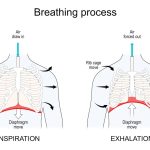
This phrase is probably the most misleading piece of advice given to singers. While engaging your diaphragm (that large, dome-shaped muscle beneath your lungs) is absolutely crucial for a deep, efficient inhalation, the diaphragm itself is an involuntary muscle that relaxes during exhalation. You can’t actively “push” with your diaphragm.
What you do control are other muscles that resist the natural tendency of your thoracic cavity (your rib cage and chest area) to collapse after inhalation. These muscles, including your external intercostals (which expand your rib cage), pectorals (chest stability), and latissimus dorsi (back muscles aiding postural and expiratory control), work together to create a controlled release of air. It’s about resisting the inward collapse, not directly pushing the diaphragm.
Your Foundation: Mastering Posture and Diaphragmatic Engagement
Before you even think about complex breath support exercises, you need to establish a strong, stable foundation. Without proper posture and a clear understanding of diaphragmatic breathing, any exercise will be less effective.
Optimal Posture for Singers: The String Analogy
Imagine a string gently pulling the very top of your head towards the ceiling. This simple image encourages natural alignment.
- Spine: Long and straight, but not stiff. Avoid arching your lower back.
- Shoulders: Relaxed, dropped, and slightly back. No tension or hunching.
- Chest: Open and lifted, allowing your ribcage to expand freely. Don’t puff it out; just keep it naturally engaged.
- Feet: Flat on the floor (if standing), hip-width apart, with even weight distribution. If sitting, sit forward on the edge of your chair, maintaining the same upright posture.
This posture isn’t just aesthetic; it opens up your thoracic cavity, giving your lungs maximum space to inflate and your supportive breathing muscles optimal leverage.
The Diaphragmatic Breath Self-Test: Feel the Core
This simple test helps you identify true diaphragmatic breathing versus shallow chest breathing.
- Position: Sit or stand tall with relaxed shoulders, following the posture guidelines above.
- Hand Placement: Place one hand flat on your chest and the other hand on your abdomen, just above your belly button.
- Inhale Deeply: Slowly inhale through your nose, focusing on allowing your belly to rise and expand outwards. Your bottom hand should move significantly more than your top hand. Your chest and shoulders should remain relatively still.
- Exhale Slowly: Gently exhale through your mouth, feeling your stomach fall back inwards. Again, the movement should primarily be in your abdomen.
If your chest hand moves more, you’re primarily chest breathing. Practice this simple self-test daily until the abdominal movement becomes second nature.
Common Traps: Breathing Mistakes to Ditch for Good
Even with good intentions, singers often fall into habits that sabotage their breath support. Identifying these pitfalls is the first step to overcoming them.
- Overfilling Lungs: It seems counterintuitive, but taking in too much air can be detrimental. It creates excessive internal pressure, leading to a forced, breathy, or airy tone, and often causes tension in the throat and upper body. For most singing phrases, your body’s natural recoil from a comfortably full breath provides ample pressure.
- Shallow Chest Breathing: As mentioned, this is the enemy of vocal stamina and relaxation. Breathing only from the chest lifts the shoulders, tenses the neck, and drastically limits your air capacity and control. Air should expand your belly and the sides of your ribcage, not just lift your chest.
- Pushing Air Out: Blasting air out too quickly in an attempt to hit a loud note or sustain a phrase is a common mistake. This “pushing” exhausts your breath prematurely, throws off pitch, and puts immense strain on your vocal cords. Proper breath support is about controlled release and steady airflow, not raw force.
The Breath Support Exercise Playbook: Your Daily Workout for a Stronger Voice
Now that we understand the principles, let’s get into the practical application. These breath support exercises are designed to strengthen your breathing muscles, improve your control, and integrate deep breathing into your vocal technique.
1. The 4-7-8 Breathing Technique
This technique, popularized by Dr. Andrew Weil, is excellent for breath control and relaxation, translating beautifully to vocal stamina.
- Purpose: Improves breath control, increases lung capacity awareness, supports sustained vocals, and aids in maintaining airflow for challenging notes.
- Steps:
- Place the tip of your tongue against the ridge of tissue just behind your upper front teeth, and keep it there throughout the entire exercise.
- Exhale completely through your mouth, making a distinct “whoosh” sound.
- Close your mouth and inhale quietly through your nose for a count of 4.
- Hold your breath for a count of 7.
- Exhale completely through your mouth, making a “whoosh” sound, for a count of 8.
- This is one breath. Inhale again and repeat the cycle three more times for a total of four breaths.
- Pro-Tip: Focus on making the exhalation smooth and even. The “whoosh” sound helps you regulate the air leaving your body.
2. The Hissing (“Sss” Drill)
A foundational exercise for developing consistent airflow.
- Purpose: Builds control and strength in your breath support muscles, regulates air pressure, and exposes any inconsistencies or “leaks” in your airflow.
- Steps:
- Take a deep, diaphragmatic breath.
- Exhale slowly and steadily through slightly parted lips, making a continuous “hiss” sound, like air escaping a bicycle tire.
- Maintain a consistent volume and pressure for as long as possible.
- Try to increase the duration of your hiss with each repetition, ensuring the sound remains even.
- What to Feel: You should feel a gentle, sustained tension in your abdominal muscles as you resist the urge to release all the air at once.
3. Panting for Agility and Quick Bursts
This exercise targets the quick, responsive action needed for fast vocal runs or staccato phrases.
- Purpose: Strengthens the agility of your diaphragm and supportive muscles, teaching control over short, precise bursts of air.
- Steps:
- Stand straight with relaxed shoulders.
- Take quick, shallow breaths in and out through your mouth, mimicking a panting dog.
- Ensure the movement originates from your diaphragm and abdomen, not your chest. Keep your upper body still.
- Continue for about 30 seconds, maintaining controlled, even breaths. Stop if you feel lightheaded.
- Why it Works: It trains your body to engage and release air in small, controlled increments, preparing you for dynamic vocal demands.
4. Practice Controlled Breathing (Slow Inhale and Exhale)
A cornerstone for overall breath mastery.
- Purpose: Improves fundamental control, strengthens breath for longer phrasing, builds awareness of even air release, and boosts stamina.
- Steps:
- Breathe in quietly through your nose, focusing on expanding your diaphragm and ribcage simultaneously. Imagine your lungs filling from the bottom up.
- Exhale very slowly and steadily through pursed lips (like breathing through a narrow straw). Focus on making the stream of air consistent and even for as long as you can without straining.
- Variation: Inhale for 4 counts, hold for 2 counts, and then exhale slowly for 6 to 10 counts, aiming for maximum length and control.
5. Sustain a Note (Sustain and Release Drill)
This exercise directly applies breath support to vocal production.
- Purpose: Builds endurance for extended phrases, strengthens breath support for continuous sound, and helps connect breath to a steady, controlled tone.
- Steps:
- Take a deep, diaphragmatic breath.
- Release your breath while singing a single, comfortable note (e.g., a middle C) at a steady volume. Avoid any wavering or pushing.
- Hold the note for as long as possible, focusing on maintaining smooth, consistent airflow from start to finish.
- Gradually work on increasing the hold time while preserving the quality of the note.
- Variation: Hum a gentle “mmm” for 5-10 seconds, then seamlessly transition into an open vowel (“ah”) without letting the airflow or volume change.
6. Silent Inhalation
An often overlooked technique that profoundly impacts vocal onset.
- Purpose: Eliminates tension in the neck and throat before you even start singing, leading to a cleaner, more relaxed vocal tone. It promotes an open throat sensation.
- Steps:
- Relax your jaw and throat.
- Breathe in through your mouth, almost like the start of a quiet yawn, allowing the air to fall in silently and deeply.
- Feel a light coolness at the back of your throat. Your shoulders should remain still, your ribs should widen, and your stomach should expand.
- Why it Matters: A silent, open-throat inhalation prepares your vocal instrument perfectly, reducing extraneous tension that can affect pitch and tone.
7. Straw Phonation Exercise (SOVT Training)
A highly effective tool for vocal health and efficient breath use.
- Purpose: Creates gentle resistance, which encourages efficient vocal cord vibration, and teaches your breath to support sound without overpowering it. This semi-occluded vocal tract (SOVT) exercise helps “balance” your vocal system.
- Steps:
- Take a regular drinking straw (or a narrower coffee stirrer for more resistance).
- Hum a gentle “oo” vowel through the straw, maintaining a steady pitch and volume, for 30–60 seconds.
- After humming, try singing a short, easy phrase and notice the easier sensation and improved airflow.
- Alternate between straw humming and light singing to integrate the feeling.
- Benefits: This technique helps optimize the interaction between breath and vocal cords, making singing feel easier and less effortful.
8. Sighing Exercise for Release
Sometimes, the best thing you can do for breath support is to simply let go.
- Purpose: Teaches release and helps eliminate accumulated effort and tension in the upper body and throat.
- Steps:
- Inhale deeply, but comfortably.
- Then, simply let the air fall out naturally in a relaxed sigh on an “ah” sound.
- Do not shape, push, or control the sound; just let it happen. Feel your shoulders drop and any tension in your jaw and throat dissipate.
- Focus: This exercise retrains your body to exhale without unnecessary tension.
9. “Four Corners” Rib Cage Breath
Encourages a more comprehensive expansion of your breathing apparatus.
- Purpose: Promotes even, three-dimensional expansion of the rib cage, leading to fuller breaths and better overall support.
- Steps:
- Picture your rib cage as a box, with four distinct corners: upper right, upper left, lower right, and lower left.
- As you inhale diaphragmatically, consciously try to expand each of these “corners” evenly, not just your belly.
- You can wrap your arms loosely around your rib cage (hands meeting behind your back if possible) to physically feel the outward and sideways expansion as you inhale.
- Benefit: This helps counteract the tendency to only breathe forward, utilizing the full capacity of your lungs and strengthening the intercostal muscles.
10. Book-on-Stomach Exercise
A classic for truly understanding diaphragmatic movement.
- Purpose: A fantastic visual and tactile exercise for beginners to train true diaphragmatic breathing without overthinking.
- Steps:
- Lie flat on your back on a comfortable surface.
- Place a light book (or a small, flat object) on your stomach, just above your belly button.
- As you breathe in deeply, focus on making the book rise.
- As you exhale, let the book gently fall back down.
- The goal is smooth, gentle, unforced movement of the book. Your chest should remain still.
- Consistency: Daily practice of this exercise can quickly ingrain the feeling of proper diaphragmatic engagement.
11. Fists in Ribs (Tactile Feedback)
This provides direct physical feedback for engaging support muscles.
- Purpose: Gives you a physical sensation to help activate and feel the external intercostals, pectorals, and latissimus dorsi, which resist thoracic collapse.
- Steps:
- Make loose fists with both hands.
- Gently press your fists into the sides of your lower ribs.
- As you exhale, or as you sing a sustained note, try to maintain gentle outward pressure against your fists. You should feel your ribs resisting the inward collapse.
- Focus: This helps you identify and engage the muscles responsible for creating a stable “platform” for your breath.
12. Arm Circles for Thoracic Expansion
Linking movement to breath.
- Purpose: Helps you consciously feel and encourage the expansion of your thoracic cavity while also isolating and engaging supportive tension.
- Steps:
- Stand tall.
- As you inhale deeply, raise your arms out to the sides and up, completing a slow, forward circle above your head.
- At the top of the inhale, hold this expanded chest position with your arms still raised.
- As you exhale, slowly lower your arms back down, trying to maintain the sense of thoracic expansion for as long as possible.
- Repeat 3–5 times.
- Sensation: This exercise can make you more aware of the full three-dimensional expansion of your rib cage.
13. Squats or Pliés on Ascending Phrases
Engaging your lower body for greater stability.
- Purpose: Naturally anchors your body and activates stabilizing muscles, which can provide a sense of grounded support, especially helpful when tackling challenging high notes or vocal leaps that might otherwise feel unsupported or “airy.”
- Steps:
- While singing an ascending phrase, a high note, or a challenging vocal leap, perform a light squat or plié.
- As you descend into the squat, consciously engage your core and glutes. The physical effort helps to activate a deeper level of breath support.
- Application: This is an excellent technique to try when practicing difficult passages, helping to solidify your physical connection to your vocal support.
14. The “One-Breath Challenge”
A measurable way to track progress and apply skills.
- Purpose: This exercise measures your progress over time, trains exhale management, improves phrasing, and sharpens your focus.
- Steps:
- Pick a simple melody, vocal exercise, or short phrase.
- Take one deep, controlled diaphragmatic breath.
- Sing the entire melody or phrase on that single breath, focusing on consistent airflow and tone.
- As your breath control improves, gradually attempt longer or more complex lines on that same single breath.
- Tracking: Recording yourself weekly can be incredibly helpful for tracking subtle improvements in your endurance and control.
Integrating Breath Support into Your Practice: Consistency is Key
Developing robust breath support isn’t about brute force; it’s about consistency, awareness, and smart practice.
- Short, Daily Sessions: Five to ten focused minutes of breath support exercises daily are far more effective than an occasional hour-long session. Regularity builds muscle memory and strengthens neural pathways.
- Listen to Your Body: Pay attention to where you feel tension. If you’re straining, you’re doing too much. Ease off and refine the technique.
- Connect to Your Voice: The ultimate goal is to seamlessly integrate these exercises into your actual singing. Always observe how improved breath support impacts your tone, pitch, and stamina when you sing.
The benefits extend beyond just vocal prowess. Breathwork can calm your nervous system, reduce stage fright, and protect your voice from strain caused by shallow inhaling or inconsistent airflow. With better breathing habits, you’ll feel empowered to experiment with notes more freely, reduce vocal fatigue, and maintain consistency across various musical styles and vocal ranges.
Quick Answers: Your Breath Support FAQs
What is the best breath support exercise for beginners?
For beginners, the Book-on-Stomach Exercise is fantastic for building awareness of true diaphragmatic breathing without overthinking. Paired with the Hissing (“Sss” Drill), which teaches controlled exhalation, you’ll establish a strong foundation.
How long does it take to develop good breath support?
Like any muscle training, developing strong breath support is a gradual process. You might notice initial improvements in a few weeks of consistent daily practice (5-10 minutes). However, to fully integrate it and make it feel effortless, it can take several months to a year, or even longer for advanced control. Patience and persistence are key.
Can breath support help with vocal strain or hoarseness?
Absolutely. One of the primary causes of vocal strain and hoarseness is inadequate breath support, leading to the throat muscles trying to compensate for a lack of airflow. Proper breath support ensures a steady, sufficient air stream, allowing your vocal cords to vibrate freely and efficiently without unnecessary tension or force. This reduces wear and tear on your voice.
Is it okay to feel my stomach move when I sing?
Yes, it’s not just okay, it’s essential! When you inhale deeply and correctly for singing, your diaphragm descends, which pushes your internal organs outwards, causing your abdomen (stomach area) to expand. When you exhale with proper support, your abdominal muscles engage to control the release of air, creating a feeling of gentle contraction. This movement indicates you’re engaging your core breathing muscles effectively.
Your Next Steps: Building a Breath-Strong Voice
Mastering breath support is a game-changer for any singer. It transforms your voice from an instrument prone to fatigue and inconsistency into one capable of sustained power, nuanced expression, and effortless control.
Start by refining your posture and practicing the diaphragmatic breath self-test. Then, select 2-3 of the breath support exercises from this guide that resonate with you, and commit to practicing them for 5-10 minutes daily. Pay close attention to the sensations in your body and how these practices influence your singing. Over time, you’ll build the muscle memory and awareness needed to make incredible strides in your vocal journey. Your voice will thank you for it.

- Daily Voice Workout To Improve Your Vocal Quality And Stamina - April 12, 2026
- Mastering Breathing and Voice Boosts Your Singing Control and Stamina - April 11, 2026
- Choir Breathing Exercises Enhance Vocal Support and Choral Blend - April 10, 2026