The stage lights dim, your cue approaches, and suddenly, that familiar flutter of nerves tightens your chest. Whether you’re a vocalist preparing for a demanding aria, a wind instrumentalist bracing for a long phrase, or a percussionist needing rhythmic stability, your breath is the silent conductor of your performance. Mastering breathing exercises for musicians isn’t just about sound; it’s about control, endurance, and protecting your most vital instrument. Without a solid foundation of breath management, even the most talented musicians can struggle with shaky notes, premature fatigue, or vocal strain that can lead to long-term damage.
This isn’t about simply taking air in and out; it’s about a sophisticated, deliberate process that supports your artistic expression. You’ll learn to harness your body’s natural mechanics, ensuring every note, every phrase, and every sustained sound is delivered with power and precision.
At a Glance: Master Your Breath, Master Your Performance
- Unlock Deeper Control: Learn to engage your diaphragm for consistent air pressure, eliminating tension and boosting stability.
- Boost Endurance & Range: Develop the lung capacity and muscular control needed to sustain long phrases and hit challenging notes effortlessly.
- Prevent Strain & Damage: Discover techniques that protect your vocal cords and support overall physical ease during performance.
- Refine Tone & Articulation: Achieve clearer sound quality and more precise musical articulation through targeted breath management.
- Build Stage Confidence: Perform with greater assurance, knowing your breath is a reliable, powerful foundation for your art.
- Integrate Breath into Practice: Incorporate practical exercises that seamlessly translate into improved real-world musical application.
Why Your Breath Is Your Secret Weapon (Beyond Just Singing)
For any musician, breath is the fuel. For vocalists, it directly creates sound. For wind and brass players, it generates the very tone. Even pianists or string players benefit from conscious breath to manage performance anxiety, maintain rhythmic internal pulse, and reduce physical tension. When we breathe shallowly – as most of us do in daily life, using only 5-10% of our lung capacity – we miss out on a massive reserve of power and control. Musical performance, especially singing, demands a far greater engagement, often up to 50% of your lung capacity, requiring a steady, controlled exhale to sustain sound.
Imagine your body as a finely tuned instrument. Proper breathing acts like the perfect support stand, allowing all other parts to function optimally. It provides a full, supported voice, minimizes strain, and enhances sound quality across instruments. Without it, you risk not only compromised musicality but also physical consequences like vocal cord strain, tension in your neck and shoulders, and a noticeable lack of power or endurance. This isn’t just about sounding good; it’s about longevity in your musical career.
The Foundation: Perfecting Your Performance Posture
Before any breath exercise, posture is paramount. Think of it as opening up the highways for air to flow freely. Good posture maximizes your chest cavity, allowing your lungs to expand fully and your diaphragm to move without restriction. It also releases physical tension, which can unconsciously constrict airflow and vocal production.
How to Set Your Stage-Ready Posture:
- Stand Tall, Stay Loose: Stand with your spine naturally erect, but not stiff. Let your body feel relaxed, hands gently by your sides.
- Ground Your Feet: Place your feet roughly shoulder-width apart, distributing your weight evenly, perhaps with a slight lean forward, as if you’re about to spring into action.
- Flexible Knees: Avoid locking your knees. Keep them slightly bent and flexible; rigid joints create tension that travels up your body.
- Relaxed Shoulders: Shrug your shoulders up, then let them fall naturally down and slightly back. This opens your chest without creating tension.
- Elevated Chest, Not Strained: Imagine a string gently pulling the top of your head towards the ceiling, or balancing a book on your head. Your chest should feel high and open, but never forced. If you feel tightness, relax and try again.
- Chin Parallel: Your chin should be level with the ground, avoiding tilting up or down. This keeps your airway open and free.
Quick Check: Your neck, shoulders, torso, hips, and knees should all feel relaxed and aligned. If any part feels strained or pinched, adjust. Slumping is a major culprit, restricting diaphragm movement and choking off airflow.
How to Gauge Your Breath: The Belly Check
This simple test immediately reveals if you’re breathing shallowly (chest breathing) or deeply (diaphragmatic breathing).
The Test:
- Place one hand flat on your chest and the other flat on your stomach, just above your navel.
- Take a slow, deep breath in through your nose.
The Verdict:
- Incorrect: If your shoulders rise or the hand on your chest lifts significantly, you’re primarily using your upper chest and neck muscles. This indicates tension and inefficient breathing.
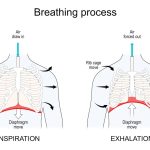
- Correct: The hand on your stomach should rise and expand outwards, while the hand on your chest remains relatively still. You should also feel your lower ribs expanding outwards. This confirms you’re engaging your diaphragm, the primary muscle for supported musical breath.
Aim for that belly expansion and still shoulders. This is the foundation we’ll build on.
Core Breathing Exercises for Musicians: Your Practical Playbook
These exercises are designed to build conscious control, expand capacity, and ensure a steady, supported airflow, whether you’re singing, playing, or performing.
1. The Diaphragmatic Inhale (Belly Breathing / Book-on-Stomach)
This is the cornerstone. It teaches you to consciously engage your diaphragm, moving air deep into your lungs rather than shallowly into your chest.
- Goal: Develop conscious awareness and control over diaphragmatic movement during inhalation.
- Steps:
- Assume proper posture, or for an easier start, lie flat on your back with a light book on your stomach.
- Place one hand on your stomach, middle finger over your belly button.
- Inhale deeply and slowly through your nose, focusing on your stomach inflating and pushing your hand (and the book) outwards. Imagine your belly expanding like a balloon. Your chest and shoulders should remain still.
- Gently exhale through your mouth, letting your belly slowly deflate. Feel the hand (and book) fall.
- Repeat for 5 minutes, or 10-15 times if standing. Prioritize outward belly movement over upward chest movement.
- Musician’s Insight: For vocalists, this ensures a full “tank” of air for sustained notes. For wind players, it’s about drawing in enough air silently and quickly. Practice this before any performance to center yourself.
2. The Controlled Exhale (Hissing Exercise / The Exhale)
In music, the release of air is just as crucial as the intake. This exercise hones your ability to regulate air pressure evenly, vital for sustained notes and smooth phrasing.
- Goal: Regulate air release evenly, build abdominal control, and protect vocal cords from tension.
- Steps:
- Stand, sit, or lie down comfortably with proper posture. Place a hand on your stomach to monitor movement.
- Take a deep, diaphragmatic inhale (feel your diaphragm flatten).
- Gently press your tongue against your bottom front teeth, with your top teeth resting lightly on them.
- Release air slowly and steadily through your teeth, producing a constant, unwavering “ssssss” sound. The key is consistency – avoid uneven bursts or fading.
- Challenge: Time yourself. The goal is to sustain the “sss” sound for at least 30 seconds with a perfectly even flow.
- Musician’s Insight: Think of this as developing your musical “bow arm” for breath. Vocalists use it for vibrato control and long phrases; wind and brass players for steady tone and pitch. Irregular airflow leads to shaky notes or wavering pitch.
3. Straw Phonation Technique
This clever exercise offers resistance, naturally guiding your breath and vocal cords toward efficient, tension-free vibration.
- Goal: Promote efficient, silent breathing and encourage easy vocal cord vibration with balanced air pressure.
- Tools: A standard drinking straw (a 4-inch straw is often recommended for more resistance).
- Steps:
- Place the straw between your lips. Maintain proper posture.
- Normal Breathing: Breathe normally and slowly through the straw. Avoid forceful sucking. Air should fill your lungs quietly, and your body should feel relaxed. Observe that your shoulders don’t raise.
- Timed Breathing: Inhale through the straw, counting to four. Exhale with the same gentle pressure, counting to four. Repeat for 5 breath cycles, then try increasing to 5 seconds for each phase.
- Humming/Vocalization: Gently hum an “oo” sound through the straw for 30-60 seconds. Afterward, try singing a short musical phrase and notice the increased ease and resonance.
- Musician’s Insight: The straw creates back pressure, which helps “tune” your vocal folds, making them vibrate more easily. For all musicians, it teaches silent, controlled inhalation—crucial for taking quick breaths without audible gasps between phrases.
4. Silent Inhalation
Gasping for air can introduce tension and compromise your sound before you even make it. This exercise focuses on a quiet, relaxed intake.
- Goal: Eliminate neck and throat tension during inhalation, leading to a cleaner vocal tone and relaxed posture.
- Steps:
- Breathe in through your mouth with a relaxed, open throat, as if you’re beginning a yawn.
- Allow the air to “fall in” quietly and effortlessly.
- As you inhale, you should feel a slight coolness at the back of your throat, indicating an open, tension-free airway. Your shoulders should remain down.
- Musician’s Insight: This is critical for singers and wind players who need to grab a quick breath in a silent passage. A silent inhale prevents pre-phrase tension, which can immediately tighten your vocal cords or diaphragm, affecting the first note.
5. Deep Breathing (Four Corners Breath)
This exercise aims to maximize your full lung capacity, bringing breath into areas you might not normally engage.
- Goal: Expand full lung capacity and gain refined control over comprehensive inhales and exhales.
- Position: Perform this sitting comfortably or lying down on your back. Do NOT attempt while standing, as it can cause light-headedness.
- Steps:
- Close your eyes.
- Take a long, deep breath in, initiating the breath from your diaphragm. Feel the muscles engage under your ribcage.
- Visualize the breath filling your lungs, not just at the front, but expanding evenly into all “four corners” of your rib cage: upper right, upper left, lower right, lower left. Feel your back and sides expand.
- Once your lungs are completely full, allow the breath to naturally leave your lungs without forcing it.
- Repeat this deep inhale 15 times, always focusing on starting from your diaphragm and expanding fully.
- On the 15th exhale, release all the air from your lungs and gently hold your breath for 30 seconds (only if comfortable and safe).
- Musician’s Insight: Full lung capacity means more available air for longer phrases or more dynamic expression. The temporary light-headedness is due to increased oxygen, so always practice in a safe, seated position. This exercise builds stamina for sustained musical passages.
6. The Sighing Exercise
Often, tension builds up in the throat and jaw without us realizing it. This exercise offers a quick, natural release.
- Goal: Release accumulated physical tension, particularly in the throat or jaw, which often interferes with vocal production.
- Steps:
- Inhale deeply, allowing your belly to expand.
- Then, let the air fall out of you in a natural, unforced sigh on an “ah” sound. Don’t try to shape or push the sound; just let it release.
- Consciously allow your shoulders to drop as you sigh.
- Musician’s Insight: A musician might perform this before or during practice to reset if they notice tension creeping in. For vocalists, it helps to release constriction that can lead to a tight, thin sound. For all, it’s a great stress-reliever before a performance.
7. The Panting Exercise
Some musical passages demand quick, agile breath responses. This exercise trains your diaphragm for that rapid flexibility.
- Goal: Develop diaphragm agility for quick, responsive breath changes needed during faster musical phrases or dynamic shifts.
- Steps:
- Pant quickly and shallowly, like a small dog after a run. These should be short, rapid inhales and exhales.
- Keep your shoulders down and your neck relaxed. The movement should originate primarily from your abdominal muscles.
- Duration: Practice for 5-10 seconds at a time. Stop immediately if you begin to feel light-headed.
- Musician’s Insight: Essential for singers tackling coloratura or rapid-fire lyrics, and for wind players needing to articulate staccato notes with precision. It trains the diaphragm to “snap” back and forth, providing quick bursts of air.
8. The Sustain and Release Drill
This exercise directly links your breath support to the consistency of your vocal tone or instrumental sound, preventing shakiness.
- Goal: Connect consistent breath support directly to vocal or instrumental tone, ensuring steady airflow from one sound to another.
- Steps:
- Hum a gentle “mmm” for 5-10 seconds, feeling a gentle buzz in your nose.
- Then, smoothly transition and release into an open vowel (such as “ah”) without altering the consistency of your airflow. It should feel like the air is simply changing direction slightly, not stopping or starting.
- You can place two fingers lightly on your nose; an even buzz during the hum indicates steady breath support, which should then carry seamlessly into the vowel.
- Musician’s Insight: For vocalists, this prevents the dreaded “shaky” entrance on a note. For wind players, it ensures a smooth legato transition between notes. It teaches you to maintain continuous air pressure even when changing the sound itself.
9. The One-Breath Challenge
This is a fantastic metric for tracking your progress in exhale management and phrasing. It provides tangible evidence of your improving control.
- Goal: Measure and track progress in exhale management, musical phrasing, and sustained focus over time.
- Steps:
- Select a simple melody or a short musical phrase.
- Sing or play it entirely on a single, well-supported breath.
- As your breath control improves, gradually incorporate slightly longer or more complex lines into that same single breath.
- Musician’s Insight: Recording yourself weekly can provide invaluable feedback. You’ll hear exactly where your breath gives out or where your support wavers. This exercise directly builds the endurance needed for demanding musical pieces. You can find more comprehensive guidance on these techniques and their vocal applications at Learn vocal breathing exercises.
Warming Up for Performance: Beyond Just Breath
Breathing exercises are powerful, but they’re part of a larger picture. Vocal cord warm-ups, for instance, are non-negotiable for singers, much like stretching for an athlete. They enhance muscle elasticity, help clear excess mucous, and significantly reduce the risk of injury to the delicate larynx. Even if you’re not a vocalist, a gentle warm-up routine can prepare your body and mind for focused practice.
Integrate regular warm-ups into your routine to maintain vocal health and build stronger breathing muscles. Start gently with techniques like humming or lip trills, then progress to drills that specifically target the demands of your repertoire (e.g., extended exercises for breathing control for a long sustained note, or rapid panting for a quick, rhythmic passage). Even 10-20 minutes daily can yield substantial benefits, keeping your voice in tune and safe.
Breath Management: Actions to Avoid
Just as crucial as knowing what to do is understanding what not to do.
- Straining for Volume: Trying to force more sound out by pushing harder often results in a strained, uncontrolled voice that quickly loses power. Instead, focus on diaphragm engagement and steady airflow for projection.
- Ignoring Warning Signs: Gravelly, croaky sounds, or sudden vocal “breaks” are your body’s way of telling you something is off. Don’t push through them. Adjust your technique, relax, and find balance.
- Yelling the Sound: True vocal projection comes from supported breath, not sheer force from the throat. Yelling bypasses diaphragmatic control, leading to fatigue and potential damage. Reclaim control and let your breath carry the sound.
Your Path to Breath Mastery
Achieving mastery in breathing exercises for musicians is a journey, not a sprint. The benefits—from reaching higher notes with ease to sustaining long, expressive phrases, and safeguarding your voice long-term—are immense. Consistent, mindful practice is your key.
Start with the diaphragmatic inhale to build awareness, then incorporate the controlled exhale for endurance. Use the straw and silent inhalation for refinement and tension release. As you progress, integrate the deep breathing, sighing, and panting exercises to expand your capacity and agility. Finally, challenge yourself with the sustain and release drill and the one-breath challenge to track your growth and apply your skills directly to your music.
Listen to your body, celebrate small victories, and remember that every breath you take with intention is a step towards a more powerful, resilient, and expressive musical performance.