Mastering your voice as a singer often feels like an artistic journey, but the secret to unlocking its full potential—from soaring high notes to sustained, powerful phrases—lies in a deeply physical, often overlooked foundation: your breathing. Without refined breathing techniques for singing, even the most talented vocalists can struggle with control, stamina, and preventing strain. It’s not just about taking a big gulp of air; it’s about how you take it, how you manage it, and how you release it with precision to transform simple air into resonant sound.
This guide will demystify the mechanics, common pitfalls, and practical exercises you need to master your breath, turning it into the powerhouse behind your most expressive vocal performances.
At a Glance: Your Takeaways for Vocal Breathing Mastery
- Embrace Diaphragmatic Breathing: Learn why shallow chest breathing hinders your voice and how to leverage your diaphragm for steady, powerful airflow.
- Optimize Your Posture: Discover the critical alignment that unlocks your lung capacity and supports efficient breath management.
- Identify and Correct Common Mistakes: Pinpoint detrimental habits like shoulder lifting or pushing air and learn how to replace them with healthier techniques.
- Implement Targeted Exercises Daily: Walk through a practical suite of drills designed to build breath control, stamina, and vocal agility.
- Translate Theory to Performance: Understand how advanced breathing strategies apply to high notes, long phrases, vocal health, and even stage presence.
The Unseen Engine: Why Breathing is Your Voice’s Foundation
Think of your voice as an instrument, and your breath as the bow that draws sound from its strings. Without a steady, controlled bow stroke, the sound will be weak, inconsistent, or strained. For singers, proper breathing isn’t merely about surviving a long phrase; it’s the bedrock of vocal power, pitch accuracy, and enduring stamina. It prevents you from running out of breath mid-sentence, from wobbling on a sustained note, and crucially, from placing undue strain on your delicate vocal cords. Efficient breath management directly translates to better tone quality, dynamic control, and long-term vocal health.
Decoding Breathing Styles: What Works and What to Avoid
Not all breaths are created equal when it comes to singing. Understanding the different ways we inhale and exhale is the first step toward optimizing your technique.
Clavicular Breathing: The Tension Trap
This is the shallowest form of breathing, where air only seems to fill the very top of the lungs. You’ll notice your shoulders rising toward your ears and your upper chest expanding. While common in moments of stress or rapid activity, it’s a detrimental habit for singers. It creates significant tension in the neck and throat, severely limits air support, and leads to a thin, strained vocal tone. This style should be actively unlearned.
Thoracic Breathing: Limited Support
Mid-chest or thoracic breathing involves a broader expansion of the ribcage. It’s an improvement over clavicular breathing, offering a somewhat larger volume of air. However, while it provides some support, the control over airflow is often limited, making it less ideal for the sustained, consistent breath required for singing complex phrases or maintaining dynamic control. It often still involves some upper-body tension.
Diaphragmatic Breathing: The Singer’s Gold Standard
This is the breathing technique for singing that all vocalists strive to master. Diaphragmatic breathing—often called “belly breathing” or “abdominal breathing”—engages your diaphragm and the lower lobes of your lungs, drawing air deep into your body.
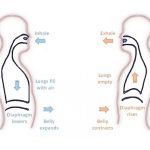
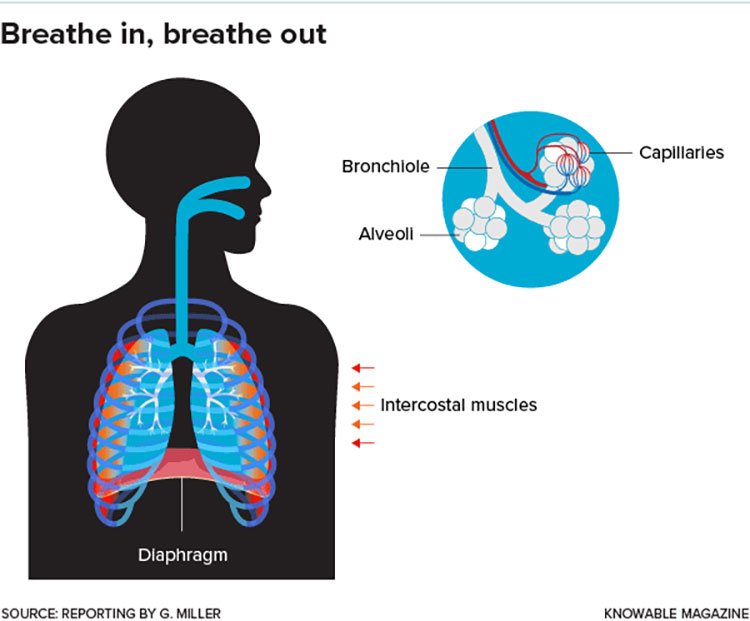
How it Works: The diaphragm is a large, dome-shaped muscle situated just below your lungs. When you inhale deeply and correctly, this muscle contracts and moves downward, creating a vacuum that pulls air into your lungs. This downward movement causes your abdomen to expand outward, rather than your chest or shoulders rising. As your lungs fill with air, your lower ribs will also gently expand outwards.
When you exhale for singing, the diaphragm slowly relaxes and moves back upward. Crucially, singers learn to control this upward movement, creating a steady, consistent stream of air that powers the vocal cords without excess pressure or tension. This method provides the maximum air capacity, steady airflow, and significantly reduces tension in the throat and upper body.
The Blueprint for Breath: Optimal Posture for Singing
Your posture is the silent partner to your breathing, either amplifying or sabotaging your efforts. Good alignment creates the optimal internal space for your lungs to fully expand and your diaphragm to move freely, directly impacting your vocal projection and phrasing.
Achieving Singer’s Posture:
- Stand or Sit Tall: Imagine a string gently pulling the crown of your head towards the ceiling.
- Relaxed Shoulders: Allow your shoulders to drop naturally, pulling them slightly back and down. Avoid hunching or stiffness.
- Open Chest, Not Stiff: Your chest should feel open and lifted, but not rigid. Think of creating space, not pushing out your sternum aggressively.
- Open Ribcage: Feel your ribcage gently expanding outwards and upwards without strain.
- Feet Shoulder-Width Apart (if standing): This provides a stable base.
- Hips Aligned: Keep your hips over your ankles (if standing) or evenly weighted (if sitting).
This alignment directly enhances lung capacity and allows your diaphragm to operate at its peak efficiency, ensuring a powerful and resonant sound without strain.
Spotting the Snags: Common Breathing Mistakes and How to Fix Them
Even with good intentions, singers often fall into habits that undermine their breath support. Recognizing these common errors is the first step toward correcting them.
- Lifting Shoulders: This is the hallmark of clavicular breathing, causing tension in the neck and throat and leading to shallow, insufficient airflow. Fix: Consciously relax your shoulders down and back during inhalation.
- Holding Too Much Air: Taking an excessively large gulp of air can create undue pressure, leading to vocal strain, instability, and a breathy, uncontrolled tone. It also makes it harder to manage the air effectively. Fix: Focus on “just enough” air for the phrase, and prioritize depth over sheer volume.
- Overexhaling Too Quickly: Rushing the exhalation causes you to run out of breath prematurely, resulting in a weak, breathy tone at the end of phrases. Fix: Practice slow, controlled release with exercises like the “sss” drill.
- Ignoring Posture: A collapsed chest or hunched back severely limits lung capacity and restricts diaphragmatic movement, making effective breath support almost impossible. Fix: Maintain the ideal singer’s posture consistently, even during quick breaths.
- Pushing Air from the Throat: Trying to force air out by tensing the throat or neck muscles can throw off pitch, create a harsh tone, and severely strain your vocal cords. Fix: Ensure air is supported by your core muscles and released by the controlled relaxation of the diaphragm, not pushed from above.
The key to overcoming these mistakes is to focus on a relaxed posture, engaging your core muscles for support, and maintaining a steady, controlled release of air.
Your Breath Check: How to Test Your Breathing Technique
Before diving into exercises, it’s helpful to quickly assess your current breathing habits. This simple test can reveal if you’re engaging your diaphragm effectively.
- Find a Relaxed Position: Lie on your back on the floor, or sit upright in a chair with good posture.
- Hand Placement: Place one hand flat on your chest and the other hand on your stomach, just above your navel.
- Inhale Slowly: Take a slow, gentle breath in through your nose.
- Observe Movement:
- Goal: The hand on your stomach should rise noticeably, while the hand on your chest remains relatively still.
- Indication of Tension: If your chest hand moves significantly upward, or your shoulders lift, it indicates you’re relying on upper-body tension and shallow breathing.
Aim for consistent belly expansion with minimal upper-body movement. This immediate feedback helps you understand where to direct your focus during practice.
Mastering the Airflow: Essential Breathing Techniques for Singers
Developing mastery over your breath requires consistent practice of targeted exercises. These drills build strength, control, and awareness, forming the core of effective Vocal breathing exercises for singers.
1. The Diaphragmatic Breathing Foundation (Book-on-Stomach)
This fundamental exercise trains your body to use the diaphragm effectively.
- How to do it: Lie on your back with a lightweight book on your stomach. Place one hand on your belly (under the book) and the other on your chest. Inhale slowly and deeply through your nose, focusing on pushing the book upward with your expanding abdomen. Keep your chest and shoulders still. Exhale gently through your mouth or on an “sss” sound, feeling the book slowly lower.
- Purpose: Builds foundational awareness and control of diaphragmatic movement.
- Practice: 5-10 minutes daily. As you improve, practice sitting and standing.
2. Pacing Your Breath: The Inhale-Exhale Timing Drill
This exercise focuses on controlled inhalation and especially on extending your exhalation.
- How to do it: Sit or stand with good posture. Inhale slowly through your nose for 4 counts, feeling your belly expand. Hold your breath for 2 to 7 counts (find what’s comfortable, but challenge yourself to increase it). Exhale slowly and steadily through pursed lips or on an “sss” sound for 6 to 8 counts.
- Purpose: Improves breath control, stamina, and the ability to sustain airflow.
- Progression: Gradually increase the exhale duration (e.g., 4-4-12, then 4-4-16) as your control improves.
3. Steady Stream: The Hissing Exercise (“Sss” Drill)
The “sss” sound provides excellent feedback for consistent airflow.
- How to do it: Take a full, deep diaphragmatic breath. Exhale on a long, steady “sss” sound, as if you’re deflating a tire slowly. Focus on maintaining an even volume and consistent airflow without any wavering or breaks. Time yourself and aim to prolong the duration.
- Purpose: Develops consistent breath support and control over the rate of air release, essential for sustained notes.
4. Sustaining Power: The One-Breath Challenge
This exercise directly applies breath control to vocalization.
- How to do it: Take a deep diaphragmatic breath. Sing a comfortable note (like a middle C) or a simple, short phrase (e.g., “Ahhhh”) as long as possible, focusing on a steady tone and unwavering airflow. Avoid letting the sound become breathy or shaky.
- Purpose: Translates breath support into sustained vocal output and builds vocal stamina.
- Example: Try sustaining a gentle “mmm” on a single pitch for 10-15 seconds.
5. Melodic Breath Control: Breathing with Scales
Integrating breathing with actual singing content.
- How to do it: Take a full diaphragmatic breath. Sing a 5-note scale (e.g., C-D-E-F-G and back down) on a single vowel sound (like “ah” or “ee”). Focus on smooth transitions between notes and maintaining consistent breath support.
- Purpose: Builds coordination between breath and pitch, preparing for longer phrases.
- Progression: Gradually expand to 8-note scales, then arpeggios, always on one breath.
6. Quick Response: The Panting Exercise
Trains the diaphragm for quick, efficient breaths.
- How to do it: Stand straight with relaxed shoulders. Take quick, shallow breaths in and out through your mouth, like a dog panting. Focus on keeping the movement localized in your diaphragm (your belly should move in and out), not your chest or shoulders. Do this for 30 seconds.
- Purpose: Enhances the agility and responsiveness of the diaphragm for quick breath recovery between phrases.
7. Silent Efficiency: The Silent Inhalation
Teaches an open, tension-free throat for rapid and quiet breaths.
- How to do it: Breathe in through your mouth with a relaxed, open throat, almost as if you’re letting the air “fall in” silently, like a gentle yawn. Feel a cool sensation at the back of your throat. Your shoulders should remain still.
- Purpose: Prevents gasping or noisy inhalations, promoting efficient and tension-free breath recovery during performance.
8. Gentle Resistance: Straw Phonation
This exercise provides back-pressure, which is excellent for vocal cord health and efficient airflow.
- How to do it: Hum a gentle “oo” or “mmm” sound through a drinking straw (a narrow coffee stirrer straw is ideal) for 30–60 seconds. Maintain a steady, even sound.
- Purpose: Creates resistance that helps regulate airflow, encourages easy vocal cord vibration, and can help balance subglottic pressure. It’s also very therapeutic for tired voices.
9. Releasing Tension: The Sighing Exercise
A natural way to release upper-body tension and find natural breath release.
- How to do it: Inhale deeply and fully (diaphragmatically). Then, let the air fall out naturally in a relaxed sigh on an “ah” sound, without trying to shape the sound or push the air out. Let gravity do the work.
- Purpose: Teaches the body to release breath without effort or tension, helpful for letting go of vocal constriction.
10. Full Lung Engagement: “Four Corners” Breath
A visualization exercise to encourage complete lung expansion.
- How to do it: Sit or stand comfortably. Picture your rib cage as a rectangular box with four corners (front-left, front-right, back-left, back-right). As you inhale, mentally expand each of these “corners” evenly, trying to draw air into all areas of your ribs and abdomen.
- Purpose: Promotes fuller lung capacity and more comprehensive engagement of the intercostal muscles and diaphragm for robust support.
11. Seamless Phrasing: “Sustain and Release” Drill
This helps maintain steady air pressure between different vocalizations.
- How to do it: Take a full breath. Hum a gentle “mmm” sound for 5–10 seconds, then, without re-breathing or changing the airflow, release immediately into an open vowel sound (“ah”) for another 5–10 seconds. Focus on maintaining a consistent volume and tone quality throughout.
- Purpose: Teaches you to carry steady air and support through transitions, preventing a shaky or unstable tone when moving between sounds or phrases.
Applying Breathing Techniques: Real-World Singing Scenarios
Mastering these exercises is one thing; applying them effectively in performance is another. Here’s how these advanced breathing techniques for singing translate to common vocal challenges:
Nailing High Notes with Ease
Many singers mistakenly believe high notes require immense air pressure or pushing from the throat. In reality, it’s about controlled support and resonance, not brute force.
- Strategy: When approaching a high note, ensure your ribs remain expanded (like a “silent gasp” feeling) and support the sound with a gentle, controlled release from your diaphragm. The sensation should be one of “floating” the note on air, rather than pushing it out. Less air pressure, combined with an open throat, allows the vocal cords to vibrate efficiently at higher frequencies. Pushing too much air simply creates tension and often makes the note sharp or strained.
Building Vocal Stamina for Long Performances
Running out of breath mid-song is a common frustration. Stamina isn’t just about lung capacity; it’s about intelligent breath pacing.
- Strategy: Plan your inhalations. Before a performance or during practice, mentally mark the ideal spots in your music for quick, silent breaths. These should be strategic pauses that allow for full diaphragmatic replenishment without interrupting the musical flow. Practice “staggered breathing” in sustained chords if you’re in a choir, where different singers breathe at different times to maintain an unbroken sound. When singing full songs, focus on releasing just enough air for each phrase, conserving the rest for upcoming challenges.
Protecting Your Vocal Health
Consistent, balanced airflow is a singer’s best friend for long-term vocal health.
- Strategy: Inconsistent or forced airflow can lead to vocal cord fatigue, hoarseness, and even injury. By using proper diaphragmatic support, you ensure your vocal cords vibrate with minimal effort. The air acts as a cushion, allowing them to adduct (come together) and abduct (open) smoothly. Over-blowing or under-supporting your voice forces your cords to work harder, leading to strain. Prioritize gentle, controlled breathing to maintain a strong, resonant, and healthy voice for years to come.
Synchronized Choir Singing
Choral singing requires individual breath mastery to contribute to a unified sound.
- Strategy: Practice group inhalations with your choir director to ensure synchronized starts and attacks. For sustained notes or long phrases, learn to use “staggered breathing.” This technique involves different sections or individuals within a section taking breaths at slightly different, inconspicuous moments, ensuring the overall sound never breaks. Always be aware of conductor cues, which often signal when and where to breathe.
Calming Stage Nerves
The physiological response to anxiety often includes shallow, rapid breathing—the opposite of what a singer needs.
- Strategy: Before and during a performance, consciously engage in slow, controlled diaphragmatic inhales. This not only provides the necessary breath for singing but also triggers your body’s “rest and digest” parasympathetic nervous system. Taking a few deep, slow breaths from your diaphragm can significantly calm your nerves, lower your heart rate, and improve focus, allowing you to deliver your best performance.
Your Daily Routine: A 10-Minute Breath Training Plan for Beginners
Consistency is paramount. Even a short, focused daily routine can yield significant improvements within weeks.
- 2 minutes: Diaphragmatic Breathing Basics (lying down with hand/book). Focus on deep, slow belly expansion.
- 2 minutes: Hissing Exercise (“sss” sound). Aim for a long, steady stream of air.
- 2 minutes: Inhale-Exhale Timing (start with 4-4-8 counts). Focus on controlled release.
- 2 minutes: Singing Scales on One Breath. Use a simple 5-note scale, focusing on smooth tone.
- 2 minutes: Posture Alignment + Relaxation. Consciously check and correct your singing posture, then release any tension in your shoulders, neck, and jaw.
Stick to this routine daily, and you’ll notice a remarkable difference in your vocal control, stamina, and overall vocal health.
Quick Answers: Unpacking Common Breathing Questions
Q: How often should I practice breathing exercises for singing?
A: Daily practice is ideal. Even 10-15 minutes a day, consistently, will yield much better results than infrequent, longer sessions. Think of it like training a muscle; it needs regular, focused work.
Q: Can I really improve my vocal range with better breathing?
A: While breathing techniques don’t directly extend your physical vocal range, they significantly enhance your usable range and vocal freedom. Better breath support allows you to access notes at the extremes of your range with more control, power, and less strain, making them part of your reliable singing voice.
Q: What if I feel dizzy during breathing exercises?
A: Feeling lightheaded or dizzy can happen when you’re not used to taking in so much oxygen. If this occurs, stop immediately, take a few normal breaths, and rest. Reduce the intensity or duration of the exercises, and gradually build up your stamina. Always listen to your body.
Q: Is breath support the same as pushing from my stomach?
A: No, it’s a common misconception. “Pushing” implies forceful exertion, which can lead to tension. Breath support is about controlled engagement of your core muscles and diaphragm, providing a steady, gentle resistance to the rising diaphragm during exhalation. It’s an active, supportive hold rather than a forceful push.
Q: Does yoga or meditation help with singing breath?
A: Absolutely. Both yoga and meditation emphasize deep, controlled breathing (often diaphragmatic) and body awareness. These practices can significantly improve your overall breath capacity, control, and ability to relax tension, all of which are invaluable for singers.
Taking the Next Breath: Your Path to Enhanced Vocal Mastery
The journey to vocal excellence is a continuous one, and mastering breathing techniques for singing is perhaps the most impactful step you can take. By consciously engaging your diaphragm, adopting optimal posture, and diligently practicing targeted exercises, you transform your breath from a simple bodily function into a powerful, reliable instrument.
Remember, the goal isn’t just to make noise, but to communicate emotion and artistry with confidence and control. Let your breath be the unwavering support that carries your voice to new heights, sustains your most heartfelt phrases, and protects your instrument for years of beautiful singing. Start today, commit to consistency, and prepare to hear your voice truly soar.