When you sing, your voice is only as powerful, controlled, and resilient as the breath behind it. Many singers struggle with pitch, sustain, or vocal fatigue, often attributing it to a “voice problem” when, in reality, it’s an “air problem.” Mastering how to breathe when singing isn’t just about taking a deep gulp of air; it’s about intelligent management, silent power, and the foundation of every resonant note you produce. This isn’t just theory; it’s the practical skill that unlocks your true vocal potential.
At a Glance: Your Breath for Better Singing
- Diaphragmatic Breathing is Gold: Learn to expand your abdomen and lower ribs, not lift your chest or shoulders.
- Breath Support is Control: It’s about regulating exhalation, not just inhaling.
- Posture Unlocks Power: Align your body to give your lungs maximum space and your support muscles optimal leverage.
- Avoid the Traps: Don’t lift shoulders, hold too much air, or push too hard.
- Practice Makes Perfect: Consistent, short daily exercises build muscle memory and stamina.
- Vocal Health is Tied to Breath: Balanced airflow prevents strain and enhances resonance.
Your Voice’s Hidden Superpower: Why Breath Matters So Much
Think of your voice as a wind instrument – and your breath as the air that makes it sing. Without steady, controlled airflow, even the most beautiful instrument will sound weak or out of tune. Proper breathing provides the essential energy for vocal cords to vibrate efficiently, allowing your voice to ring out clearly, sustain long notes, and achieve dynamic control without strain. It’s the silent engine that powers every aspect of your singing, from pitch accuracy to stamina and emotional delivery.
Decoding the Engine: Diaphragm, Support, and the Real Muscles at Play
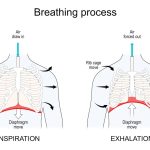
Let’s clear up some common misconceptions right away. You don’t “sing from your diaphragm” in the way you might “sing from your throat.” The diaphragm is a crucial, dome-shaped involuntary muscle beneath your lungs. When you inhale deeply, it contracts and moves downward, creating space for your lungs to fill and causing your abdomen and lower ribs to expand.
However, during singing (exhalation), your diaphragm relaxes. The magic of “breath support” isn’t consciously controlling the diaphragm itself; it’s about intelligently managing the exhalation process using other muscles. These are the trainable ones that resist the natural tendency of your rib cage to collapse too quickly, keeping the airflow steady and controlled.
- Breath Support Explained: This is the conscious regulation of air pressure below your vocal folds (subglottal pressure). It’s not about how much air you take in, but how steadily and controlled you release it. Think of it like a controlled leak, not a gush.
- Key Support Muscles:
- External Intercostals: These muscles between your ribs help expand your rib cage during inhalation and maintain that expansion during exhalation, preventing a rapid collapse.
- Pectorals: While primarily chest muscles, they subtly assist in maintaining chest stability, contributing to a more open thoracic cavity.
- Latissimus Dorsi (Lats): These large back muscles contribute to posture and can assist in controlling the descent of the rib cage during exhalation, playing a role in sustained breath.
The Right Way to Breathe for Singing (and the Styles to Avoid)
Not all breaths are created equal when it comes to singing. Understanding the differences is critical for building a solid vocal foundation.
Clavicular Breathing (The Shallow Trap)
This is shallow chest breathing, where you visibly lift your shoulders and upper chest. It pulls minimal air into the lungs, creates tension in the neck and throat, and offers virtually no breath support. It’s the enemy of good singing.
Thoracic Breathing (Partially Useful, But Limited)
This involves expanding the mid-chest, offering a bit more air than clavicular breathing. While it provides some support, it often lacks the deep, consistent control needed for sustained singing and can still lead to upper body tension if not combined with lower breathing.
Diaphragmatic Breathing (The Singer’s Gold Standard)
This is the recommended method. When you breathe diaphragmatically, you activate the lower lungs and diaphragm. Your abdomen expands outward as you inhale, and your lower ribs might subtly widen, but your shoulders remain relaxed and still. This method provides the deepest air intake, the most stable airflow, and significantly reduces tension in your throat and neck. It’s the foundation for sustained notes, dynamic control, and vocal longevity.
Building Your Vocal Foundation: Posture First
Imagine trying to play a wind instrument that’s bent or constricted – it wouldn’t sound right. Your body is your instrument, and proper posture ensures optimal alignment for your breathing mechanism.
The Ideal Singing Stance:
- Tall and Balanced: Stand or sit upright as if a gentle string is pulling the crown of your head towards the ceiling. Your feet should be shoulder-width apart, knees slightly relaxed.
- Shoulders Back and Down: Relax your shoulders, letting them fall naturally away from your ears. Avoid hunching or rolling them forward.
- Open Chest, Not Stiff: Keep your chest comfortably lifted and open, but not rigid or pushed out. This creates space for your lungs to expand.
- Relaxed Neck and Jaw: Ensure there’s no tension in your neck or jaw, as this will restrict your vocal cords.
The Posture Self-Test: Place one hand on your chest and the other on your belly. As you inhale deeply, the hand on your belly should move outward more significantly than the hand on your chest. This confirms you’re engaging your diaphragm and breathing deeply, not shallowly.
Common Pitfalls: What NOT to Do When Breathing for Singing
Even with the best intentions, singers can fall into habits that hinder their vocal performance and health.
- Lifting Shoulders: This is the tell-tale sign of clavicular breathing, leading to tension and minimal air. You’re trying to lift air into your lungs, which is physiologically incorrect.
- Holding Too Much Air: Especially prevalent in contemporary music with shorter phrases, taking in excessive air can create internal pressure. This leads to instability, a breathy tone, and unnecessary strain as you try to release it. Your body often has enough recoil pressure (up to 30 cmH₂O) for most singing; overfilling creates resistance.
- Overexhaling Too Quickly/Pushing Air: This results in a weak, breathy, unsupported tone because you lose your “gas tank” too fast. It can throw off pitch and strain your vocal cords as they fight for insufficient, uneven airflow.
- Ignoring Posture: A slumped posture compresses your lungs, restricts diaphragm movement, and limits overall lung capacity. It makes proper breath support almost impossible.
- Forcing Air (Instead of Allowing It): Thinking of breath as something to “push” often creates tension. Instead, imagine it “falling in” quietly and “flowing out” smoothly.
Your Daily Breath Training Playbook: Step-by-Step Exercises
Consistent practice is key to developing unconscious competence in breath management. Dedicate 5-10 minutes daily to these exercises, building muscle memory, control, and stamina. For a wider range of techniques to supercharge your vocal performance, you can Master vocal breathing exercises beyond these foundational drills.
1. Diaphragmatic Breathing Basics (The Book-on-Stomach)
- How to Do It: Lie on your back with a light book on your stomach. Inhale slowly and silently through your nose, focusing on making the book rise. Your chest should remain still. Exhale gently through pursed lips on a soft “sss” sound, allowing the book to lower slowly.
- Why It Helps: This exercise isolates diaphragmatic movement, teaching you to breathe deeply without engaging your upper chest or shoulders. It builds awareness of your core breathing muscles.
2. Inhale-Exhale Timing Exercise
- How to Do It: Inhale slowly through your nose for 4 counts. Hold the breath gently for 2-4 counts. Exhale through gently parted or pursed lips for 6-8 counts, maintaining a consistent stream of air. Gradually increase the exhale count as you gain control (e.g., to 10, 12, or 16 counts).
- Why It Helps: Develops precise control over the release of air, building stamina and teaching you to pace your breath for longer phrases.
3. Hissing Exercise (“Sss” Drill)
- How to Do It: Take a full diaphragmatic breath. Then, release the air through a long, steady “sss” sound. Aim for an absolutely consistent volume and pressure, like a slow leak from a tire, without any wobbles or breaks.
- Why It Helps: This is fantastic for regulating air pressure and exposing any inconsistencies in your breath stream. It directly translates to steady vocal tone.
4. Silent Inhalation
- How to Do It: Breathe in through your mouth with a relaxed, open throat, as if you’re beginning a gentle yawn. Let the air “fall in” quietly, feeling a slight coolness at the back of your throat.
- Why It Helps: Eliminates tension in the neck and throat that often accompanies a rushed or forced inhale. It promotes a relaxed, open vocal tract before singing.
5. Straw Phonation Exercise
- How to Do It: Hum a gentle “oo” sound through a narrow drinking straw (or a professional SOVT straw) for 30–60 seconds, maintaining a steady pitch and comfortable volume.
- Why It Helps: The resistance from the straw balances subglottal pressure, encourages easy vocal cord vibration, and teaches your breath to support the sound without overwhelming it.
6. Sighing Exercise
- How to Do It: Take a deep, relaxed diaphragmatic breath. Then, without shaping or pushing, let the air fall out naturally on an open “ah” sigh, allowing your body to release all tension.
- Why It Helps: Teaches natural release of air and helps alleviate upper body tension, encouraging a free and easy vocal onset.
7. “Four Corners” Rib Expansion
- How to Do It: Imagine your rib cage as a box with four distinct corners: front, back, and both sides. As you inhale, mentally (and physically) try to expand each of these “corners” evenly, drawing air into all areas of your lower ribs.
- Why It Helps: Promotes three-dimensional breath expansion, ensuring you’re utilizing your full lung capacity and building comprehensive breath support.
8. Panting Exercise
- How to Do It: Pant quickly and lightly like a small dog for 5–10 seconds. Keep your shoulders down and neck relaxed, focusing on the quick, shallow movements of your abdomen. Stop if you feel lightheaded.
- Why It Helps: Builds agility and responsiveness in your diaphragm and abdominal muscles, crucial for fast lyrical passages or quick vocal leaps.
9. “Sustain and Release” Drill
- How to Do It: Take a comfortable diaphragmatic breath. Hum a gentle “mmm” for 5–10 seconds, maintaining steady airflow. Then, without letting your breath support falter, transition smoothly into an open vowel like “ah” for another 5–10 seconds.
- Why It Helps: Trains seamless transitions between different vocal sounds while maintaining consistent breath support, preventing a shaky or inconsistent tone.
10. “One-Breath Challenge”
- How to Do It: Take a full, deep diaphragmatic breath. Sing a comfortable note or short phrase, sustaining it for as long as possible with steady tone and airflow. As you improve, try longer or more complex melodic lines on a single breath.
- Why It Helps: Directly trains your ability to manage and sustain your exhale for actual singing phrases, improving phrasing and focus.
11. Breathing with Scales
- How to Do It: Integrate your breath exercises into your vocal warm-ups. Take a proper diaphragmatic breath before each scale. Sing a 5-note scale up and down on a single breath, focusing on even airflow throughout. Gradually increase the length and complexity of the scales.
- Why It Helps: Applies breath control directly to musical phrases, linking technique with vocal output.
Tailoring Your Breath for Performance: Advanced Applications
Once you’ve mastered the basics, you can adapt your breath technique for specific singing demands.
- High Notes and Power Singing: Counterintuitively, don’t force more air. Higher notes often require less air pressure but more control over the release. Focus on keeping your ribs expanded and maintaining consistent subglottal pressure through controlled abdominal engagement, rather than pushing from your throat.
- Performance Endurance: Plan your breathing points within phrases. Instead of gasping for air, find strategic moments to take a controlled, silent “sip” of air. Practice singing entire songs or long passages with minimal breaks to simulate live conditions and build stamina.
- Choir and Group Singing: Learn to synchronize your inhalations with your section and conductor. For long sustained chords, practice staggered breathing with your peers – taking turns to breathe so the overall sound remains seamless and full.
Beyond Sound: Breath and Your Vocal Health
The way you breathe directly impacts the health and longevity of your voice. Too much air pressure or forceful pushing can fatigue your vocal cords, leading to hoarseness, nodules, or other serious issues. Conversely, too little support results in a breathy, unstable tone that often compensates with throat tension, creating its own set of problems.
Balanced, consistent airflow ensures your vocal cords vibrate efficiently and without undue stress. Furthermore, a mindful, controlled inhale can be a powerful tool for calming your nervous system on stage, mitigating performance anxiety and allowing you to sing with greater freedom and confidence.
Quick Answers: Common Breathing Questions for Singers
Q: Do I really “sing from my diaphragm”?
A: No, you don’t “sing from” your diaphragm. The diaphragm is an involuntary muscle that helps you inhale deeply. “Singing from your diaphragm” is a common phrase referring to using the muscles that control exhalation (abdominal and intercostal muscles) to support the breath, rather than pushing from your throat or chest.
Q: How much air should I take in before singing?
A: Enough to comfortably sustain the phrase, but rarely “the absolute maximum.” Overfilling can create tension and make it harder to manage airflow. For most singing, about 70-80% lung capacity is ideal for flexible control. For very long phrases, you might take in more, but always prioritize relaxation over volume.
Q: Why do I feel lightheaded during breathing exercises?
A: This can happen if you’re taking in too much air too quickly, or if your body isn’t used to the increased oxygen intake. If you feel lightheaded, stop the exercise, take a few normal breaths, and resume more gently. Always listen to your body.
Q: Can I breathe through my mouth or nose when singing?
A: Generally, for singing, a quiet, relaxed mouth breath is often preferred as it allows for quicker, more open intake of air, especially between phrases. Nose breathing is good for gentle warm-ups or maintaining stillness between very long phrases, but it’s slower and can constrict the throat.
Q: My shoulders still rise when I breathe. How can I stop this?
A: Practice diaphragmatic breathing while lying down with a book on your stomach. This forces you to engage the correct muscles. Consciously tell yourself, “shoulders down,” and focus on expansion in your lower abdomen and sides, not upward in your chest. Repetition and body awareness are key.
Your Breath, Your Freedom: A Concrete Action Plan
Mastering how to breathe when singing is not a destination but a continuous journey of awareness and refinement. It’s the silent discipline that empowers your voice to soar effortlessly, connecting your deepest emotions with your audience.
Your 10-Minute Daily Breath Routine:
- Lie Down & Feel: Start with 2 minutes of diaphragmatic breathing, lying on your back with hands on your chest and belly. Focus purely on belly expansion.
- Hiss for Control: Stand or sit tall for 2 minutes, practicing the Hissing Exercise (“sss” drill) to maintain steady airflow.
- Timed Exhale: Practice the Inhale-Exhale Timing Exercise for 2 minutes, gradually extending your exhale count.
- Quiet Inhale: Spend 2 minutes on Silent Inhalations, focusing on relaxing your throat and neck before each breath.
- Postural Check: Finish with 2 minutes of checking your posture, ensuring your shoulders are relaxed and your chest is open. Breathe gently, observing where the air goes.
This consistent, mindful approach will transform your vocal performance, reduce strain, and build the foundational strength and control every singer needs. Remember, great singing starts with great breathing.

- Learn Breath Support Exercises for Singing Power and Control - April 9, 2026
- Breathing Exercises for Musicians Master Your Breath for Performance - April 8, 2026
- How to Improve Breath Support for Singing Through Diaphragm Control - April 7, 2026