The power of a truly compelling singing voice isn’t just in the notes you hit or the emotion you convey. It’s built on a silent, foundational skill: how to breathe while singing. Imagine your voice as a grand instrument, capable of incredible range and expression. Your breath isn’t just the air; it’s the engine, the fuel, and the precision mechanism that drives every sound. Without mastering your breath, even the most talented vocalists can struggle with sustain, power, and preventing strain. This isn’t just about taking a deep breath; it’s about conscious control, deliberate management, and understanding the subtle mechanics that transform a simple inhale into a powerful, resonant sound.
When singers encounter issues like a shaky tone, running out of air mid-phrase, or a weak high note, the root cause is often an “air problem,” not a “voice problem.” Learning to breathe effectively while singing unlocks the full potential of your instrument, offering stability, endurance, and the freedom to express yourself without vocal fatigue.
At a Glance: Mastering Your Singing Breath
- Unlock Vocal Power: Discover how proper breath support is the engine for sustained notes, dynamic range, and powerful high notes.
- Debunk Breathing Myths: Learn why common beliefs about “singing from the diaphragm” or needing “huge belly breaths” are often misleading.
- Practical Self-Assessment: Use simple techniques to test your current breathing patterns and identify areas for improvement.
- Actionable Exercise Toolkit: Access a comprehensive suite of targeted breathing and vocal exercises designed to build control, stamina, and resonance.
- Protect Your Voice: Understand how consistent breath work prevents vocal strain and promotes long-term vocal health.
- Integrate Breath Daily: Learn how to weave effective breathing into your warm-ups and daily practice for lasting vocal gains.
The Engine Room: Understanding Breath Support
At its heart, singing is an athletic endeavor, and breath support is your core strength. It’s the conscious management of the air pressure beneath your vocal folds (subglottal pressure) during exhalation, which is what actually makes sound possible. Think of it less as filling a balloon and more as regulating a steady stream of air. It’s not about the sheer volume of air you take in, but how masterfully you control its release. This control is what allows you to sustain a note, increase volume without pushing, and navigate complex melodic lines with ease.
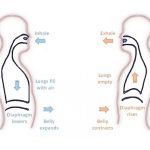
The cornerstone of this control is diaphragmatic breathing. The diaphragm is a large, dome-shaped muscle located just below your lungs. When you inhale deeply and correctly, your diaphragm contracts and moves downwards, creating space for your lungs to expand. This movement pushes your abdominal organs slightly outward, which is why your stomach expands. On exhalation – when you sing – the diaphragm relaxes and moves upward, gently pushing air out. Proper diaphragmatic engagement ensures a stable, controlled airflow, preventing your upper body from tensing up.
A Quick Self-Test for Diaphragmatic Breathing:
Lie flat on your back, or sit up straight with relaxed shoulders. Place one hand on your chest and the other on your stomach. Take a slow, deep breath in through your nose. What do you notice? If your chest lifts or your shoulders rise, you’re likely engaging in shallow, upper-chest breathing, which often leads to tension. Your goal is for your stomach hand to rise significantly, and your ribs to expand outward, while your chest hand remains relatively still. This indicates your diaphragm is doing the heavy lifting, allowing your throat and neck to remain relaxed.
Clearing the Air: Common Breathing Myths Debunked
Many singers fall prey to popular misconceptions about breathing, often leading to frustration and vocal strain. Let’s clarify some pervasive myths:
- Myth: You Need to Push More Air to Sing Louder or Higher.
- Reality Check: While it feels intuitive to push harder, your body is incredibly efficient. Most singing, even at a powerful volume, requires relatively low subglottal pressure (5–35 cmH₂O). A good, deep inhale alone provides a natural recoil force of up to 30 cmH₂O without any strenuous muscle effort. The key isn’t brute force; it’s subtle control over the air you already have. Over-pushing creates tension, which is the enemy of a free and resonant voice.
- Myth: You Need Huge Belly Breaths for Proper Support.
- Reality Check: While relaxing your belly does allow for greater inhalation volume, useful for very long phrases in classical music, constantly over-inhaling can actually create more tension, especially for shorter, more agile phrases common in Contemporary Commercial Music (CCM). As Hooke’s Law suggests, the more you stretch something (like your lungs), the more effort it takes to control its recoil. Furthermore, excessively deep abdominal breathing can lower the larynx, which is desirable in some classical styles but detrimental to many CCM sounds. It’s about sufficient, not excessive, air.
- Myth: You Should “Sing from the Diaphragm.”
- Reality Check: This is perhaps the most common and misleading phrase in vocal instruction. The diaphragm is an involuntary muscle that relaxes during exhalation (singing). It helps you inhale, but it doesn’t “push” air out when you sing. Breath support relies on the conscious control of other expiratory muscles that subtly resist the natural collapse of your rib cage and manage the rate and pressure of air leaving your lungs. You can’t actively “sing from” it because it’s not directly involved in the push of singing.
The Supporting Cast: Key Muscles for Vocal Breath
Since the diaphragm primarily assists inhalation, where does the “support” come from during exhalation? It comes from a strategic, subtle resistance to the natural collapse of your thoracic cavity. This allows you to maintain steady, manageable airflow. Key trainable muscles involved in this nuanced support include:
- External Intercostals: These muscles between your ribs expand the rib cage during inhalation and resist its collapse during exhalation, helping to keep your chest open and prevent sagging.
- Pectorals: Your chest muscles play a role in maintaining chest stability, preventing it from collapsing too quickly.
- Latissimus Dorsi (Lats): These large back muscles provide crucial postural support and contribute to expiratory control, helping to stabilize your torso and manage the outward expansion and inward gentle contraction that supports your breath.
By understanding and engaging these muscles through targeted exercises, you shift from a passive “air reservoir” approach to an active “airflow management system.” For a broader perspective on how integrating these foundational breathing insights into a comprehensive exercise routine can elevate your vocal performance, you might explore how vocal breathing exercises can truly Boost your voice with breathing exercises.
Your Practical Playbook: Essential Breathing Exercises for Singers
Let’s put theory into practice with exercises that build real, tangible breath control for singing. Focus on consistency and mindful execution over speed or force.
- Diaphragmatic Breathing (Book-on-Stomach):
- Purpose: The foundational exercise to train true diaphragmatic breathing and isolate abdominal movement.
- Steps: Lie flat on your back, knees bent, with a light book placed on your stomach. Inhale slowly and deeply through your nose, focusing on making the book rise smoothly. Your chest should remain still. As you exhale, slowly release the air through gently pursed lips, controlling the book’s descent for 5-10 seconds. Feel a gentle engagement in your lower abdomen. Repeat 10 times.
- The Slow Inhale and Exhale:
- Purpose: Builds conscious awareness of air intake and release, improves stamina, and prevents tone wobbling.
- Steps: Inhale through your nose for a slow count of 4, feeling your ribs expand outward, not just upward. Hold the breath gently for 2 counts. Then, exhale slowly and evenly through gently parted lips for 6 counts. As you improve, gradually extend the exhale to 8 or even 10 counts, maintaining a consistent, steady stream of air. Imagine you’re exhaling through a tiny straw.
- Silent Inhalation:
- Purpose: Eliminates neck and throat tension, ensuring an open, relaxed throat for clean tone production.
- Steps: Breathe in through your mouth with a relaxed, open throat, as if you’re beginning a silent yawn. Let the air “fall in” quietly. You should feel a cool sensation at the back of your throat. Crucially, your chest should remain still; only your stomach and lower ribs should move. This prevents the common mistake of raising shoulders during inhalation.
- Sighing Exercise:
- Purpose: Teaches natural release of air and helps dissipate upper body tension.
- Steps: Take a deep, relaxed breath. Then, simply let the air fall out naturally on an unforced “ah” sound, without consciously shaping or pushing it. Allow your shoulders to drop and your entire upper body to relax as the air escapes. This reconnects you to the natural release of breath.
- 4-7-8 Breathing:
- Purpose: Excellent for breath control, increasing lung capacity, and sustaining vocals and airflow, and also calming the nervous system.
- Steps: Inhale quietly through your nose for 4 seconds. Hold your breath for 7 seconds. Then, steadily release the air through your mouth with a gentle ‘whooshing’ sound for 8 seconds. Repeat 4-5 times. This pattern trains your body in controlled retention and slow release.
- Hissing Exercise (“Sss” Drill):
- Purpose: Builds precise control and breath support strength by regulating consistent pressure; reveals any airflow leaks.
- Steps: Take a deep, diaphragmatic breath. Exhale slowly and steadily through a long, continuous “sss” sound, imagining air escaping from a tire. Your goal is a consistent volume and pitch for the hiss. Time how long you can sustain it smoothly, aiming to increase the duration over time without the sound wavering or becoming breathy. This is a direct measure of your breath support muscles’ endurance.
- Sustain a Note:
- Purpose: Builds vocal endurance and strengthens support for extended musical phrases.
- Steps: Take a deep, supported breath (diaphragm engaged, ribs expanded). Choose a comfortable pitch in the middle of your range. Sing that single note on an open vowel (e.g., “Ah” or “Oh”) at a steady, medium volume, avoiding any strain or wobbling. Hold it for as long as possible with consistent tone and air pressure. Gradually increase the duration as your breath control improves.
- “Shhh” Breath (Breath Resistance):
- Purpose: Strengthens the abdominal muscles and diaphragm by creating controlled resistance during exhalation.
- Steps: Inhale deeply. Exhale on a strong, steady “shhh” sound, similar to the hiss but with more resistance. Feel the engagement in your lower abdomen as you control the release. Maintain consistency in the sound for as long as you can. This is great for building the “appoggio” (lean/support) feeling.
- Straw Phonation Exercise:
- Purpose: Creates beneficial back-pressure that helps vocal cords vibrate more efficiently with less effort, making it easier to find steady breath support.
- Steps: Place the end of a regular drinking straw in your mouth. Hum or sing simple scales and melodies through the straw for 30–60 seconds. You’ll feel a gentle resistance, which helps balance the pressure above and below your vocal cords, improving phonation efficiency and making it easier to sustain notes without excessive breath.
- Messa di Voce (The “Message of the Voice”):
- Purpose: This advanced technique regulates subglottal pressure for exquisite dynamic control, teaching you to smoothly increase and decrease volume while maintaining stable cord closure and breath support.
- Steps: Choose a comfortable, sustained pitch in the middle of your range. Start singing the note very softly (pianissimo), then gradually and smoothly swell the volume to its loudest point (fortissimo), and then gracefully diminish it back to the softest volume, all on one breath. The entire process should be seamless, with no breaks or sudden changes in quality. This is the epitome of breath control and vocal artistry.
- Staccato Exercise to Improve Appoggio:
- Purpose: Trains your breath and abdominal muscles to respond with precision for vocal agility and complex melodic patterns, strengthening the “push” of support.
- Steps: Practice short, detached (staccato) exercises on a vowel sound like “ee” or “ah.” For each note, use a quick, controlled burst of air from your lower abdomen. Imagine a gentle “punch” from your core for each sound, quickly releasing the tension immediately after. This teaches your support system to be responsive and agile.
- Squats or Pliés on Ascending Phrases:
- Purpose: Anchors the body and naturally activates core and stabilizing muscles, providing a tangible feeling of support, especially on challenging high notes or leaps.
- Steps: When practicing a difficult ascending phrase or hitting a high note that feels unsupported, perform a light squat or plié (bending knees) as you sing. The physical exertion naturally engages your core, helping you feel how to “ground” your breath and prevent airy or strained high notes.
Mini Case Snippet: The “Winded Soprano”
Maria, a soprano, often struggled with long phrases and high notes, becoming visibly tense in her neck and shoulders. Her self-test revealed significant chest lifting. After incorporating the Diaphragmatic Breathing (Book-on-Stomach) and Silent Inhalation exercises for two weeks, she reported less neck tension and a clearer, more sustained tone, especially on her higher register. She started feeling her lower back and sides expand, rather than just her front, which gave her a sense of being “anchored” to her breath.
Daily Vocal Warm-Ups: Connecting Breath to Sound
Breathing exercises lay the foundation, but daily warm-ups connect that foundational breath work directly to your singing. A good 10-15 minute warm-up prepares your voice, improves tone, and prevents injury.
- The Lip Trill (Lip Bubble):
- Purpose: The ultimate coordination exercise. It keeps your vocal cords lightly connected, relaxes your lips and face, reduces tension throughout your vocal tract, and provides immediate feedback on steady airflow.
- Steps: Relax your lips. Exhale air through them so they vibrate, creating a “brrrrr” sound. Once you can sustain this, add your voice, sliding smoothly up and down your vocal range like a siren. If your lips stop trilling, it means your airflow is inconsistent. For assistance, gently place two fingers on your cheeks and push slightly towards your mouth to help the lips vibrate.
- The Slide Technique (Siren):
- Purpose: Seamlessly connects different parts of your vocal range, smoothing transitions between chest and head voice for a unified, flexible sound.
- Steps: Start on a comfortable note in your lower range. Smoothly glide your voice up to a higher note, then back down, mimicking a siren. Use a rounded vowel sound like “oo” or “ee.” The goal is to maintain consistent tone quality and air pressure throughout the entire slide, avoiding any breaks, pushing, or straining at the transition points.
- The Mmm-Ah Exercise for Resonance:
- Purpose: Bridges the gap between a hum (which often encourages forward resonance) and an open vowel, helping you carry that resonant feeling into your sung words.
- Steps: Begin by humming a comfortable note on a gentle “Mmm” sound, feeling the vibration prominently in your lips and the front of your face (this is “forward placement”). After holding the hum for a few seconds, smoothly open your mouth into an “Ah” vowel (as in “father” or “car”), trying to maintain that same resonant, buzzing feeling in the front of your face. This trains your voice to carry resonance even with an open mouth.
Expanding Your Vocal Range Safely
Expanding your vocal range, both higher and lower, is a journey of flexibility and control, not force. It happens gradually, over weeks or months, and relies heavily on consistent, gentle breath work and warm-ups. The extreme ends of your range are the most fragile and demand exceptional breath control. Pushing your voice to its limits without proper support is a fast track to vocal injury, like vocal nodes.
Exercises like lip trills and slides are invaluable here. They gently encourage your vocal cords to stretch and become more flexible without putting undue strain on them. When reaching for a higher note, focus on maintaining that supported breath, keeping your throat open, and imagining the sound floating upwards, rather than pushing it out. For lower notes, avoid “dropping” your breath or throat; keep the same foundational support. Patience is paramount, as is listening to your body: a slight stretch or new sensation is normal, but any pain is a clear warning sign to stop and re-evaluate your technique.
The Lasting Impact: Benefits of Consistent Breath Work
Dedication to these breathing and vocal exercises will transform your singing in profound ways:
- Effortless Sustain: You’ll find yourself able to hold long phrases with steady lungs and without running out of air.
- Dynamic Control: Naturally extended and consistent airflow allows you to experiment with volume, color, and phrasing without squeezing or pushing.
- Reduced Tension: When your breath supports your voice properly, your throat, neck, and jaw can relax, leading to a freer, more resonant tone.
- Vocal Protection: Most vocal strain stems from shallow inhalation or inconsistent airflow, forcing the throat to compensate. Consistent breath work acts as a shield, protecting your vocal cords from unnecessary stress and injury.
- Enhanced Performance: Onstage, consistent breath work calms your nervous system, allowing you to focus on performance and connection, knowing your vocal engine is reliable.
- Improved Tone & Pitch: A stable airstream ensures a steady pitch and a richer, more consistent vocal tone.
Quick Answers: Common Breathing Questions for Singers
Q: Why do I run out of breath so quickly when I sing?
A: You’re likely exhaling too much air too fast, or not taking a sufficiently deep, supported breath to begin with. The “Hissing Exercise” and “Slow Inhale and Exhale” will help you regulate and conserve air more effectively, teaching you to meter your breath.
Q: My voice sounds shaky sometimes. Is that a breath problem?
A: Often, yes. A shaky or wobbly tone (vibrato gone wild, or “tremolo”) is frequently a sign of inconsistent breath support. The air pressure underneath your vocal folds isn’t steady, causing them to vibrate erratically. Focus on “Sustain a Note” and “Slow Inhale and Exhale” to build a steady stream of air.
Q: Does good posture really impact my breathing for singing?
A: Absolutely. Good posture—shoulders relaxed, chest open but not pushed out, head balanced over spine—allows your diaphragm and lungs to move freely. Slouching restricts lung capacity and makes it harder for your support muscles to engage effectively. Stand tall and relaxed!
Q: How long does it take to see results from these breathing exercises?
A: You can often feel a difference in awareness and initial control within days or a week of consistent practice. Significant improvements in stamina, power, and vocal freedom typically take several weeks to a few months of dedicated, daily practice. Patience and consistency are your greatest allies.
Your Path to Powerful Singing: A Quick Start Guide
Mastering how to breathe while singing isn’t an overnight fix; it’s a journey of consistent, mindful practice. Start by integrating the self-test into your routine to ensure you’re engaging your diaphragm. Then, pick 2-3 exercises from the “Essential Breathing Exercises” list, such as the Diaphragmatic Breathing and Hissing Exercise, and practice them daily for 5-10 minutes. Follow this with a brief vocal warm-up like the Lip Trill.
The most crucial step is to pay attention to your body. Feel where the tension is, where your breath is moving, and how it impacts your sound. When a note feels hard or strained, always ask yourself: “Is this an air problem?” By consistently applying these principles and exercises, you’ll build the robust, reliable breathing foundation that every powerful vocal performance demands. Your voice isn’t just a talent; it’s a skill you can build, starting from the very air you breathe.

- Diaphragmatic Breathing for Singers Boosts Vocal Power and Prevents Strain - April 3, 2026
- Breathing Tips for Singing to Power Your Vocal Performance - April 2, 2026
- Vocal Breathing Techniques Improve Control and Stamina for Singers - April 1, 2026