Are you constantly running out of breath mid-phrase, struggling to hit those long, sustained notes, or feeling tension creep into your neck and shoulders when you sing? Mastering how to improve breath support for singing isn’t just about lung capacity; it’s fundamentally about gaining precise control over your diaphragm. This often-misunderstood muscle is the secret to unlocking a truly powerful, resilient, and effortless vocal performance.
Many singers, even experienced ones, fall into the trap of shallow breathing, relying on their chest and throat, which leads to a thin sound, limited range, and vocal strain. But with dedicated practice and a clear understanding of diaphragmatic control, you can transform your vocal delivery and prevent vocal fatigue. Let’s delve into how to cultivate that deep, unwavering support your voice craves.
At a Glance: Diaphragm Mastery for Singers
- Understand the Diaphragm: Learn its role as your primary breathing muscle for singing.
- Correct Poor Habits: Identify and replace shallow chest breathing with deep, abdominal support.
- Master Posture: Establish the physical foundation for optimal lung and diaphragm function.
- Practice Controlled Exhalation: Use exercises like hissing to manage airflow consistently.
- Build Stamina & Flexibility: Engage in dynamic drills to prepare for varied vocal demands.
- Prevent Strain: Ensure your breath, not your throat, is doing the heavy lifting.
Why Your Diaphragm is Your Voice’s Powerhouse
For singers, breathing is far more than just taking air in and letting it out. It’s the engine of your voice, the silent partner that determines sound quality, volume, and control. When you sing, you’re engaging in phonation, where air vibrates your vocal folds in the larynx to produce sound. The quality of that air, its pressure, and its steady release are directly managed by your diaphragm.
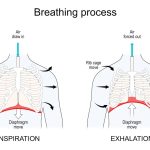
The diaphragm is a large, dome-shaped muscle located at the base of your lungs, separating your chest cavity from your abdomen. When you inhale deeply and correctly, your diaphragm flattens, drawing air down into the deepest parts of your lungs and causing your abdomen to expand outwards. This isn’t your belly “filling with air,” but rather your internal organs being gently pushed down and out by the descending diaphragm. On exhalation, the diaphragm relaxes and rises, pushing air out in a controlled manner. This conscious control over your diaphragm is the cornerstone of powerful, sustained, and strain-free singing.
Spotting the Signs: Are You Breathing Wrong?
Many everyday breathing habits are detrimental to singing. While normal breathing uses only about 5-10% of lung capacity, singing demands up to 50% or more, requiring a longer, steadier exhale and conscious awareness. If you experience any of the following, you’re likely not fully utilizing your diaphragm:
- Shoulders or Chest Rise: When you inhale, your shoulders elevate, or your chest visibly lifts. This indicates shallow, clavicular breathing, which doesn’t fill the lungs adequately.
- Running Out of Breath: You find yourself gasping for air between phrases or unable to sustain notes as long as you’d like. This is a clear sign of insufficient breath support and control.
- Vocalizing from the Throat: Your voice feels tight, strained, or you experience hoarseness after singing. This often happens when the throat and neck muscles compensate for a lack of diaphragmatic support.
- Limited Vocal Range or Power: Your voice lacks resonance, volume, or you struggle to reach higher notes without forcing them. A powerful voice is a supported voice.
- Poor Posture: You slump, hunch your shoulders, or jut your chin forward. This restricts lung expansion and diaphragm movement, making proper breathing almost impossible.
Ignoring these signs can lead to unnecessary tension, limited vocal range, and even vocal injury. The good news is that these are habits you can change, starting now.
Building Your Foundation: Core Principles for Diaphragm-Driven Singing
Before diving into exercises, establish the fundamental conditions for effective breath support. These principles ensure your body is ready to engage the diaphragm efficiently.
1. Optimize Your Posture: The Gateway to Open Airways
Your posture is the silent conductor of your breath. Slouching restricts your diaphragm’s movement and compresses your lungs, making deep breathing impossible.
- Actionable Steps:
- Stand tall with your feet shoulder-width apart, weight slightly forward (on the balls of your feet).
- Allow your knees to be soft, never locked.
- Relax your shoulders, letting them fall back and down naturally. Avoid hunching or elevating them.
- Lift your chest slightly, as if a string is gently pulling it upwards. This creates maximum space in your chest cavity.
- Keep your chin parallel to the ground, head balanced over your spine.
- Release any tension in your jaw, neck, and throat.
- Why it Helps: This posture maximizes space for your lungs to expand and allows your diaphragm to flatten unhindered. It releases tension in the upper body, which is crucial for free airflow and a relaxed throat.
2. Relax Your Upper Body: Let Go of Tension
Tension is the enemy of breath support. When your shoulders, neck, or jaw are tight, they try to take over the work of breathing, leading to strain.
- Actionable Steps:
- Consciously scan your body before and during singing. Are your shoulders hiking up? Is your jaw clenched?
- Gently roll your shoulders back and down. Shrug them up to your ears and then let them drop, feeling the release.
- Loosen your jaw by letting it hang slightly open or gently massage your jaw muscles.
- Imagine your upper body is light and floating, while your lower body (from the diaphragm down) is grounded and supportive.
- Why it Helps: A relaxed upper body ensures that your diaphragm and abdominal muscles are doing the primary work of breath management, preventing compensatory tension in your throat and freeing your vocal cords to vibrate naturally.
3. Focus on Abdominal Expansion: Not Chest Lifting
This is the core of diaphragmatic breathing. The movement should be outward and downward, not upward.
- Actionable Steps:
- Place one hand on your chest and the other on your stomach (fingers over your belly button).
- Inhale deeply through your nose, focusing on making your lower hand move outwards as your belly expands. Your upper hand (on your chest) should remain relatively still.
- Visualize your diaphragm flattening, drawing air into the deepest part of your lungs, rather than just the top.
- Exhale slowly through your mouth, feeling your abdomen gently contract inward.
- Why it Helps: This direct feedback helps you distinguish between shallow chest breathing and deep diaphragmatic breathing. It trains your body to use the correct muscles for inhalation.
For a broader understanding of how all types of vocal breathing exercises contribute to overall vocal health and power, explore a comprehensive resource like Singers’ vocal breathing guide.
The Diaphragm Control Playbook: Exercises for a Resonant Voice
Now, let’s put these principles into practice with targeted exercises designed to strengthen your diaphragm and improve your breath control. Consistent daily practice, even for just 10-20 minutes, will yield significant results.
1. Mastering the Diaphragmatic Breath: The Foundation
This exercise directly trains you to engage your diaphragm for deep inhalation and controlled exhalation.
- Actionable Steps (Standing):
- Assume proper posture (relaxed shoulders, elevated chest, feet shoulder-width).
- Place one hand on your stomach, just below your ribs, and the other lightly on your chest.
- Inhale slowly and deeply through your nose. Feel your stomach expand outwards, pushing your lower hand out. Your chest hand should move minimally.
- Exhale slowly through your mouth, letting out a gentle sigh or “ahhh” sound. Feel your stomach gently draw back in.
- Repeat 10-15 times, focusing solely on the outward expansion of your abdomen, not an upward lift of your chest.
- Actionable Steps (Lying Flat – Alternate):
- Lie flat on your back on the floor, placing a light book on your stomach.
- Inhale deeply, making the book rise as your abdomen expands.
- Exhale slowly, watching the book fall.
- This position naturally encourages diaphragmatic breathing because gravity assists.
- Why it Helps: This foundational exercise teaches you to isolate and feel the diaphragm’s movement, making it second nature for singing.
2. The Hissing Sound: Precision Breath Control
This exercise is excellent for developing a steady, controlled exhale, crucial for sustained notes and even phrasing.
- Actionable Steps:
- Sit or stand in proper posture, with a hand on your stomach to monitor diaphragm movement.
- Inhale deeply and silently through your nose, feeling your diaphragm flatten and abdomen expand.
- As you exhale, grit your teeth slightly and create a long, steady “ssssssssssssssss” sound. The sound should be consistent in volume and air pressure, without wavering.
- Focus on engaging your abdominal muscles to maintain the steady flow, resisting the urge to collapse your chest.
- Continue the hiss until you are completely out of breath, feeling your core muscles gently contract to squeeze out the last bit of air.
- Advanced Hissing with Metronome:
- Set a metronome to a comfortable tempo (e.g., 60-80 bpm, 4/4 time).
- Inhale for 4 counts.
- Exhale (hiss) for 4 counts. Repeat several times.
- Inhale for 4 counts.
- Exhale (hiss) for 8 counts. Repeat.
- Inhale for 4 counts.
- Exhale (hiss) for 12 counts. Repeat.
- Inhale for 4 counts.
- Exhale (hiss) for 16 counts. Repeat.
- Gradually work towards inhaling for fewer counts (e.g., 2, then 1) while increasing your exhalation duration. Take deep, normal breaths between sets to avoid lightheadedness.
- Why it Helps: The hiss provides immediate auditory feedback on air consistency. It strengthens your abdominal muscles and diaphragm by forcing them to work against resistance, improving both stamina and control over your airflow without the distraction of vocal sound. A higher-pitched hiss further engages these abdominal muscles.
3. Bouncy Hissing: Diaphragm Flexibility and Agility
This exercise helps with dynamic breath control, useful for quick phrases, staccato notes, or sudden volume changes.
- Actionable Steps:
- Assume proper singing posture.
- Inhale deeply using your diaphragm.
- As you exhale with a “sssss” sound, create short, sharp “bounces” by quickly contracting and releasing your abdominal muscles. Think of it like a rapid internal pump.
- The sound should be interrupted by these quick abdominal contractions, creating an “s-s-s-s-s-s” effect.
- Start slowly, then gradually quicken the bounces, maintaining a controlled outward movement of your abdomen on the “s” and a quick inward bounce.
- Why it Helps: This trains your diaphragm and abdominal muscles to be flexible and responsive, preparing them for faster-paced song sections and varied vocal dynamics.
4. The Straw Phonation Exercise: Focused Breath Channeling
Often called SOVT (Semi-Occluded Vocal Tract) exercises, this simple tool can dramatically improve breath focus and vocal resonance.
- Actionable Steps:
- Get a regular drinking straw (or a narrower coffee stirrer for more resistance).
- Place the straw in your mouth and inhale normally.
- Hum or make an “oooo” sound through the straw, starting at the bottom of your vocal range and sliding up to higher notes, then back down.
- Focus on maintaining a steady, even airflow through the straw. You’ll feel a slight back-pressure that helps to balance your vocal cords.
- Fun Twist: Hum through the straw into a glass of water, half-full. Aim to blow consistent bubbles, without sputtering or running out of air too quickly. Adjust the depth of the straw for more or less resistance.
- Why it Helps: The resistance of the straw concentrates your breath, forcing you to use consistent diaphragmatic support. It helps you focus on controlled breathing, keeping your face and body still, and can reduce tension in the throat.
5. Yawning Exercise: Relax and Strengthen
Yawning is a natural way to relax vocal muscles and engage the diaphragm.
- Actionable Steps:
- Stand tall and relaxed.
- Breathe in and out slowly, feeling your abs and ribs expand.
- Induce a yawn, stretching your face and mouth muscles wide. As you yawn, feel the deep inhale initiated by your diaphragm and the relaxed opening of your throat.
- Keep your chin level and minimize any head, neck, or shoulder movement.
- For advanced observation, lie flat with a light book on your abdomen and observe its movement during a deep yawn.
- Why it Helps: Yawning inherently relaxes vocal muscles, stretches the soft palate, and naturally encourages a deep, diaphragmatic breath. It helps strengthen the diaphragm and open the throat, improving resonance and ease of singing.
6. Feather or Candle Exercise: Visualizing Consistent Exhalation
This exercise provides immediate visual feedback on your breath stream.
- Actionable Steps:
- Hold a light feather (or a small piece of tissue paper) at arm’s length, or light a candle.
- Take a deep, diaphragmatic breath.
- Exhale with a steady, consistent stream of air, aiming to keep the feather suspended in the air or the candle flame bending gently and steadily without flickering excessively or going out too quickly.
- Observe your abdominal muscles. They should gradually draw inward as you exhale, supporting the breath, while your chest remains steady and relaxed.
- Why it Helps: This visual cue helps you regulate and sustain a smooth, even breath stream, which is vital for long phrases, high notes, and maintaining consistent vocal tone.
Beyond Exercises: Everyday Habits for Sustainable Breath Support
Mastering diaphragmatic control extends beyond dedicated practice time. Integrating these habits into your daily life reinforces the techniques and protects your voice.
What to Avoid for Better Breath Management
- Don’t Strain to Sing Louder: True volume comes from efficient breath support, not forcing air from your throat or yelling. If you need more volume, engage your diaphragm more actively.
- Don’t Ignore Warning Signs: Gravelly, croaky, or hoarse sounds are signals that your technique needs adjustment. Stop, reassess your posture, breath intake, and diaphragmatic engagement.
- Avoid “Running on Empty”: Don’t try to squeeze out notes when your breath is depleted. Plan your breaths, even in conversation, to maintain a consistent reservoir of air.
- Breathe Through Your Nose (Often): While singing involves mouth breathing, nose breathing in daily life helps filter air, warm it, and naturally encourages deeper, diaphragmatic breaths.
Integrating Breathwork into Your Day
- Mindful Breathing: Take moments throughout your day to consciously check in with your breath. Are you breathing shallowly from your chest? Gently re-engage your diaphragm for a few deep breaths.
- Warm-ups are Non-Negotiable: Dedicate 10-20 minutes daily to vocal warm-ups, including breathing exercises. This builds vocal elasticity, removes mucus, and strengthens breathing muscles, reducing the risk of injury.
- Protect Your Voice: On performance days, consider minimizing unnecessary talking to conserve vocal energy. Ensure you’re hydrated.
Your Breath Support FAQs: Clearing Up Common Doubts
Q: Why does my upper chest still move a little when I do diaphragmatic breathing? Is that wrong?
A: A slight, natural expansion of the rib cage is normal and healthy, as your lungs expand in all directions. The key is that your primary expansion should be in your abdomen, and your shoulders and upper chest should not be lifting or tensing. If your chest is visibly heaving, you’re likely still relying too much on shallow breathing.
Q: I feel lightheaded during these exercises. What should I do?
A: Feeling lightheaded can happen when you’re taking in more oxygen than your body is used to. If this occurs, stop the exercise immediately. Take a few normal, gentle breaths, perhaps even sitting or lying down. Gradually ease into the exercises, taking breaks as needed, and don’t push yourself to hold breaths for too long initially. Consistency over intensity is key.
Q: Can singing from my diaphragm hurt my voice?
A: No, quite the opposite! Singing with proper diaphragmatic support is the healthiest way to sing. It reduces strain on your vocal cords and throat, prevents tension, and allows your voice to function optimally. The goal is always to use your diaphragm effectively to support your voice, not to force or strain it.
Q: How long does it take to see results?
A: Like any muscle training, it varies. You might notice small improvements in breath control and stamina within a few weeks of consistent daily practice. Significant changes in vocal power and endurance often take several months of dedicated effort. Be patient, stay consistent, and trust the process.
Your Next Steps to Diaphragm Mastery
Improving breath support for singing through diaphragm control is a journey, not a destination. It requires consistent effort, mindful practice, and a willingness to unlearn old habits.
- Start with Posture: Before any breath exercise, ensure your posture is aligned and relaxed. This is non-negotiable.
- Feel the Diaphragm: Practice the basic diaphragmatic breathing exercise (standing or lying) daily until you consistently feel the outward abdominal expansion on inhale.
- Master the Hiss: Incorporate the basic and metronome-paced hissing exercises to build steady, controlled exhalation.
- Integrate Variety: Add bouncy hisses, straw phonation, and the feather/candle exercise to develop agility and fine-tune your breath.
- Listen to Your Body: Pay attention to tension, lightheadedness, or vocal fatigue. Adjust your practice as needed.
- Make it a Habit: Integrate short breathing check-ins and exercises throughout your day, not just during dedicated practice time.
With diligent practice, you’ll unlock a deeper, more resonant voice, extend your breath capacity, and perform with newfound confidence and ease. Your diaphragm is waiting to become your greatest vocal ally.