Are you one of the 60% of vocalists experiencing preventable strain annually? The truth is, mastering proper singing technique isn’t just about sounding better; it’s about building resilience, preventing long-term damage, and truly unlocking your voice’s full, healthy potential. Without a foundational understanding of how your body, breath, and vocal cords interact, even the most talented voices risk fatigue, hoarseness, and limited expression.
This isn’t about natural talent alone—studies show 97% of people can learn to sing in tune. It’s about skill, precision, and consistent application of proven methods. Let’s delve into the techniques that transform an ordinary voice into an extraordinary, enduring instrument.
At a Glance
- Protect Your Instrument: Learn how mandatory warm-ups, cool-downs, and vocal rest safeguard against common strain.
- Master Your Foundation: Discover the direct link between posture, alignment, and resonant sound production.
- Breathe Like a Pro: Understand diaphragmatic breathing as the core energy source for powerful, controlled singing.
- Shape Your Sound: Refine tone, resonance, and diction for clearer, more impactful vocal delivery.
- Navigate Your Range: Gain strategies for seamlessly connecting vocal registers and expanding your singing capabilities.
- Build a Sustainable Routine: Develop effective daily practice habits and leverage tools for continuous improvement.
The Unseen Foundation: Vocal Health and Preparation
Before you even sing a note, the health and preparedness of your vocal instrument are paramount. Neglecting this step is like trying to run a marathon without stretching—it guarantees sub-optimal performance and risks injury.
The Non-Negotiable Warm-Up: Think of vocal warm-ups as your voice’s essential pre-flight check. They dramatically improve vocal quality and prevent strain by gradually increasing blood flow to your vocal folds, relaxing muscles, and enhancing flexibility. Skipping them is a direct path to preventable issues.
- Your Warm-Up Blueprint: Dedicate at least 10 to 15 minutes. Start with gentle humming exercises, focusing on soft, low-pitched sounds. Gradually expand your range. Simple techniques like the yawn-sigh (a gentle inhale followed by a relaxed, sighing exhale) or lip trills (blowing air through relaxed, vibrating lips) are highly effective. The key is gentle progression; avoid sudden loud or high-pitched sounds.
Cooling Down is Not Optional: Just as warm-ups prepare your voice, cool-downs help it recover. Use similar light vocal exercises—gentle hums or light descending scales—to ease your voice back to a resting state, helping to keep your singing voice strong and resilient.
Strategic Vocal Rest and Recovery: Treat your voice like an athlete treats their body. Deliberate recovery periods are essential for maintaining optimal vocal health and preventing fatigue. Pushing your vocal limits without proper rest isn’t a sign of dedication; it’s a fast track to long-term damage. If something hurts, you’re doing it wrong. Don’t force your voice to do something it doesn’t want to do, as it will only slow your progress or cause strain.
Nourish Your Voice: Consistent hydration is fundamental. Drink plenty of water throughout the day. A diet rich in lean protein and vegetables also supports overall vocal health, ensuring your body has the building blocks for vocal resilience.
Posture and Alignment: Your Body as a Resonator
Your physical alignment isn’t just about looking good on stage; it’s an essential element for superior vocal performance that profoundly impacts sound production. Proper posture enables better blood circulation, reduces unnecessary physical stress, and allows you to produce stronger, more resonant sounds with less effort. This is one of the fastest and easiest ways to improve your singing voice.
Finding Your “Singer’s Stance”:
- Feet First: Stand with your feet apart at shoulder width. This provides a stable base.
- Stack Your Core: Ensure your shoulders are aligned with your hips, and your hips are aligned with your feet. This creates a vertical column of support.
- Lifted Chest: Keep your chest comfortably lifted, avoiding leaning backward or forward. You want openness, not rigidity.
- Soft Knees: Allow your knees to bend slightly. This keeps you grounded and flexible, preventing tension.
- Relaxed Arms: Let your hands and arms hang naturally at your sides.
Be mindful of your body alignment during daily activities, not just when you’re actively singing. Consistent practice builds muscle memory.
Head, Neck, and Jaw: Releasing Tension for Freedom: Tension in these areas chokes your sound. - Level Head: Keep your head level and your chin straight—not pointing up or down. When singing higher notes, consciously think “down” to prevent your chin from lifting, which often constricts the throat.
- Loose Jaw, Free Lips: Your jaw should move freely with whichever vowel you’re singing. Tightening lips or protruding your jaw can impair singing. Try this: speak a phrase, observing how vertically your jaw opens. Now, sing that same phrase, allowing your jaw to open to the same height.
- Relaxed Throat and Tongue: The larynx (voice box) and tongue are common tension zones.
- Larynx Check: Gently feel your larynx between your thumb and forefinger while singing. If it rises or feels tight, consciously try to allow it to stay relaxed and low.
- Tongue Check: Gently feel the muscles underneath your chin with your thumb while singing. If they feel tense, actively try to relax them.
Breath Management: The Engine of Your Voice
Diaphragmatic breathing, often called “breath support,” is the “secret weapon” of professional singers. It’s the fundamental energy that drives vocal performance, allowing for a steady, controlled stream of breath rather than forceful pushes of air. This is the opposite of singing from your throat, which is inefficient and damaging.
Activating Your Diaphragm:
- Hand Placement: Stand in front of a mirror and place your hands on both sides of the bottom of your stomach.
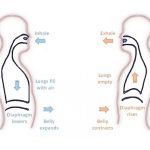
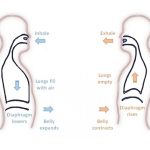
- Inhale Expansion: Open your mouth slightly and inhale, allowing the breath to expand your stomach outward. Imagine filling a balloon in your belly.
- Exhale Control: As you exhale, allow the breath to bring your stomach gently back in.
- No Shoulder/Chest Movement: Crucially, ensure there is no movement in your shoulders or chest. This confirms you’re breathing from your diaphragm, not shallowly from your upper chest. Prioritize airflow directly to your vocal cords.
For a broader understanding of how these foundational elements, including breath control, integrate into a comprehensive approach to vocal mastery, you can delve into our guide on Elevate your voice and control.
Sharpening Your Breath Control with Exercises:
- Farinelli Breathing Exercise: Set a metronome to 60 BPM. Inhale a low breath from the diaphragm for 4 counts, hold for 4 counts, then exhale for 4 counts. Gradually increase the count (e.g., to 5, then 6) in subsequent rounds, stopping if you feel winded. This builds sustained breath power.
- The Scared Breath: This exercise helps you take a quick, silent diaphragm breath on stage. Imagine you’re scared but cannot make a sound. Take a quick, silent inhale with your diaphragm, feeling your stomach expand outwards instantly and quietly.
Vocal Production and Tone: Shaping Your Unique Sound
Once your body is aligned and your breath is managed, it’s time to sculpt the sound itself. This involves understanding and manipulating your vocal tone, resonance, and articulation.
Crafting a Strong, Vibrant Tone: Your goal is a full, clear sound.
- Combatting Breathy Singing: If your tone sounds breathy or light, it indicates your vocal cords aren’t fully coming together, preventing a strong sound.
- Actionable Step: Pick a breathy phrase. Speak it at a strong volume, as if projecting to the back of an auditorium. Then, “speak-sing” the words on pitch like a robot, aiming for that same strong, projected “Chest Voice” quality.
- Avoiding Nasal Singing: This occurs when your vocal tone resonates behind the soft palate, in the nasal cavity.
- Actionable Step: Select a phrase you suspect might be nasal. Gently pinch your nose and sing it. If you feel significant vibration (apart from ‘n’ and ‘m’ consonants, which are naturally nasal), try to direct the sound more out of your mouth.
Harnessing Resonance: Resonance transforms an ordinary voice into a powerful, rich sound. It involves harnessing your body’s natural acoustic chambers—chest, throat, and facial cavities—to enhance vocal quality and projection, amplifying your unique sound. Experiment with feeling vibrations in different parts of your head and chest.
Diction: The Unsung Hero: Clear articulation (diction) is what separates good singers from extraordinary ones. It transforms raw sound into meaningful musical communication, allowing you to tell the song’s story with precision. - Actionable Step: Practice playful exercises like tongue twisters, but also systematic vowel exercises. Focusing on distinct vowel sounds (like “ee,” “ah,” “oh”) helps develop muscle memory, pronunciation clarity, and promotes resonance and breath control.
Singing Higher (Without Yelling): Belting is about projecting high notes with as much strength as lower notes, but without yelling or straining. This is often achieved by adding a healthy amount of “press” (controlled vocal fold compression). - Actionable Step: Use a “Cry” sound. Sing a high note on the word “Mum” with a sad, crying quality. This helps relax the larynx and makes hitting higher notes feel more accessible and less forced.
- Falsetto: This lighter, breathier voice exists just beyond your usual vocal range, stretching the limits of your head voice. Strengthen it through targeted exercises that focus on agility and control in this upper register.
Navigating Your Vocal Registers: Seamless Transitions
A vocal register is a series of notes in your voice that share a consistent sound and vibratory pattern in the vocal folds. Understanding and smoothly transitioning between these registers is critical for vocal flexibility and range.
Your Vocal Landscape (Lowest to Highest): Vocal Fry, Chest Voice, Head Voice, Whistle Register.
- Chest Voice: These are the notes at the bottom of your range, produced by short, thick vocal folds vibrating strongly, giving a robust, projected sound.
- Actionable Step: Use the 5-Tone Count exercise: “speak-sing” the note in a 5-Tone major arpeggio, feeling the resonance primarily in your chest.
- Head Voice: The vocal register above the chest voice, produced by long, stretched vocal folds vibrating faster, creating a breathy, fluty sound for high notes.
- Actionable Step: Sing a narrow “ee” vowel (as in “fever”) on a descending octave arpeggio (e.g., starting on a high B4 for guys or C#5 for girls). This helps engage the head voice without pushing.
- Mixed Voice (Mix): This is the holy grail for many singers, connecting your chest and head voices together. It allows you to hit high notes with power without sounding breathy or straining, and it’s key to fixing vocal breaks (the “cracks” in your voice). For male singers, negotiating the vocal break between chest and head voice is a major challenge, and the mixed voice is the solution.
- Actionable Steps: Use the “Gee” exercise over a long scale, focusing on a smooth transition between registers. For specifically fixing vocal breaks, try the “bratty Nay” exercise, which encourages vocal fold compression across the break.
- Vocal Range Expansion: To expand how low or high you can sing, focus on strengthening your head voice for high notes and vocal fry for low notes.
- Actionable Step: Use the “ng” sound (like in “Rung”) on a long scale. While nasal, this exercise is highly effective in helping to increase your overall vocal range by encouraging vocal fold closure and resonance.
Musicality and Ear Training: Connecting Voice to Music
Singing in tune and with musical expression requires a keen ear and an understanding of musical structure.
Ear Training: Your Internal Tuner: The ability to hear a note and accurately sing it back is absolutely crucial for singing on pitch.
- Actionable Steps: Gently cup your fingers behind your ears while singing to hear your voice better and match the pitch of music. Humming along to melodies is also incredibly helpful for developing pitch accuracy.
- Learning an Instrument: Learning to play an instrument like the piano or guitar can significantly help train your ear and improve your musicality by creating a direct, tactile connection between what you play and what you hear.
Singing Intervals and Scales: Understanding the building blocks of music helps you navigate melodies with confidence. - Intervals: Learn to sing common musical intervals (the distance from one note to another) using the Italian Solfeggio system (Do, Re, Mi, Fa, So, La, Ti, Do).
- Examples: Major 2nd (Do-Re, think “Happy Birthday”), Major 3rd (Do-Mi, “When the Saints Go Marching In”), Perfect 4th (Do-Fa, “Here Comes the Bride”), Perfect 5th (Do-So, “Twinkle Twinkle Little Star”), Major 6th (Do-La, “NBC” theme), Major 7th (Do-Ti, A-Ha’s “Take on Me” chorus), Octave (Do-Do, “Somewhere Over the Rainbow”).
- Scales: Practice major and minor scales. The major scale starts on Do (Do, Re, Mi, Fa, So, La, Ti, Do), and the minor scale can be sung by starting on La (La, Ti, Do, Re, Mi, Fa, So, La).
The Artistry: Expressing Emotion and Style
Beyond the mechanics, singing is about connection and expression.
- Volume Control: Find your comfortable volume—loud enough for the entire audience to hear, without resorting to yelling or whispering. This requires fine-tuned breath support.
- Staccato Singing: This Italian term means to attack each note separately, giving the vocal folds extra compression and depth needed to hit high notes with more power.
- Actionable Step: Take a song phrase and sing the melody on the word “Bee,” attacking each “Bee” separately so the notes are punchy and distinct.
- Legato Singing: Meaning “singing smoothly,” this technique involves connecting lyrics seamlessly, often by emphasizing vowels rather than consonants while maintaining power.
- Actionable Step: To practice, take a phrase (e.g., “Stay with Me”), remove all consonants, and sing only the vowels (“Ay ih ee”). Then, add the consonants back in, maintaining that smooth, vowel-focused flow.
- Vibrato: A rapid, slight variation in pitch that adds warmth and expressiveness, making a note sound like it’s shimmering or shaking.
- Actionable Step: Use the Diaphragm Pulse exercise: gently place your index and middle fingers on your solar plexus (about two inches above your belly button), sing a sustained note, and gently pulse your diaphragm with your fingers.
- Vocal Runs & Riffs: These creative, often impromptu vocal embellishments are a string of notes hung together in a quick, punchy mix. They require significant skill and technique, built on a strong foundation of scales and agility.
- Emote: Properly conveying the emotions of a song is paramount. Understanding the lyrical content and the mood of the musical accompaniment is vital to communicating the ineffable through sound, turning a performance into an experience.
Your Practical Playbook: Learning and Practice Strategies
Consistent, intelligent practice is the bedrock of vocal improvement.
Build Your Daily Ritual: Create a daily practice routine of 30-60 minutes. Dedicate the first 30 minutes to 3-5 vocal exercises that specifically target your current vocal needs, then spend the remainder practicing a song, focusing on the difficult parts.
Leverage Learning Resources:
- Online Video Lessons: Helpful for beginners to grasp concepts but generally lack personalized feedback.
- Singing Courses/Apps: Offer a more organized, step-by-step, cumulative approach to vocal training and are often more accessible than private coaching.
- The Vocal Coach Advantage: Taking lessons with a qualified vocal coach is the single best way to learn. They provide personalized feedback, pinpoint weaknesses, and offer tailored solutions that accelerate your progress safely.
Cultivate Your Learning Environment: - Join a Choir: A fantastic way to start singing publicly with others, taking pressure off individual performance and building confidence.
- Join a Band: For those ready to perform originals or covers, it’s a great way to make music with others and deal with stage anxiety.
Refine Your Performance: - Memorize Lyrics: Thoroughly memorizing lyrics frees up your mental space, allowing you to focus entirely on your singing, conveying emotions, and telling the song’s story.
- Microphone Techniques: Practice singing with a microphone. The ideal position is typically 1 to 1.5 inches away from the center of the microphone ball (e.g., a Shure SM58) for clearer, brighter sound. Learn to work the mic to control dynamics.
- Choosing Songs Wisely: Select songs that fit your voice type and range, have an emotional connection for you, and demonstrate good vocal technique. Start with simple, well-known tunes (like “Happy Birthday”) to practice fundamental pitch control and breath support.
- Find Your Unique Style: While initial imitation is useful for learning, eventually branch out to develop your own unique vocal identity.
- Actionable Step: Use the “Mum” exercise (singing on the melody with a relaxed, natural “Uh” vowel) to find the natural, unforced sound of your voice.
- Get Inspired: Listen to great singers in your chosen genre, analyze their craft, and identify your own strengths as a performer, songwriter, or lyricist.
Quick Answers: Common Questions About Proper Singing Technique
Q: Is singing a talent or a skill?
A: Singing is primarily a learned skill, not just a talent. Studies show that 97% of people (those without tone deafness or “amusia”) can learn to sing in tune with proper technique and consistent practice. Talent might give some a head start, but skill and dedication are what truly elevate a voice.
Q: How long should I warm up before singing?
A: You should spend at least 10 to 15 minutes on vocal warm-ups before any performance or practice session. This gradually prepares your vocal folds and muscles, preventing strain and improving vocal quality.
Q: What’s the most important technique for a beginner?
A: For beginners, establishing proper posture and mastering diaphragmatic breathing (breath support) are the absolute foundational elements. These two techniques provide the stability and power needed for all other vocal development.
Q: Can I hurt my voice by singing incorrectly?
A: Absolutely. Pushing vocal limits without proper technique, neglecting warm-ups, or forcing your voice to do something it resists can lead to vocal strain, hoarseness, nodules, or other long-term damage. If something hurts, stop and reassess your technique.
Your Path Forward
Mastering proper singing technique is an ongoing journey, not a destination. It requires patience, diligence, and a commitment to understanding your unique instrument. Start by prioritizing vocal health, establishing a strong physical foundation, and mastering diaphragmatic breathing. Incorporate targeted exercises for tone, range, and musicality into a consistent daily practice. Remember, slow, steady improvement—guided by informed practice—is the only sustainable path to a truly elevated and enduring voice.

- Voice Breathing Exercises Build Stronger Support for Your Singing - March 26, 2026
- How to Increase Lung Capacity for Singing and Improve Vocal Stamina - March 25, 2026
- Breathing during Singing Techniques Elevate Your Vocal Performance - March 24, 2026