The health and strength of your voice aren’t just for professional singers or performers. If you talk for a living – whether you’re a teacher, presenter, lawyer, or even a busy parent – a consistent vocal routine is your secret weapon for preventing strain, improving clarity, and maintaining stamina. Neglecting your voice is like skipping warm-ups before a workout: it puts you at risk for fatigue, hoarseness, and even long-term injury.
This guide dives deep into building an effective daily vocal routine, designed to keep your everyday speaking voice robust, resilient, and ready for anything.
At a Glance
- Protect Your Instrument: Understand why your voice, a physical system of muscles and tissue, needs regular conditioning.
- The Four Pillars: Master foundational warm-ups, pitch flexibility, breath support, and resonance techniques.
- Actionable Exercises: Learn simple, effective drills you can do anywhere, often in just minutes.
- Prevent Strain: Discover how a consistent routine combats vocal fatigue, hoarseness, and potential injury.
- Tailored Practice: Get tips for customizing your
vocal routineto fit your specific daily demands and goals.
Beyond the Stage: Why Your Daily Voice Demands a Routine
Most of us don’t think of our voice as a muscular system that needs training, but it absolutely is. Every word you speak, every conversation you have, relies on a complex interplay of breath, vocal cords, and articulators. Just like any muscle group, your vocal mechanism performs better when it’s warmed up, used correctly, and consistently maintained. For anyone who uses their voice heavily—be it a call center worker on back-to-back calls, a coach projecting across a field, or an actor rehearsing lines—this isn’t a luxury; it’s a necessity.
Ignoring regular vocal care can lead to uncomfortable and often debilitating issues. You might experience persistent hoarseness, chronic vocal fatigue that makes even simple conversations feel like a chore, or a tight, strained sensation in your throat. Over time, these symptoms can escalate into more serious vocal cord problems, potentially requiring extensive rest or even medical intervention. Regular vocal exercises, the cornerstone of any good vocal routine, are your frontline defense, preventing strain, maintaining vocal strength and flexibility, and improving overall vocal efficiency. They are also critical for recovery from existing voice problems and for preventing long-term issues, equally relevant for adults and teens alike. For a broader understanding of how daily practice can transform your voice, you might want to explore how to Improve voice with daily workout, which provides a holistic perspective on vocal training.
The good news? You don’t need fancy equipment or hours of dedicated time. Many highly effective exercises can be done at home, often taking just a few minutes each day. The key is consistency and understanding why each exercise matters.
Building Blocks: Essential Vocal Warm-Up Exercises
Think of a vocal warm-up as preparing your voice for battle—or at least, for a busy day of speaking. These exercises are crucial for reducing tension, improving airflow, and encouraging healthy, gentle vocal cord vibration right from the start.
Releasing Tension: Lip and Tongue Trills
Tension is the enemy of a healthy voice. It constricts your throat, jaw, and neck, forcing your vocal cords to work harder than they should. Trills are fantastic for breaking down this tension.
- Lip Trills (Lip Buzzing):
- Why: These magical little buzzes reduce vocal cord effort by creating a gentle back pressure, supporting a smooth sound, and melting away tension in the throat, jaw, and neck. They also do wonders for improving breath coordination.
- How: Let your lips rest as loosely as possible, almost floppy. Relax your jaw completely. Inhale calmly and steadily through your nose. Now, gently blow air out through your lips, allowing them to vibrate or “buzz,” making a soft “brrr” sound. The key is ease; keep it quiet and effortless for 10-20 seconds, then take a short rest. Once you’re comfortable, you can start varying the pitch, gliding smoothly up and down your comfortable range.
- Expert Tip: If your lips struggle to trill, gently pull up the corners of your mouth with your index fingers to give them a bit more stability. The goal is flow, not force.
- Tongue Trills:
- Why: Just like lip trills, tongue trills are superb for releasing tension, but they specifically target the tongue and jaw. A relaxed tongue allows your voice to move freely, improving control and enhancing the coordination between your airflow and the sound you produce.
- How: Allow your jaw to drop slightly, ensuring it stays completely relaxed. Place the tip of your tongue lightly behind your top front teeth. Now, blow air out gently, letting your tongue flutter naturally. Maintain a light, steady sound for 10-15 seconds. If you feel any tension creeping into your jaw or throat, stop, reset, and start again with even less effort.
- Scenario: A teacher, constantly speaking loudly, found that incorporating 30 seconds of lip and tongue trills before class significantly reduced her end-of-day throat tightness. “It’s like my voice wakes up without the stiffness,” she reported.
Gentle Awakening: Humming and Sighs
Once tension is released, it’s time to gently awaken the vocal cords and introduce sound.
- Gentle Humming:
- Why: Humming is an incredibly low-impact way to increase blood flow to your vocal cords, providing a gradual, gentle warm-up. It also encourages forward resonance, which means the sound vibrates in your face rather than getting stuck in your throat, reducing pressure and making your voice feel effortless.
- How: Keep your lips gently closed, jaw relaxed. Inhale calmly through your nose. Hum softly on a comfortable, easy pitch. Focus on feeling a pleasant vibration in your lips, cheeks, or nose. Sustain this for 20-30 seconds. This is not about volume; it’s about sensation and warmth. This exercise also doubles as an excellent resonance-building practice.
- Analogy: Think of humming as giving your vocal cords a warm, comforting blanket before they have to do any heavy lifting.
- Sighing on Vowels:
- Why: Many people tend to start speaking with a “hard” or “pressed” vocal onset, where the vocal cords slam together too forcefully. This can irritate and inflame the cords. Sighing on vowels encourages a relaxed throat and a smooth, gentle onset of sound, which is much healthier.
- How: Take a comfortable breath in through your nose. Gently release sound on an open vowel like “ah” or “oo,” letting the pitch naturally fall downward, as if you’re letting out a contented sigh. Keep the sound soft and easy, focusing on the lack of effort at the beginning of the sound. Repeat this 5-10 times.
- Clarification: This isn’t a stressed sigh; it’s a relaxed release of breath and sound.
Navigating Your Range: Pitch and Flexibility Drills
A flexible voice can move smoothly across different pitches without cracking, pushing, or feeling tight. These exercises train the coordination needed for seamless pitch changes, preventing strain during varying vocal demands.
Smooth Glides: Vocal Sirens and Octave Slides
These exercises are fantastic for getting your voice to “stretch” and “flex” without abrupt breaks.
- Vocal Sirens (Chromatic Scale Sirens):
- Why: Sirens dramatically improve vocal cord flexibility, allowing your voice to adjust smoothly to different pitches. This reduces those awkward cracks, strains, and breaks often felt when trying to hit higher or lower notes. They also act as diagnostic tools, highlighting areas where you might be holding tension.
- How: Start on a low, comfortable pitch that feels effortless. Slowly glide your voice smoothly upward to a higher, comfortable pitch, then glide back down, continuously. Use relaxed, open sounds like “oo,” “ee,” or simply hum. Repeat this 5-8 times. For chromatic sirens, focus on sliding through every single semitone—the smallest possible step between notes—without any bumps or skips. This reveals exactly where your register breaks might be and helps you map areas needing more practice.
- Expert Insight: Many vocalists find that “M” or “NG” sounds on sirens help keep the resonance forward and prevent throat engagement.
- Octave Slides:
- Why: Octave slides specifically teach your voice how to shift between vocal registers (e.g., chest voice to head voice) smoothly, reducing tension that often occurs during these transitions and improving overall vocal balance.
- How: Begin on a low, comfortable pitch. Slide smoothly up exactly one octave (eight notes), then slide back down equally slowly. Use an easy, sustained vowel sound like “oh” or “ah.” Focus on the smoothness of the transition, avoiding any “gear changes” or sudden jumps. Repeat 3-5 times.
- Case Snippet: A public speaker noticed their voice often cracked when they tried to raise their pitch for emphasis. Consistent octave slides helped them bridge that gap, making their transitions seamless and powerful.
Precision and Control: Five-Note Scales and Interval Training
Building strength and accuracy in smaller, controlled movements is vital for overall vocal stability.
- Five-Note Scales:
- Why: These short scales improve the intricate coordination between your breath, vocal cords, and the sound you produce. By keeping pitch movements small, you maintain vocal stability without forcing anything, which gradually builds endurance and reliability in your voice.
- How: Choose an easy, comfortable starting pitch. Move up five notes, then back down. Use relaxed, light sounds like “ma,” “na,” or “oo” at a moderate, conversational volume. Repeat this pattern a few times, then take a brief rest. If you feel any tightening in your throat, lower your starting pitch.
- Practical Tip: Use a piano or a vocal app to ensure you’re hitting the notes accurately.
- Interval Training on Vowels:
- Why: This practice directly builds pitch accuracy and sharpens your ear-to-voice coordination. It helps you precisely target and land specific notes.
- How: Using a piano, keyboard, or even a pitch-matching app as a reference, sing specific intervals (like a third, a fifth, or an octave) on a sustained vowel such as “ah” or “oh.” The goal is to land each new pitch cleanly and confidently. Start with smaller, easier intervals and gradually work up to wider ones. Recording yourself and listening back is an invaluable way to track your improvement and identify areas needing more attention. This disciplined practice directly strengthens your ear’s precision in hearing and reproducing target pitches.
Foundational Harmony: Major Scale Practice
The major scale is a fundamental building block for all pitch work.
- Major Scale Ascending and Descending:
- Why: This is foundational pitch training that translates directly to cleaner intonation, not just in singing but in overall speech clarity. It trains your voice to maintain a consistent, open tone across a full scale.
- How: Sing the full major scale up and then back down on a single, open vowel like “ah,” “ee,” or “oh.” After completing one scale, move your starting pitch up by a half step and repeat the process. Focus on keeping your tone open, forward, and consistent throughout the scale. Pay particular attention to the top note of each scale, as this is often where pitch tends to waver or tension can sneak in.
- Quick Check: Is your jaw relaxed? Is your sound feeling “free” or “stuck”? Adjust as needed.
The Engine Room: Breathing and Support Exercises
Your voice is powered by breath. Proper breath support is the engine that prevents your throat and vocal cords from overworking, allowing them to vibrate freely and efficiently.
Core Power: Diaphragmatic Breathing
This is arguably the most crucial exercise for vocal health.
- Diaphragmatic Breathing:
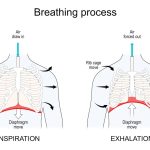
- Why: This technique, often called “belly breathing,” dramatically reduces strain on your throat by shifting the workload to your diaphragm and abdominal muscles. This allows your vocal cords to vibrate freely and efficiently, leading to better stamina, a steadier and richer sound, and significantly less vocal fatigue. It is, quite simply, the engine behind all effective breath support.
- How: Lie down on your back first, as it helps you feel the movement. Place one hand gently on your chest and the other on your belly. Breathe in slowly and deeply through your nose, focusing on letting your belly expand outward while your chest stays mostly still. As you exhale slowly and fully, feel your belly gently contract. Repeat this for 1-2 minutes, really connecting with the movement. Once comfortable lying down, practice it standing, maintaining the same belly expansion and contraction. Dedicate at least 5 minutes per session to truly integrate this habit.
- Analogy: Think of your breath as the fuel and your diaphragm as the pump. A strong, consistent pump ensures a steady supply of fuel to your voice.
Sustained Power: Hissing and Pulsed Breaths
These exercises build control and endurance in your breath release.
- Sustained Hissing (S or Z):
- Why: This exercise specifically improves breath consistency and prevents the common habit of “pushing” sound from the throat. The “Z” sound adds a gentle vocal cord vibration, effectively connecting breath support directly to vocalization. Both variations build the essential muscles for sustaining long phrases without running out of air or straining.
- How: Take a deep, diaphragmatic breath in through your nose. Slowly release the air using a long, steady “S” sound, maintaining an even stream of air for as long as possible. Then, repeat the exercise using a sustained “Z” sound, which engages your vocal cords gently. Aim to sustain the sound for 30-60 seconds or even longer, focusing on the evenness of the airflow.
- Expert Tip: If your “S” or “Z” wavers, it indicates your breath support isn’t perfectly steady. Focus on tightening your core gently as you release the air.
- Pulsed Breathing Exercises:
- Why: These exercises are excellent for preventing breath-holding and keeping your voice responsive and agile. They are particularly useful for those who tend to feel tight or rushed when speaking, helping to create a relaxed, controlled burst of air.
- How: Take a comfortable, relaxed breath in. Now, release short, controlled bursts of air, using sounds like “ha” or “ss.” Keep your throat completely relaxed and focus on the abdominal muscles providing the “pulse” of air. Repeat 5-10 times.
Linking Breath to Voice: Phrase Breathing on Scales
This exercise bridges the gap between breath control and actual vocal use.
- Phrase Breathing on Scales:
- Why: This exercise directly connects breath control to sustained vocal output, training your body to maintain robust breath support under performance-like conditions. It teaches you to manage your breath economically.
- How: Sing a five-note scale pattern on a single breath. The goal is to inhale fully with good diaphragmatic support and aim to finish the entire scale with a comfortable amount of breath still to spare. Once you’re consistent with five notes, gradually extend the phrase length to seven, nine notes, or even a full octave. Throughout the exercise, concentrate on releasing your breath evenly and consistently throughout the entire phrase, rather than letting it all out at the beginning. Pay attention to areas where your breath might run thin and apply this awareness to actual speaking or song phrases in your daily life.
Clarity and Ease: Resonance and Articulation Builders
Resonance is about where your voice vibrates and how it sounds. Shifting sound vibration forward into your mouth and face makes your voice clearer, easier to use, and drastically reduces throat tension.
Bringing Sound Forward: Forward Resonance Hums and Nasal Sounds
These exercises are all about placing the sound in the sweet spot.
- Forward Resonance Hums:
- Why: These hums actively reduce vocal cord effort and throat tension by encouraging the sound to resonate in the facial bones and nasal cavity. This improves tone quality and helps your voice carry better without you needing to push volume from your throat. They are commonly employed in vocal therapy for promoting vocal efficiency and comfort.
- How: Gently close your lips and relax your jaw. Take a calm breath in through your nose. Hum softly on a comfortable pitch, focusing intently on feeling the vibration in your lips, cheeks, or the bridge of your nose for 20-30 seconds. The sensation should be a pleasant buzz, not a strained effort.
- Nasal Sounds (M, N, NG):
- Why: The sounds “M,” “N,” and “NG” (as in “sing”) naturally place resonance in the front of your face and nasal cavity. This is an incredibly effective way to reduce throat strain and improve overall vocal clarity. These sounds are particularly helpful if your voice often feels stuck, weak, or overly breathy.
- How: Use each sound distinctly: “mmm,” “nnn,” or “nggg.” Keep the sound gentle, steady, and sustained for 20-30 seconds. Focus on feeling the vibration strongly around your nose and lips. The “NG” sound, specifically, is a powerful tool for accessing and developing “head resonance,” which makes your voice sound brighter and more effortless.
- Straw Phonation:
- Why: Straw phonation is a scientifically proven technique that significantly improves vocal cord efficiency and helps reduce swelling. By creating a semi-occluded vocal tract (SOVT), it balances air pressure above and below the vocal cords, allowing them to vibrate smoothly and with minimal impact. This makes it an invaluable exercise for combating vocal fatigue, addressing hoarseness, and aiding in vocal recovery.
- How: Place a narrow straw (a coffee stirrer or cocktail straw works well) between your lips. Inhale through your nose. Gently make sound through the straw, keeping it light and steady. You can hum, slide pitches up and down, or even sing simple melodies through it for 30-60 seconds. The back pressure from the straw will make your vocal cords vibrate more easily.
Speaking with Precision: Exaggerated Vowel Shapes
Clear articulation isn’t just about consonants; vowels play a huge role.
- Exaggerated Vowel Shapes:
- Why: When mouth movements are small or tight, your voice has to work much harder for others to understand you. This compensatory effort often leads to throat tension and vocal fatigue as you try to push the sound louder. Exaggerating vowel shapes physically opens your mouth more, allowing sound to resonate naturally and improving clarity without added vocal effort.
- How: Look in a mirror and consciously over-articulate each vowel sound: “eee,” “ayyy,” “ahhh,” “ohhh,” “oooo.” Really stretch your lips, drop your jaw, and shape your mouth fully for each. Do this slowly, feeling the movement and observing the shape your mouth makes. Then, try speaking simple phrases using this exaggerated articulation. You’ll likely feel a greater engagement of your jaw and lip muscles, but less tension in your throat. This trains your articulators for greater flexibility and precision in everyday speech.
- Mini-Example: Instead of a lazy “hello,” try “Hah-LOH,” emphasizing the full shape of each vowel sound.
Crafting Your Personal Vocal Routine: A Practical Playbook
The best vocal routine is one you’ll actually do consistently. It should fit your lifestyle and your vocal demands.
Daily Checklist: Integrate Vocal Care Throughout Your Day
- Morning Wake-Up (5-10 minutes):
- Start with gentle diaphragmatic breathing to center yourself.
- Move into lip trills and tongue trills to release any morning tension.
- Follow with gentle humming for a soft warm-up and to encourage forward resonance.
- A few sighs on vowels will ensure a relaxed onset for your first words of the day.
- Before Heavy Voice Use (10-15 minutes):
- If you’re about to give a presentation, teach a class, or sing, run through a more comprehensive warm-up.
- Include vocal sirens and five-note scales to engage your full range.
- Add sustained hissing/Z sounds to build breath support for longer phrases.
- Consider straw phonation for optimal vocal cord efficiency.
- Short Breaks/Voice Resets (1-2 minutes):
- Throughout a busy day, squeeze in quick resets. A few lip trills or forward resonance hums can instantly ease tension.
- Pulsed breathing can re-energize your breath support.
- Take a moment to check your posture and jaw tension.
Customization Tips for Your Vocal Routine
- Listen to Your Body: Your voice will tell you what it needs. If an exercise feels strained or causes discomfort, stop. Modify it, make it gentler, or skip it for the day. Vocal health is about ease, not effort.
- Consistency Over Intensity: Ten minutes of mindful practice every day is far more beneficial than an hour once a week. Build a habit, even if it’s short.
- Track Your Progress: Keep a simple journal or use a voice recording app. Notice how your voice feels at the start and end of the day. Do you sound clearer? Do you feel less fatigued? This feedback loop motivates and helps you adjust your routine.
- Hydration is Key: While not an exercise, drinking plenty of water throughout the day is non-negotiable for vocal health. Moist vocal cords vibrate more easily and are less prone to injury.
Red Flags: When to Seek Professional Help
A vocal routine is preventative and strengthening, but it’s not a cure-all. If you experience persistent hoarseness (more than two weeks), pain when speaking, loss of voice, or a significant change in vocal quality, consult an Ear, Nose, and Throat (ENT) doctor, preferably one specializing in voice, or a speech-language pathologist. Early intervention is crucial for vocal health.
Quick Answers to Common Vocal Routine Questions
Q: How long should my daily vocal routine be?
A: For most everyday voice users, 5-15 minutes of focused warm-ups and exercises is a great starting point. If you use your voice professionally and extensively, you might opt for 15-20 minutes, broken up throughout the day. The most important factor is consistency.
Q: Can I skip warm-ups if I’m just speaking and not singing?
A: Absolutely not! Your speaking voice uses the same intricate musculature and vocal cords as your singing voice. Just like you wouldn’t go for a run without stretching, you shouldn’t launch into a day of heavy speaking without preparing your vocal instrument. Skipping warm-ups significantly increases your risk of vocal fatigue, strain, and potential injury.
Q: What if I don’t have much time for a full vocal routine?
A: Prioritize! Even 2-3 minutes of gentle lip trills, humming, and diaphragmatic breathing can make a huge difference. Focus on releasing tension and establishing good breath support. You can always integrate quick “micro-routines” throughout your day during short breaks.
Q: Are there any special tools I need for a vocal routine?
A: Not necessarily. Most exercises rely only on your body. However, a narrow straw for straw phonation is highly recommended, and a piano, keyboard, or a pitch-matching app can be helpful for pitch-related exercises like scales and interval training. Beyond that, the most important “tool” is your conscious awareness and intention.
Q: How do I know if I’m doing the exercises right?
A: The primary indicators are comfort and ease. If an exercise causes pain, strain, or excessive effort, you’re likely doing it incorrectly or pushing too hard. Listen to your body. Recording yourself can also provide objective feedback on your tone, consistency, and whether you’re hitting pitches accurately. Focus on relaxing your throat, jaw, and neck throughout.
Taking Your Vocal Health to the Next Level
Implementing a consistent vocal routine is a long-term commitment, but the payoff is immense: a stronger, healthier, more resilient voice that serves you well in every conversation and presentation. It empowers you to communicate effectively without discomfort, ensuring your vocal instrument remains clear and reliable for years to come.
For those looking to integrate movement and music into their vocal training, resources like Cheryl Porter’s “BOOM! THE BIG 10!” offer structured, high-energy vocal workouts. These 10 music-driven, movement-based sessions are designed for all levels, focusing on quickly improving stamina, flexibility, and control. They’re short, fun, repeatable, and accessible online, providing a dynamic way to practice consistently anywhere, anytime. Whatever path you choose, remember that intentional, daily care is the bedrock of lasting vocal health. Start small, stay consistent, and your voice will thank you.

- A Vocal Routine for Stronger Healthier Everyday Speaking - April 13, 2026
- Daily Voice Workout To Improve Your Vocal Quality And Stamina - April 12, 2026
- Mastering Breathing and Voice Boosts Your Singing Control and Stamina - April 11, 2026