You’ve felt it before: that frustrating moment mid-phrase when your breath gives out, your note wavers, or your voice feels thin. It’s a common stumbling block for singers, stemming not from a lack of vocal talent, but often from insufficient breath support. Mastering dedicated voice breathing exercises isn’t just about taking deeper breaths; it’s about building an internal engine that provides unwavering power, control, and stamina for every note you sing.
This isn’t a quick fix, but a foundational skill. By consistently integrating specific breathing techniques into your routine, you’ll unlock a new level of vocal freedom, protect your delicate vocal cords, and sustain those challenging melodies with ease.
At a Glance: How Breathing Exercises Transform Your Voice
- Deepen Your Resonance: Learn to access full lung capacity for a richer, more vibrant tone.
- Boost Stamina & Control: Sustain notes longer and navigate complex phrasing without running out of air.
- Prevent Vocal Strain: Protect your voice by providing steady, adequate airflow, acting as a cushion for your vocal cords.
- Enhance Agility & Dynamics: Gain the precision to sing both delicate pianissimos and powerful fortissimos, as well as rapid-fire passages.
- Calm Performance Nerves: Utilize breath as a tool for physical and mental relaxation before stepping into the spotlight.
- Improve Posture: Develop a body awareness that supports optimal airflow and an open vocal tract.
The Unseen Engine: Understanding Your Vocal Breath Support
Think of your voice as a sophisticated wind instrument. Just like a trumpet needs a steady, controlled stream of air to produce a clear, sustained note, your voice relies on precise airflow to create sound. Without this controlled support, your vocal cords strain, your tone wavers, and your musical phrases fall short.
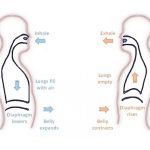
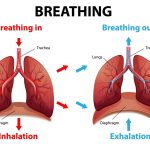
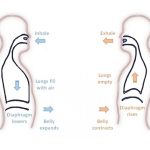
At the heart of vocal breathing is your diaphragm. This large, dome-shaped muscle sits below your lungs, and it’s your primary muscle for breathing. Engaging your diaphragm means your belly and lower ribs expand on inhalation, drawing air deep into your lungs, rather than relying on shallow chest breaths that create tension. This technique, known as diaphragmatic breathing, is crucial because it provides the stable airflow and efficient use of lung capacity that singers desperately need.
Beyond the diaphragm, the pressure beneath your vocal cords, called subglottic pressure, is vital. This pressure allows you to manage volume and sustain notes without pushing or straining. When you execute voice breathing exercises correctly, you strengthen the muscles responsible for creating and regulating this pressure, giving you fine-tuned control over your sound.
For a broader perspective on how these fundamental concepts collectively enhance your singing, explore our pillar article: Boost your voice with breathing.
Your Practice Playbook: Foundational Voice Breathing Exercises
These exercises are the building blocks. Practice them daily, even for just a few minutes, to retrain your body for optimal vocal support.
1. Diaphragmatic Breathing: The Foundation
This is where it all begins. It teaches your body to breathe deeply and efficiently, engaging the diaphragm rather than the upper chest.
- Purpose: To train true diaphragmatic engagement and establish stable airflow.
- Steps:
- Posture: Sit or stand tall, shoulders relaxed, back straight but not stiff.
- Hand Placement: Place one hand on your chest and the other on your abdomen, just above your navel.
- Inhale: Take a slow, deep breath through your nose. Focus on making only the hand on your abdomen rise outward. The hand on your chest should remain still or move minimally.
- Exhale: Release your breath slowly and steadily through your mouth. Feel your stomach gently draw inward as the air leaves your body.
- Duration: Aim for a steady inhale and an even slower, controlled exhale.
- Variation (The Book Test): Lie on your back with a light book resting on your stomach. As you inhale, make the book rise. As you exhale, control its slow descent, aiming for 5-10 seconds. This provides immediate visual feedback for diaphragmatic movement.
2. Slow Inhale & Extended Exhale (4-7-8 Adaptation)
This exercise significantly improves lung capacity and teaches you to release air evenly and consistently, essential for sustained notes.
- Purpose: Increases lung capacity, enhances breath control for sustained vocals, and teaches smooth, even air release.
- Steps:
- Inhale: Take a quiet, diaphragmatic breath through your nose for a slow count of 4. Focus on deep expansion.
- Hold: Gently hold your breath for a count of 2 to 7 (find what’s comfortable without straining). This brief pause allows the breath to settle.
- Exhale: Slowly release the air through pursed lips (like blowing through a straw) or with a gentle ‘whooshing’ sound for a sustained count of 6 to 8. Control the release so it’s even, not a sudden burst.
- Practical Tip: Visualize a candle flame you’re trying to bend but not extinguish with your exhaled breath.
3. The Hissing Exercise (“Sss” Drill)
A powerful tool for building breath support strength and detecting “leaks” in your airflow.
- Purpose: Builds control and breath support strength, regulates air pressure, exposes airflow leaks, and strengthens abdominal muscles.
- Steps:
- Deep Breath: Take a full, diaphragmatic breath.
- Steady Hiss: Exhale slowly and steadily, producing a long, consistent ‘ssss’ sound. Keep the volume and intensity of the ‘s’ constant for as long as possible.
- Abdominal Engagement: Notice how your abdominal muscles engage to push the air out. Try to prolong the duration of the hiss with each repetition.
- Benefit: This exercise immediately reveals if your breath stream is steady or if you’re releasing air too quickly. If your hiss wavers or runs out abruptly, it signals a need for more controlled exhalation.
4. The Panting Exercise
Develops diaphragm agility and control over short, precise bursts of air, crucial for fast lyrical passages.
- Purpose: Strengthens diaphragm agility and teaches control over short bursts of air for fast phrases.
- Steps:
- Relaxed Stance: Stand straight, shoulders relaxed, and jaw loose.
- Quick Breaths: Take quick, shallow breaths in and out through your mouth, mimicking a ‘panting’ sound, like a dog.
- Diaphragm Focus: Ensure the movement comes primarily from your diaphragm (your belly moving in and out), not your chest or throat.
- Duration: Continue for about 30 seconds, maintaining controlled, even panting.
- Application: This helps you learn to “sip” air quickly between short phrases without gasping, preparing you for agile vocal runs.
5. Practice Controlled Breathing (Pursed Lips / Straw Phonation)
These methods provide gentle resistance, encouraging steady, efficient airflow and a healthy vocal cord connection.
- Purpose: Improves breath control and phrasing, regulates pressure, helps vocal cords vibrate efficiently with less effort, and encourages steady airflow.
- Pursed Lips Steps:
- Inhale: Inhale quietly through your nose, expanding your diaphragm and ribcage.
- Exhale: Exhale slowly through tightly pursed lips (as if blowing through a tiny hole), focusing on a controlled and steady release of air for as long as possible without straining.
- Straw Phonation Variation: Hum a gentle “oo” or sing simple scales (like a 5-note scale up and down) through a regular drinking straw for 30-60 seconds. This creates back pressure that gently massages the vocal cords and promotes balanced breath support.
6. Sustain a Note / Sustain and Release Drill
This exercise directly applies breath control to vocalization, building endurance for longer phrases.
- Purpose: Builds endurance, strengthens support for extended phrases, and teaches smooth transitions between sounds.
- Steps:
- Deep Breath: Take a deep, diaphragmatic breath.
- Hum: Release your breath while humming a gentle “mmm” on a comfortable mid-range pitch for 5-10 seconds. Feel the vibration in your mask (lips, nose).
- Open Vowel: Without letting the airflow or tone change, smoothly open your mouth into an open vowel like “Ah” (as in ‘father’).
- Sustain: Hold the “Ah” note for as long as you can maintain a steady tone and even airflow, without forcing.
- Goal: The transition from hum to vowel should be seamless, proving your breath support is consistent.
7. The Silent Inhalation
Often, singers unconsciously tense their throat during inhalation, impacting vocal quality. This exercise addresses that directly.
- Purpose: Removes neck and throat tension before singing, opening the throat for a cleaner tone.
- Steps:
- Relax: Relax your jaw, neck, and shoulders.
- Open Throat: Breathe in through your mouth with a relaxed, open throat, almost as if you’re beginning a yawn. Let the air “fall in” quietly on its own, without conscious effort to pull it.
- Feel: You should feel the cool air going directly to your diaphragm, not catching in your throat.
8. The Sighing Exercise
A simple yet effective way to release physical and mental tension, which can restrict breath and vocal freedom.
- Purpose: Teaches release and helps alleviate tension in the upper body, throat, and jaw.
- Steps:
- Inhale Deeply: Take a full, relaxed diaphragmatic breath.
- Sigh: Let the air fall out of you naturally in a gentle, unforced sigh on an “ah” sound. Don’t try to shape or push the sound; just let it happen.
- Benefit: This helps reset your breath and body, reminding you that singing should feel natural and effortless.
9. The “Four Corners” Breath
This visualization technique encourages a more complete and even expansion of your rib cage, increasing lung capacity.
- Purpose: Helps draw air into all areas of the ribs for more even expansion and better support.
- Steps:
- Visualize: Imagine your rib cage as a box with four distinct corners: upper right, upper left, lower right, and lower left.
- Even Expansion: As you inhale, mentally direct the air to expand each of these “corners” evenly. You should feel a sense of expansion in your back and sides, not just the front of your belly.
- Tip: Placing your hands on your lower ribs can help you feel this lateral expansion.
10. The “One-Breath Challenge”
A dynamic exercise that directly applies breath control to singing, offering measurable progress.
- Purpose: Trains exhale management, phrasing, and focus, and serves as a measurable progress indicator.
- Steps:
- Choose a Phrase: Select a simple melody or a few lines of a song you know well.
- One Breath: Take one deep, diaphragmatic breath and attempt to sing the entire phrase or melody on that single breath, maintaining consistent tone and support.
- Increase Complexity: As your control improves, gradually add longer or more complex lines, challenging your endurance and phrasing.
- Tracking: Record yourself to hear how your breath holds out and where you might need more control.
Beyond Basics: Advanced Breath Control Techniques for Performance
Once you’ve mastered the foundational exercises, you can begin to apply breath control to more nuanced vocal demands.
- Building Breath Support for Dynamic Control: This is about actively managing subglottic pressure. Practice sustaining a comfortable note (on a hum or open vowel). Gradually increase your volume from very soft to medium loud, then decrease it back to soft, all while keeping the pitch steady and the airflow consistent. The diaphragm should remain engaged, controlling the release of air rather than pushing with the throat.
- Messa di Voce (Message of the Voice): This classic exercise exemplifies advanced breath control. Choose a sustained pitch in your comfortable range. Start pianissimo (very softly), smoothly swell the sound to its fortissimo (loudest) point, and then smoothly diminish back to pianissimo, all on one breath and without any wavering in pitch. This requires immense control over your breath mechanism to regulate the subglottic pressure precisely.
- Staccato Exercise to Improve Appoggio: Appoggio refers to the coordinated support of the breath mechanism. Practice short, disconnected (staccato) notes on a clear vowel like “ee” or “ah.” For each note, engage your diaphragm with a quick, precise burst of air. This trains your breath to respond instantly and efficiently for agile, complex melodic patterns, ensuring each note has strong, independent support.
Troubleshooting Your Breath: Common Pitfalls and Solutions
Even with the best intentions, singers often fall into breath habits that hinder their progress.
- Mistake: Shallow Chest Breathing: This is when your shoulders rise and fall significantly, and your breath doesn’t feel deep.
- Solution: Return to Diaphragmatic Breathing (with the book test). Focus on lateral rib expansion with the “Four Corners” breath.
- Mistake: Overfilling the Lungs: Trying to inhale too much air can cause tension and a breathy, unfocused tone.
- Solution: Focus on efficient, full lung use, not just “more” air. The 4-7-8 breathing teaches balanced capacity.
- Mistake: Pushing Air Too Quickly: Blasting air out can throw off pitch, create a breathy sound, and strain vocal cords.
- Solution: The Hissing Exercise and Pursed Lips/Straw Phonation are excellent for regulating and controlling the steady release of air.
- Mistake: Loud or Noisy Inhalation: Often a sign of tension in the throat or neck.
- Solution: Practice the Silent Inhalation. Focus on a relaxed, open throat and letting the air “fall” in gently.
Sustaining Your Progress: Actionable Insights for Singers
Building strong breath support is a journey, not a destination. Consistent, mindful practice is your greatest asset.
- Consistency is Key: Short, daily sessions (even 5-10 focused minutes) are far more effective than occasional, lengthy, and frustrating practices. Make it a non-negotiable part of your daily routine, like brushing your teeth.
- Listen to Your Body: A slight feeling of stretch or engagement in your core is normal. However, stop immediately if you feel any pain, tightness, or discomfort in your throat, neck, or chest. Pushing through pain can lead to vocal injury.
- Safe Range Expansion: Your vocal range will expand naturally and safely as your breath support improves, reducing strain. It’s a gradual process that relies on gentle, consistent effort, not forcing.
- Track Your Progress: Consider recording yourself weekly. You might not notice subtle improvements day-to-day, but listening back to recordings over time will reveal tangible gains in stamina, control, and tone quality. A stopwatch can also help you track how long you can sustain a hiss or a note.
Your Questions Answered: Voice Breathing Exercise FAQs
Q: How often should I practice voice breathing exercises?
A: Daily practice is ideal. Even 5-10 focused minutes a day will yield better results than one long session once a week. Consistency builds muscle memory and strengthens your diaphragm.
Q: Can I overdo breathing exercises?
A: Yes, if you push too hard, hold your breath for too long, or create tension. Always listen to your body. Breathing exercises should feel like a gentle workout for your core, not a strain on your throat or head. If you feel dizzy or lightheaded, stop and rest.
Q: What’s the main difference between “chest breathing” and “diaphragmatic breathing”?
A: Chest breathing is shallow; your shoulders and upper chest rise, providing limited air and often leading to tension. Diaphragmatic breathing (also called belly breathing) engages your diaphragm, allowing your abdomen and lower ribs to expand, drawing air deep into your lungs for maximum capacity and stable support. For singers, diaphragmatic breathing is essential.
Q: How quickly will I see results from these exercises?
A: You might notice subtle improvements in breath awareness and stamina within a few weeks of consistent daily practice. Significant changes in vocal control, endurance, and tone quality typically emerge over several months. Like any muscle training, it requires patience and dedication.
Building Your Vocal Foundation, Breath by Breath
The journey to a strong, supported singing voice begins and ends with your breath. By committing to these voice breathing exercises, you’re not just practicing a technique; you’re building a resilient foundation for every note, every phrase, and every performance. Embrace the process, listen to your body, and observe how your voice blossoms with newfound control and freedom. Your vocal future is literally in your hands—and your diaphragm.

- Voice Breathing Exercises Build Stronger Support for Your Singing - March 26, 2026
- How to Increase Lung Capacity for Singing and Improve Vocal Stamina - March 25, 2026
- Breathing during Singing Techniques Elevate Your Vocal Performance - March 24, 2026