Ever felt your voice waver on a sustained note, or your tone thin out when reaching for a high pitch? The secret to truly commanding your voice often lies not in your throat, but deep within your core: your breath. Mastering effective voice breathing techniques is the fundamental shift that transforms an aspiring singer into a vocal powerhouse, providing the support and stamina needed to truly express yourself without strain.
When you learn to harness your breath, you unlock a full, resonant sound, expand your range, and gain the precise control that defines a confident vocalist. This isn’t just about taking a deep breath; it’s about an integrated system of posture, muscle engagement, and controlled release that serves as the engine for every note you sing.
At a Glance: Your Pathway to Vocal Command
- Reimagine Your Breath: Discover how singing breath differs from everyday breathing, engaging up to 50% of lung capacity.
- Master Diaphragmatic Support: Learn the core technique for deep, supported breathing that powers your voice.
- Unlock Optimal Posture: Understand how simple adjustments dramatically enhance breathing efficiency and vocal freedom.
- Refine Airflow Precision: Utilize targeted exercises like the “hiss” to control breath release for sustained notes and nuanced phrasing.
- Avoid Common Pitfalls: Identify and correct habits that lead to tension, strain, and reduced vocal potential.
- Build a Daily Practice: Implement actionable steps to integrate these techniques into your routine for lasting vocal improvement.
The Invisible Engine: Why Voice Breathing Techniques Matter So Much
Think of your voice as a sophisticated wind instrument. Just like a trumpet needs a steady, controlled column of air to produce a clear note, your vocal cords rely entirely on the air pushed through them. Without robust, consistent breath support, your sound will be inconsistent, lacking in power, and prone to strain. This is why focused voice breathing techniques are non-negotiable for any serious singer.
Unlike the shallow, often unconscious breathing of daily life, which might use only 5-10% of your lung capacity, singing demands a conscious, concerted effort. It requires you to tap into up to 50% of your lung capacity, employing a longer exhale than inhale, and maintaining steady exertion. This fundamental difference means traditional breathing won’t cut it; you need specialized techniques to truly support your art.
Proper breathing isn’t just about volume; it’s the bedrock for:
- Sound Quality: A full, resonant tone free from breathiness or weakness.
- Vocal Control: The ability to execute intricate melismas, dynamic shifts, and sustained phrases.
- Broader Note Range: Reaching higher and lower notes with ease and stability.
- Accurate Pitch: Maintaining precise intonation throughout a song.
- Sustained Stamina: Singing longer without running out of breath or fatiguing.
- Advanced Techniques: Effortlessly executing vibrato and other vocal embellishments.
Building Your Foundation: Essential Voice Breathing Techniques
Let’s break down the core techniques that form the bedrock of excellent vocal breath control. These aren’t just exercises; they’re habits to integrate into your daily life and singing practice.
1. The Power of Posture: Your Vocal Blueprint
Before you even take a breath, your body’s alignment dictates how effectively you can do so. Poor posture can literally restrict your airflow and diaphragm movement, making every breathing exercise harder.
Why Posture is Your First Step
Correct posture isn’t about standing stiffly; it’s about creating an open, relaxed conduit for air. It:
- Maximizes Lung Capacity: By aligning your spine and opening your chest, you create maximum space for lung expansion. This allows for longer, more sustained notes.
- Facilitates Diaphragmatic Breathing: A relaxed, upright torso allows your diaphragm to move freely and fully.
- Reduces Tension: Slouching or tensing your shoulders creates unnecessary muscle tension, which can spread to your neck and jaw, hindering vocal production.
- Improves Airflow for Phrasing: An unobstructed path for air means smoother transitions and more controlled phrasing.
Actionable Steps for Optimal Posture
- Ground Yourself: Stand with your feet shoulder-width apart, distributing your weight evenly, perhaps slightly favoring the balls of your feet. Feel stable but not rigid.
- Release the Shoulders: Gently roll your shoulders back and down. Imagine them melting away from your ears. Never let them rise when you inhale.
- Elevate Your Chest, Gently: Your chest should feel open and lifted, not pushed out or stiff. This helps open your ribcage, allowing your lungs and breathing muscles to function optimally.
- Align Your Head: Keep your chin parallel to the ground, and imagine a string gently pulling the crown of your head towards the ceiling. This elongates your spine and aligns your larynx.
- Stay Flexible: Ensure your joints (knees, hips, neck) remain flexible, never locked. A slight bend in the knees can prevent tension.
- Avoid This: Straining your neck, slumping forward, or hunching your shoulders. These actions immediately restrict airflow and create vocal tension.
2. Deep from the Core: Mastering Diaphragmatic Breathing
This is the cornerstone of all effective voice breathing techniques. “Singing from the diaphragm” is a common phrase, but it often causes confusion. The diaphragm is an involuntary muscle, but you can create the right conditions for it to function optimally.
What Diaphragmatic Breathing Means for Singers
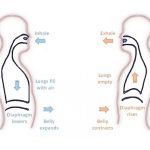
The diaphragm is a large, dome-shaped muscle sheath located below your lungs, separating the chest cavity from the abdomen. When you “breathe from your diaphragm,” you’re essentially allowing it to flatten as you inhale, pulling air deep into the bottom of your lungs. This action engages your core body muscles – those between your ribs, in your abdomen, and even in your back – to support and control the release of air.
This type of breathing is crucial because it:
- Supports Your Voice: Provides a steady, consistent airflow to the vocal folds, preventing a “run out of air” feeling.
- Increases Lung Capacity: Maximizes the amount of air you can take in, leading to longer phrases.
- Reduces Vocal Strain: Prevents you from pushing air from your throat or chest, which can damage your vocal cords.
The Diaphragmatic Breathing Exercise
- Assume Proper Posture: Stand or sit tall, shoulders relaxed, chest open.
- Hand Placement: Place one hand gently over your belly button and the other on your chest. This helps you monitor your breathing.
- Slow Inhale: Inhale slowly and silently through your nose. Focus on making your stomach expand outwards, pushing your bottom hand out. Your chest (top hand) should move minimally, if at all. Visualize your diaphragm flattening and your lungs filling from the bottom up.
- Controlled Exhale: Slowly exhale through your mouth, feeling your stomach gradually contract inwards. This release should be even and controlled, not a sudden collapse.
- Repeat and Refine: Repeat 10-15 times. Pay attention to avoiding any tension in your shoulders or chest. The goal is a relaxed, deep breath that feels like it originates in your lower abdomen.
- Expert Tip: Many vocal coaches compare the feeling to a balloon inflating in your lower abdomen, or a gentle expansion all the way around your waistline.
3. Preparing the Instrument: Warming Up Your Vocal Cords
Just as an athlete stretches before a race, a singer must warm up their vocal instrument. This isn’t strictly a breathing technique, but it’s an indispensable part of preparing the entire vocal system, including the muscles involved in breath support.
Why Warm-ups Are Critical
- Enhance Muscle Elasticity: Prepares the delicate vocal cords for vibration, improving flexibility and responsiveness.
- Clear Excess Mucus: Helps remove any buildup that could hinder clear vocal production.
- Reduce Injury Risk: The larynx and vocal folds are fragile; warming up prevents strain and potential damage.
- Build Breathing Muscle Strength: Gentle warm-ups can engage and strengthen the muscles used in efficient breath control over time.
Effective Warm-Up Steps
- Start Gently: Begin with low-impact exercises like humming or lip trills (blowing air through relaxed lips to create a “brrrr” sound). These are excellent for even breath release.
- Progress Systematically: Move to gentle scales or arpeggios on a “doo,” “mee,” or “mah” sound. Focus on maintaining consistent breath support.
- Target Specific Challenges: If you’re rehearsing a particular song, identify any challenging breathing sections or tricky vowel placements. Design short drills that focus on these areas.
- Consistency is Key: Even 15-20 minutes of daily warm-up can make a significant difference.
## Refining Your Airflow: Advanced Voice Breathing Techniques
Once you have a handle on foundational posture and diaphragmatic breathing, it’s time to fine-tune your control over air release. This is where precision in **voice breathing techniques** truly shines.
### 4. The Hissing Exercise: Your Airflow Metronome
The “hiss” is a deceptively simple yet incredibly powerful exercise for breath management. It removes the distraction of pitch and vocalization, allowing you to focus purely on the even, controlled release of air.
#### Purpose of the Hissing Exercise
* **Slows Breathing:** Encourages mindful, extended exhalation.
* **Aids in Voice Lowering (when required):** Builds the abdominal control needed to support lower registers without running out of air.
* **Focuses on Breath Support:** Without needing to produce a note, you can concentrate solely on engaging your core and diaphragm.
* **Teaches Even Air Release:** Develops the ability to release air at a consistent rate, crucial for sustained notes and long phrases.
#### Performing the Hissing Exercise
1. **Relaxed Position:** Sit, stand, or lie down in a comfortable, relaxed position, maintaining good posture. Place a hand on your stomach to monitor your breath.
2. **Deep Inhale:** Slowly inhale through your nose, filling your lungs deeply and feeling your diaphragm flatten and your abdomen expand.
3. **Controlled Exhale:** Lightly grit your teeth and use your tongue to create a low, constant “ssssssssss” sound. The key is to make this sound absolutely even in volume and intensity for as long as possible. Feel your abdominal muscles gently contract inwards as you maintain the hiss.
4. **Modification for Deeper Engagement:** For an advanced challenge, make the hiss a higher pitch by pushing air through a smaller mouth opening. You’ll likely feel a more pronounced engagement in your abdominal muscles as they work harder to maintain the pressure.
* **Scenario:** A singer struggling to hold a long, sustained note at the end of a phrase might use the hissing exercise to build the stamina and even air release needed to make that note ring out confidently.
### 5. Intentional Breath Management: Releasing Air Like a Pro
Breathing in is only half the battle; how you *release* the air dictates your vocal performance. Breath management is about conscious control and knowing how to prevent common mistakes that lead to vocal strain or a depleted sound.
#### The Goal: Controlled, Unbroken Airflow
Your primary objective is to release air in a steady, unbroken stream, much like water flowing from a gently opened faucet. This allows your vocal cords to vibrate consistently, producing a stable and clear tone.
#### Techniques to Actively Avoid
* **Straining for Volume:** Many singers try to sing louder by pushing more air from their throats or chests. Instead, focus on engaging your diaphragm more deeply and maintaining core support. True volume comes from resonance and efficient breath, not raw force.
* **Ignoring Warning Signs:** Gravelly, croaky, or airy sounds are your voice’s way of telling you something is off. Don’t push through them. They often indicate improper breath support or too much air pressure. Adjust your technique, re-engage your diaphragm, and support your voice.
* **”Yelling” on High Notes:** Reaching for high notes by forcing air from your throat leads to tension and potential vocal damage. Reclaim diaphragm control, support the note from your core, and allow the air to flow efficiently. The diaphragm should do the work, not your throat.
* **Pushing the Air Too Quickly:** Blasting air out rapidly can lead to a breathy tone, difficulty with pitch accuracy, and quickly running out of breath. The goal is a consistent *stream* of air, not a *gush*.
* **Analogy:** Imagine blowing a perfect bubble. You don’t blast air; you provide a slow, steady, controlled stream to expand the bubble gradually. Your voice works similarly.
## Common Breathing Mistakes and How to Correct Them
Even with the right intentions, singers often fall into common traps. Recognizing these can help you refine your **voice breathing techniques** faster.
### 1. Overfilling the Lungs
* **The Mistake:** Taking in too much air, creating excessive pressure in the chest. You might feel “stuffed” or uncomfortable.
* **The Consequence:** Leads to a breathy, unsupported tone because the body struggles to control the release of the overwhelming volume of air. It can also create tension in the chest and shoulders.
* **The Fix:** Focus on a *relaxed, deep* inhale rather than trying to fill every last corner of your lungs. Aim for a feeling of expansion in your lower abdomen and sides, not just a high chest rise. The simple breathing exercise (inhale 4, hold 2, exhale 6-8) is excellent for gauging appropriate air intake.
### 2. Shallow Chest Breathing
* **The Mistake:** Primarily lifting the chest and shoulders during inhalation, without engaging the diaphragm. Your belly moves very little.
* **The Consequence:** Causes tension in the neck, shoulders, and larynx, severely limits lung capacity, shortens vocal stamina, and prevents proper breath support.
* **The Fix:** Return to the diaphragmatic breathing exercise. Place one hand on your chest and one on your belly. During inhalation, your bottom hand should move significantly more than your top hand. Actively relax your shoulders and focus on expanding *outwards* and *downwards* rather than *upwards*.
### 3. Pushing the Air (Blasting)
* **The Mistake:** Forcing air out too quickly or with excessive force, especially at the beginning of a phrase.
* **The Consequence:** Can disrupt pitch, strain vocal cords, create a harsh or breathy attack, and lead to quickly running out of air.
* **The Fix:** Emphasize the *control* of the exhale. Use the hissing exercise to practice an even, steady stream. Imagine “sipping” the air out, rather than “blowing” it out. The goal is efficiency and consistency, not speed.
## Your Voice Breathing Playbook: Integrating Techniques into Practice
Now that you understand the core **voice breathing techniques**, let’s put them into a practical routine.
### Daily 5-Minute Breath Tune-Up
1. **Posture Check (1 min):** Stand tall, shoulders down, chest open, chin parallel. Feel grounded and relaxed.
2. **Diaphragmatic Awareness (2 min):** Place hands on belly/chest. Inhale slowly through the nose (4 counts), feeling belly expand. Exhale slowly through pursed lips (6-8 counts), feeling belly contract. Repeat 4-5 times, focusing purely on deep, low breath.
3. **Hissing for Control (2 min):** Inhale deeply from the diaphragm, then slowly release air with an even “ssssss” sound. Try to extend the hiss each day, keeping the volume consistent.
### Integrating into Vocal Practice
* **Pre-Song Routine:** Before singing any song, always perform a quick posture check and a few diaphragmatic breaths to center your body and mind.
* **Phrase Mapping:** When learning a new song, identify natural breathing points. Mark where you’ll inhale and where you’ll sustain. Avoid taking “catch breaths” mid-phrase unless absolutely necessary for dramatic effect.
* **”Singing Through” Notes:** Instead of just hitting a note, think about “singing through” it, maintaining that steady airflow and diaphragmatic support until the very end of the phrase. This prevents notes from deflating or becoming pitchy.
* **Listen to Your Body:** If you feel tension, shortness of breath, or vocal strain, pause. Re-evaluate your posture and breath support. Your body is giving you crucial feedback.
## Quick Answers to Common Voice Breathing Questions
### Q: Is the diaphragm an involuntary muscle? How can I “control” it?
**A:** Yes, the diaphragm is an involuntary muscle that works automatically for everyday breathing. However, by consciously engaging the muscles surrounding your diaphragm (your abdominal and intercostal muscles), you create the physical conditions that allow your diaphragm to descend further on inhalation and provide controlled resistance on exhalation. So, while you don’t directly “tell” the diaphragm what to do, you indirectly influence its function and optimize its effectiveness for singing.
### Q: How much air do I *really* need for singing?
**A:** It’s not about *how much* air, but *how you use it*. You need enough to support the phrase without running out, but not so much that you create excessive pressure (overfilling). A good rule of thumb is to take a breath that feels “full enough” for the phrase, but still relaxed and without tension. The simple breathing exercise (4-count inhale) helps calibrate this.
### Q: Can I overdo breathing exercises?
**A:** While beneficial, excessive or forced breathing exercises can lead to hyperventilation or tension. Focus on quality over quantity. Short, consistent practice sessions (5-10 minutes daily) are more effective than infrequent, intense sessions. Listen to your body and never push to the point of lightheadedness or discomfort.
### Q: My shoulders still rise when I breathe. What gives?
**A:** This is a common habit from shallow breathing. Place your hands on your shoulders and actively try to keep them still and relaxed as you inhale. Visualize your breath expanding *sideways* and *downwards* into your belly and back, rather than *upwards* into your chest. Practice in front of a mirror to catch yourself. It takes conscious effort to break old habits.
## Your Next Steps: Embrace the Breath
Mastering **voice breathing techniques** is a journey, not a destination. It requires consistent, mindful practice and a willingness to feel and adjust. By integrating proper posture, diaphragmatic breathing, and controlled airflow into your daily routine, you will undeniably experience a stronger, more controlled, and ultimately, more expressive voice.
Start with the fundamental posture and diaphragmatic breathing exercises. Practice them daily until they become second nature. Then, gradually introduce the hissing exercise and mindful breath management. Your voice is a remarkable instrument; give it the robust, steady breath support it deserves, and watch your singing transform.