For the bigger picture and full context, make sure you read our main guide on How Vocal Breathing Exercises for Singers Boost Your Voice.
The ability to sing with power, control, and consistent tone isn’t just about vocal cords—it fundamentally stems from how you breathe. Mastering specific breathing exercises for singing can transform a hesitant voice into a confident instrument, giving you the stamina for long phrases and the dynamic range to truly express yourself. Without a strong, controlled breath, even the most beautiful vocal technique can falter.
At a Glance
- Unlock Diaphragmatic Power: Learn to breathe deeply using your diaphragm, the engine room of your vocal support.
- Boost Vocal Stamina: Develop the capacity to sustain notes and phrases without running out of air or straining.
- Enhance Control & Tone: Gain precise command over your airflow, leading to clearer tone, consistent pitch, and dynamic shifts.
- Prevent Vocal Strain: Protect your voice from fatigue and injury by developing efficient, tension-free breath mechanics.
- Build a Progressive Practice: Discover a structured path from foundational techniques to advanced exercises that challenge and refine your breath control.
Why Breath Control is Your Vocal Engine
For singers, breath isn’t just about staying alive; it’s the very foundation of sound. Proper breath control fuels every note, every phrase, and every nuance of your performance. When you learn to harness your breath, you effectively unlock your full vocal potential. It’s the difference between a strained, wavering sound and a resonant, powerful voice that truly commands attention.
This deep engagement with breath supports consistent tone quality, prevents vocal strain by reducing unnecessary tension, and significantly increases your lung capacity, allowing for longer, more sustained singing. Beyond the purely technical, effective breath control also builds vocal power, expands your vocal range by ensuring even vocal cord vibration, and can even reduce performance anxiety, helping you maintain a calm, confident presence on stage. To truly understand the full spectrum of benefits and how breath transforms your singing, explore how these techniques Boost your voice with breathing.
The Four-Stage Breathing Cycle for Singers
Singing isn’t just about random air intake and release; it follows a precise, four-stage breathing cycle designed to maximize vocal efficiency and control. Understanding and practicing each stage is crucial for developing robust breath support.
- Preparation: Before you even take a breath, set the stage. Gently soften and expand your soft palate—the fleshy part at the back of the roof of your mouth—and ensure your tongue is relaxed and correctly positioned behind your bottom teeth. This creates an open pathway for air.
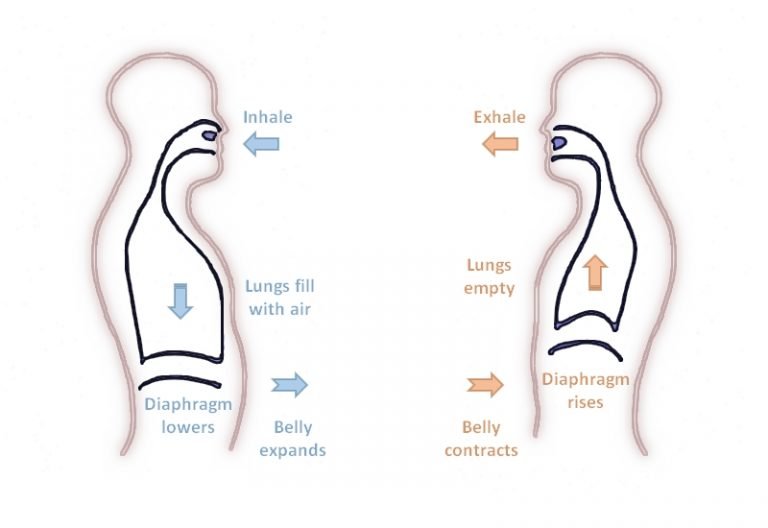
- Inhalation: This is where the magic of diaphragmatic breathing comes in. Relax your entire body, allowing your belly, sides, and even your lower back to expand as you draw air deeply into your lungs. Simultaneously, engage your pelvic floor—a subtle yet powerful anchor for breath support—to help fill your lungs to their maximum, efficient capacity.
- Suspension: A brief, almost imperceptible moment of stillness after inhalation. This isn’t holding your breath rigidly, but rather a micro-pause to assess how much air you have and how long you’ll need to sustain the upcoming phrase. It’s a mental and physical recalibration before phonation.
- Exhalation (Phonation): This is the controlled release. As you sing, your diaphragm and abdominal muscles steadily push the air out, vibrating your vocal cords to produce a strong, healthy singing voice. The key here is consistency and control, not simply letting the air rush out.
Foundational Breathing Exercises for Singers: Building Your Base
These exercises are your starting point, designed to establish the core mechanics of deep, diaphragmatic breathing and introduce fundamental breath control.
Diaphragmatic Breathing (Simply Breathe)
This is the cornerstone of all singing breath work. It teaches you to isolate diaphragm movement from shallower chest breathing.
- Purpose: Strengthens the diaphragm, isolates diaphragm movement, establishes deep belly breathing.
- Steps:
- Lie on your back with one hand on your chest and the other on your stomach (or sit/stand tall, maintaining good posture).
- Inhale slowly and silently through your nose for 4 counts, focusing on feeling your stomach rise. Your chest hand should remain relatively still.
- Exhale slowly through your mouth (or nose) for 4 counts, feeling your stomach fall and gently contracting your abdominal muscles.
- Reps: Practice 5-10 repetitions. Make this a ritual at the start of every vocal warm-up.
Pursed Lip Breathing / Practice Controlled Breathing
This exercise helps you regulate the release of air, crucial for sustained notes and smooth phrasing.
- Purpose: Develops controlled, steady exhalation, strengthens phrasing, and uses oral muscles to regulate breath rate.
- Steps:
- Inhale slowly and deeply through your nose, keeping your mouth closed.
- Pucker your lips into a small “O” shape, as if you’re about to whistle or breathe through a straw.
- Exhale very slowly and steadily for 5-8 counts through your pursed lips, focusing on maintaining a consistent, even airflow.
- Duration: Continue this controlled exhalation for 30-60 seconds.
4-7-8 Breathing / Practice Slow Breaths
Beyond singing, this technique is a fantastic relaxation tool, but for singers, it builds lung capacity and sustained airflow.
- Purpose: Increases lung capacity, helps sustain vocals and airflow for longer notes, promotes relaxation.
- Steps:
- Inhale quietly through your nose for a count of 4 seconds.
- Hold your breath for a count of 7 seconds.
- Exhale steadily through your mouth for a count of 8 seconds, making a gentle ‘whooshing’ sound or simply maintaining a controlled release. Keep your muscles relaxed throughout.
- Reps: Perform 4-5 complete cycles.
Hissing
A simple yet highly effective exercise for building sustained exhalation and engaging your core support.
- Purpose: Builds control and breathing support strength, develops sustained exhalation.
- Steps:
- Take a deep, diaphragmatic breath, filling your lungs completely.
- Exhale slowly and steadily through your mouth, making a continuous “sssss” sound, similar to air slowly escaping from a tire or balloon.
- Focus on actively engaging your abdominal muscles to control the air release and maintain the hiss.
- Action: Repeat 3-5 times, trying to prolong the duration of the hiss with each repetition while maintaining an even sound.
Panting
This exercise helps strengthen the diaphragm and teaches quick, controlled bursts of air, essential for agility in singing.
- Purpose: Strengthens the diaphragm, teaches control over short, quick bursts of air needed for singing phrases, builds stamina.
- Steps:
- Stand up straight with relaxed shoulders.
- Take quick, shallow breaths in and out through your mouth, mimicking a “panting” sound (like a puppy on a hot day, tongue slightly out).
- Ensure the movement comes from your diaphragm/abdomen, not your chest.
- Optional: Place a fist gently between your lower ribs and vocalize “ha” on a simple scale, feeling your diaphragm actively move.
- Duration: Continue for about 30 seconds, keeping breaths controlled and even. End the exercise with a long, relaxed sigh.
Sipping Breath
Develops precision in both inhaling and exhaling, especially for short, controlled bursts.
- Purpose: Develops precise control over inhale amount and exhale rate, exhaling in short, controlled bursts.
- Steps:
- Imagine you’re sipping a very hot tea.
- Inhale slowly through your nose over 2 counts, taking in a small, controlled amount of air.
- Part your lips slightly and exhale steadily for 4 counts, releasing the air in a smooth, consistent stream.
- Reps: Practice 5-10 times.
Yawn-Sigh
This exercise naturally opens the throat and promotes relaxation, crucial for a free, resonant voice.
- Purpose: Promotes full opening of oral and nasal airways, relaxation of throat muscles and torso upon exhalation.
- Steps:
- Take a slow, deep breath in through both your mouth and nose, consciously mimicking a full, satisfying yawn. Feel your soft palate lift.
- Open your mouth wide and exhale fully with a relaxed, audible sigh, often on an “Aaahhh” sound, allowing your throat and torso to fully relax.
- Reps: Repeat 5 times.
Stepping Up: Intermediate Breathing Exercises for Singers
Once you’ve mastered the foundational techniques, these exercises introduce more complexity, expanding your rib cage capacity and developing quicker breath recovery.
Costal Breathing
This technique specifically targets the expansion of your rib cage, engaging the intercostal muscles for broader breath support.
- Purpose: Expands the rib cage, strengthens intercostal muscles, maximizes rib expansion capacity.
- Steps:
- Place your hands on your mid to upper ribs, fingers spread, covering the sides of your rib cage.
- Inhale slowly and deeply, focusing on feeling your ribs expand outward into your hands, not just your belly.
- Exhale slowly through pursed lips, gently pulling your ribs inward as the air leaves.
- Reps: Aim for 3 sets of 10 repetitions, focusing on the outward expansion.
Stair-Step Breathing
Ideal for training rapid, efficient breath recharging between vocal lines, often needed in faster or complex musical passages.
- Purpose: Trains rapid breath recharging between vocal lines, coordination of fast inhales and slow exhales.
- Steps:
- Take a quick, silent “sip” of breath through your nose (like a small, sudden gasp).
- Immediately exhale slowly on a continuous “sss” sound.
- Repeat this pattern: quick inhale, long “sss” exhale. The inhale should be quick and silent, the exhale controlled and steady.
- Reps: Build up to 3 sets of 8-10 repetitions.
Quick Breath
This exercise focuses on increasing overall lung capacity and enhancing breath control during rapid respiration, useful for dynamic vocal shifts.
- Purpose: Increases lung capacity, enhances breath control during rapid respiration.
- Steps:
- Set a timer for 30 seconds.
- Take very fast, yet complete inhales and exhales, utilizing both your mouth and nose. Focus on quick, deep diaphragm movement.
- Aim: Work towards 10-15 full breath cycles within each 30-second interval. Perform 4 sets.
Vocal Fry Breath
Often misunderstood, vocal fry can be a useful tool for singers, helping to develop breath pressure for low, thick vocal fold vibration.
- Purpose: Develops breath pressure for low, thick vocal fold vibration, connects breathing to singing low notes.
- Steps:
- Inhale deeply into your belly, keeping your lips loose and relaxed.
- As you exhale, produce a low, creaky vocal fry sound (that “gravelly” sound often heard at the end of sentences). Focus on sustaining this sound with consistent breath pressure from your diaphragm.
- Reps: Practice 3 sets of 5-10 repetitions.
Mastering Your Breath: Advanced Breathing Exercises for Singers
These advanced techniques are for singers who have a solid grasp of foundational and intermediate breath work and are ready to push their endurance, precision, and application to singing.
Resistance Training
Adding external resistance strengthens the intercostal muscles and enhances ribcage expansion beyond natural limits.
- Purpose: Increases ribcage expansion against resistance, strengthens intercostal and breath support muscles.
- Steps:
- Sit upright with excellent posture.
- Place a flexible exercise band (or even a scarf/belt) around your lower ribs, crossing the ends in front.
- Inhale deeply through your nose, actively pushing your ribs outward against the resistance of the band. Feel the band tighten.
- Exhale slowly and controlled through pursed lips, maintaining the pressure until the air is fully expelled.
- Reps: Complete 3 sets of 10 inhale/exhale cycles.
Sustain a Note / Extended Note Holding
The ultimate test of breath endurance, this exercise directly translates to holding long vocal phrases with steady power.
- Purpose: Builds endurance, strengthens support for extended phrases, trains consistent breath pressure during sustained singing, and maintains posture/rib expansion.
- Steps:
- Take a full, deep, diaphragmatic breath.
- Choose a comfortable mid-range note (e.g., a comfortable “C” for your range) and sing it on an “ahh” vowel (or another clear vowel).
- Focus on maintaining a steady volume, pitch, and consistent breath pressure without straining. Hold the note for as long as possible on one breath.
- Action: Record your duration. Repeat 5 times, aiming to gradually increase the hold time while maintaining smooth airflow and tone.
Vocal Runs On Breath
This exercise focuses on maintaining consistent breath flow and support during rapid melodic sequences.
- Purpose: Develops efficient breath use for complex vocal riffs, maintains breath flow during rapid note changes.
- Steps:
- Inhale deeply through your mouth and nose, ensuring a full breath.
- Sing a short, complex melodic run (e.g., an ascending and descending five-note scale, or a simple riff) in one continuous breath. This should last approximately 8-15 seconds.
- Fully recharge your breath with a quick, silent inhale immediately after the run.
- Reps: Repeat 3 times (3 sets). Gradually increase the complexity and duration of the runs as your breath control improves.
Blowing Through a Straw
A powerful tool for vocal cord rehabilitation and strengthening, as well as developing efficient breath pressure for singing.
- Purpose: Stretches and resets vocal cords, helpful for low register and voice placement, develops precise breath management.
- Steps:
- Place a narrow straw (a cocktail straw works well) into your mouth, lips sealed gently around it.
- Do a pitch glide from your lowest comfortable note to your highest and back down, maintaining a continuous sound through the straw. Focus on a smooth, consistent airflow from your diaphragm.
- Add accents by gently engaging your abdominal muscles, feeling the effort come from your core, not your throat.
- Hum a favorite song or simple melody through the straw.
- Action: Repeat for a couple of minutes, especially if your voice feels tired or strained.
Lip Trills
Excellent for relaxing facial muscles, freeing up the voice, and maintaining constant, steady airflow for legato singing.
- Purpose: Relaxes face muscles, maintains constant airflow for legato (singing long phrases without breaks).
- Steps:
- Relax your lips, allowing them to vibrate together as you exhale, creating a “brrr” sound (like blowing a raspberry).
- Start with a siren, gliding from your lowest comfortable pitch to your highest and back down, maintaining the lip trill throughout.
- Ensure a continuous, even stream of air from your diaphragm is what sustains the trill and the pitch changes.
- Action: Repeat a few times until your voice feels warm, relaxed, and smooth.
Your Practice Playbook: Tips for Consistent Progress
Mastering vocal breathing is a journey, not a sprint. Integrate these actionable insights to ensure your practice is effective, safe, and leads to lasting improvement.
- Prioritize Posture: A straight, aligned posture with relaxed shoulders is non-negotiable. It allows for full lung and rib expansion and unimpeded diaphragm movement, creating a stable foundation for your breath.
- Warm Up Thoroughly: Before diving into singing, perform light vocal warm-ups like humming, lip trills, or gentle sirens. This loosens vocal cords, frees the throat, and releases tension in the jaw, neck, and shoulders, preparing your entire vocal mechanism.
- Hydrate Relentlessly: Drink water consistently throughout the day. Well-hydrated vocal folds are flexible and less prone to irritation, making all breathing and vocal exercises smoother and more effective.
- Embrace Progressive Overload: Start with the basic exercises, focusing on impeccable form. As you build strength and control, gradually advance to intermediate and then advanced techniques. Patience is key; vocal mastery unfolds over time.
- Consistency is King: Dedicate 10-15 minutes daily to targeted breathing exercises. A regular routine, even if short, is far more effective than infrequent, long sessions.
- Mind Your Sets & Reps: Begin with 3-5 sets of 5-10 repetitions for each exercise. Gradually increase these numbers as your endurance and control improve, challenging yourself without overdoing it.
- Listen to Your Body: Pay close attention to any signs of strain, discomfort in your throat, or dizziness. These are signals to take a break, re-evaluate your technique, or reduce intensity. Rest and hydration are crucial for vocal health.
- Seek Professional Feedback: A qualified vocal coach can provide invaluable personalized guidance. They can correct subtle posture issues, refine your breathing method, and accurately assess your progress, preventing the development of bad habits.
- Develop Pitch Awareness: Integrate pitch-matching exercises into your routine. This sharpens your singing accuracy and helps you focus on how breath control directly influences pitch stability.
- Record and Review: Use your phone or a simple recording device to capture your practice sessions. Listening back objectively can highlight strengths and pinpoint areas needing improvement, such as breath consistency, attack, or pitch accuracy.
- Give Your Voice a Break: After extended periods of singing or speaking, allow your voice to rest. Vocal rest is vital for keeping your vocal folds healthy, preventing fatigue, and avoiding hoarseness or injury.
- Refine Diction: Practice exercises like tongue twisters or gentle jaw-loosening movements. Relaxing the muscles of your jaw, lips, and tongue ensures clearer pronunciation, which is supported by precise breath release.
- Explore Gently: When trying new notes or extending your range, do so with light humming or small, step-by-step exercises. Avoid forcing notes, which can lead to throat tension and potential vocal damage.
Quick Answers: Unpacking Common Breathing Questions for Singers
How quickly will I see results from breathing exercises for singing?
While immediate improvements in awareness are common, significant changes in vocal stamina, control, and tone typically develop over weeks to months of consistent practice. Think of it like building any other muscle group – it requires regular, dedicated effort. You’ll likely notice better breath management within a few weeks, with deeper changes in vocal quality appearing over 2-3 months.
Can I overdo breathing exercises?
Yes, absolutely. Over-exertion can lead to lightheadedness, dizziness, or even hyperventilation. The goal is controlled, efficient breathing, not maximum air intake at all costs. If you feel any discomfort, stop and rest. Listen to your body and prioritize proper technique over duration or intensity, especially when starting out.
Is it always bad to breathe through my mouth when singing?
Ideally, silent, deep inhalations through the nose are preferred as they warm, filter, and humidify the air. However, in certain fast-paced musical phrases, a quick mouth breath might be necessary. The key is that even a mouth breath should be deep, controlled, and silent, drawing air from the diaphragm, not a shallow gasp from the chest. The general rule is: use the nose when time allows, use the mouth effectively when speed is critical.
The Road Ahead for Your Vocal Journey
Embarking on a consistent regimen of breathing exercises for singing is perhaps the most impactful decision you can make for your vocal development. It’s not just about getting more air; it’s about mastering the dynamic, subtle art of breath support that underpins every powerful, expressive, and healthy vocal performance. By integrating these foundational, intermediate, and advanced techniques into your daily routine, you’ll build not just lung capacity, but a deep, intuitive connection to your vocal instrument. Start today, be patient with your progress, and watch as your voice transforms, gaining new levels of control, stamina, and truly captivating resonance.

- Live Concert Stage Design Transforms Performances into Immersive Journeys - May 1, 2026
- Concert Stage Set Design Creates Immersive Live Shows - April 30, 2026
- Concert Stage Designs That Create Unforgettable Live Music Moments - April 29, 2026