Singing feels effortless for some, yet a struggle for many others who battle with running out of air, inconsistent tone, or strain. The truth is, mastering vocal control and stamina isn’t about having “big lungs” or a “naturally good voice”—it’s fundamentally about implementing effective breathing exercises for singers. These targeted practices transform your voice from the inside out, turning breath into your most reliable vocal asset.
You’re not just learning to breathe; you’re learning to control the very air that powers your instrument. Without this foundational skill, vocal issues often stem from “air problems” rather than inherent “voice problems.” This guide dives deep into the specific techniques and exercises that unlock steady airflow, improve tone quality, sharpen pitch accuracy, build endurance, and protect your most valuable instrument.
At a Glance: Harnessing Your Breath for Better Singing
- Unlock Diaphragmatic Breathing: Understand why it’s the gold standard for singers and how to master it.
- Identify & Correct Bad Habits: Spot common breathing mistakes that limit your vocal potential.
- Explore Core Exercises: Learn practical, step-by-step drills to build breath control, stamina, and support.
- Apply Breath to Performance: Discover how proper breathing impacts high notes, endurance, and vocal health.
- Craft a Daily Routine: Get a simple, effective practice plan for consistent vocal improvement.
- Boost Your Confidence: Experience how steady breath support makes singing feel easier and more enjoyable.
The Foundation: Why Your Breath Matters More Than You Think
Imagine your voice as a sophisticated wind instrument. Just like a trumpet needs a consistent, controlled stream of air to produce a clear, sustained note, your vocal cords require a steady, supported airflow to vibrate efficiently and create sound. When this airflow is inconsistent or insufficient, you encounter common singing struggles: notes that waver, a breathy tone, difficulty sustaining phrases, or even vocal strain.
Proper breathing isn’t just about taking a big gulp of air; it’s about how you take it in and, more importantly, how you release it. It’s the silent engine behind every powerful sustained note and every delicate vocal nuance. To gain a broader perspective on how these fundamental techniques elevate your vocal performance, you can also Learn vocal breathing exercises.
Embracing Diaphragmatic Breathing: Your Vocal Powerhouse
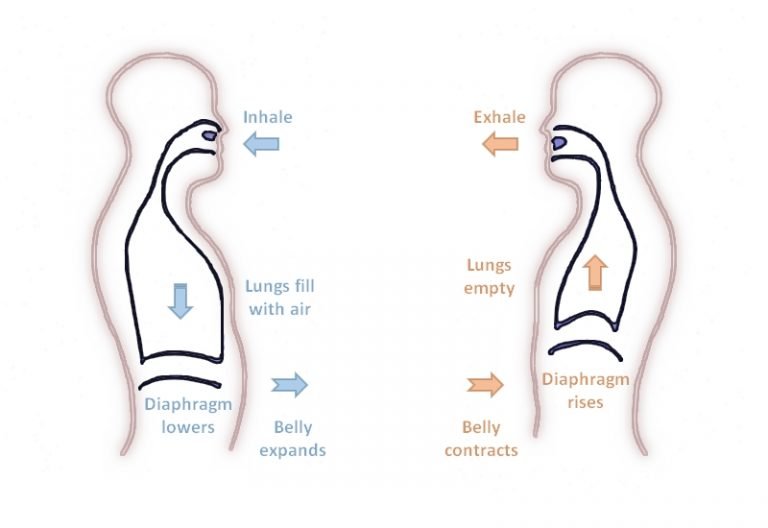
For singers, diaphragmatic breathing is the undisputed champion. The diaphragm, a large, dome-shaped muscle situated beneath your lungs, contracts and moves downward when you inhale deeply. This action creates space, allowing your lungs to fill fully and your lower ribs and abdomen to expand. The controlled, gradual release of this muscle during exhalation provides the steady, sustained airflow crucial for singing.
How to Achieve This Essential Breath:
- Align Your Instrument (Posture): Whether standing or sitting, envision a string gently pulling the crown of your head towards the ceiling. Allow your shoulders to relax down and back, opening your chest naturally without stiffness. This alignment is key to maximizing lung capacity and enabling your diaphragm to move freely.
- Inhale Deeply, Not High: Breathe in slowly through your nose, focusing intently on the sensation of your belly and sides expanding. Crucially, your chest and shoulders should remain relatively still—no lifting or tensing.
- The Self-Test: Place one hand flat on your belly and the other on your chest. As you inhale, the hand on your belly should rise significantly more than the hand on your chest. You should also feel your ribs expanding outward, almost like an umbrella opening, while your shoulders stay put. This confirms you’re engaging your diaphragm effectively.
Mistakes That Undermine Your Voice
Even with the best intentions, singers can fall into breathing traps that hinder their progress. Recognizing these common pitfalls is the first step to correcting them:
- Shallow Chest Breathing: If your shoulders lift or your chest visibly rises during inhalation, you’re likely engaging in shallow breathing. This creates upper body tension, limits air support, and drastically shortens your vocal stamina.
- Overfilling the Lungs: While it might seem logical to take in as much air as possible, overfilling can lead to excessive pressure. This often results in a breathy tone, vocal strain, and even difficulty initiating sound smoothly.
- Pushing Air Too Quickly: Blasting air out without control can throw off your pitch, strain your vocal cords, and produce a weak or breathy tone that lacks resonance. The goal is a steady stream, not a sudden burst.
- Holding Too Much Air/Tension: Tensing up and holding breath before singing creates unnecessary tension in the vocal mechanism. This instability can lead to a shaky voice and vocal fatigue.
- Ignoring Posture: A slumped or collapsed posture literally compresses your lungs, severely limiting your capacity and the diaphragm’s ability to function properly. Remember, good posture is non-negotiable for good breath.
Mastering Airflow: Essential Breathing Exercises for Singers
The true secret to vocal control lies not in how much air you can take in, but in how smoothly and consistently you can release it. These exercises are designed to cultivate that balance, engage your core breath muscles, and calm performance-related tension.
1. Foundational Awareness & Release
These exercises help you connect with your diaphragm and release unnecessary tension.
- Diaphragmatic Breathing Basics:
- How: Lie on your back, one hand on your chest, one on your belly. Inhale slowly through your nose, focusing on your abdomen expanding (not your chest). Exhale gently on a sustained “sss” sound, keeping your shoulders completely relaxed.
- Why: Establishes the core feeling of diaphragmatic movement without the demands of singing.
- Tip: Practice for 5-10 minutes daily to build muscle memory.
- Book-on-Stomach Exercise:
- How: While lying flat on your back, place a lightweight book on your stomach. As you inhale, make the book rise. As you exhale, let it fall.
- Why: Provides immediate visual and tactile feedback, clearly demonstrating true diaphragmatic movement.
- Tip: If the book doesn’t move, you’re likely chest breathing. Adjust your focus until it does.
- Silent Inhalation:
- How: Inhale through your mouth with a relaxed, open throat, almost as if you’re beginning a yawn. Let the air “fall in” quietly.
- Why: Eliminates neck and throat tension during inhalation, which can otherwise constrict your sound. Feeling a light coolness at the back of your throat indicates openness.
- Scenario: Useful before a quick phrase in a song where you need to grab air without sounding noisy or tense.
- Sighing Exercise:
- How: Take a comfortable diaphragmatic breath, then simply let the air fall out naturally on an “ah” sound as a relaxed sigh. Don’t push or shape the sound.
- Why: Teaches complete release and helps dissipate tension in the upper body, jaw, and throat—a common blocker for a free voice.
- Example: Use this before a challenging vocal run to release pre-performance tension.
- “Four Corners” Breath:
- How: Visualize your rib cage as a rectangular box with four distinct corners (upper right, upper left, lower right, lower left). Inhale, consciously trying to expand each “corner” of your rib cage evenly.
- Why: Encourages a more comprehensive and even expansion of the entire rib cage, ensuring fuller lung capacity and more balanced support.
- Benefit: Prevents relying solely on abdominal expansion and helps avoid a “caved-in” feeling in the upper back.
2. Building Control & Stamina
These drills focus on regulating your airflow for sustained vocal output.
- Slow Inhale and Exhale / Inhale-Exhale Timing:
- How: Inhale slowly through your nose for 4 counts. Gently hold for 2-7 counts. Exhale slowly through pursed lips (like blowing through a straw) for 6-8 counts. Repeat 4-5 times, aiming to gradually extend the exhale to 10-16 counts.
- Why: Builds breath stamina and teaches a smooth, even release of air—critical for long vocal phrases.
- Case Snippet: A singer struggling to sustain the final note of a ballad might use this to build the endurance needed for a smooth, unwavering finish.
- Hissing Exercise (“Sss” Drill):
- How: Take a deep diaphragmatic breath, then release it through a long, steady “sss” sound, like a tire slowly deflating. Time how long you can sustain a consistent “sss” without wobbling or running out of air.
- Why: Directly helps regulate air pressure, strengthens breath support muscles, and reveals inconsistencies in your airflow (e.g., a “wobbly” hiss).
- Tip: Aim for a consistent volume and pitch in your “sss” sound.
- Controlled Breathing (Pursed Lips):
- How: Inhale quietly through your nose, expanding your diaphragm and ribcage. Exhale very slowly through gently pursed lips, focusing on maintaining an incredibly steady and controlled stream of air for as long as possible without straining.
- Why: This variation enhances breath control for nuanced phrasing and delicate dynamics, strengthening the muscles that manage air release.
- Scenario: Perfect for improving control over soft, sustained passages in a song.
- Panting Exercise:
- How: Stand straight with relaxed shoulders. Take quick, shallow breaths in and out through your mouth, mimicking a dog panting. Ensure the movement primarily comes from your diaphragm, not your chest. Continue for 5-30 seconds.
- Why: Strengthens the diaphragm’s agility and teaches control over rapid, short bursts of air, essential for quick vocal runs or staccato phrases.
- Caution: Stop immediately if you feel lightheaded.
3. Bridging Breath to Sound
These exercises directly link your breath support to vocal production.
- Straw Phonation Exercise:
- How: Hum a gentle “oo” vowel through a drinking straw (a narrower straw provides more resistance) for 30-60 seconds. Focus on the ease of sound production.
- Why: The resistance from the straw naturally encourages balanced airflow, promotes efficient vocal cord vibration, and teaches your breath to support the sound without overpowering it. It’s a fantastic vocal “massage.”
- Benefit: Great for warming up, cooling down, or recovering from vocal fatigue.
- Sustain a Note / “Sustain and Release” Drill:
- How: Take a full diaphragmatic breath. Hum a gentle “mmm” for 5-10 seconds, then seamlessly release into an open vowel like “ah” or “oh,” without letting the airflow or volume change. Focus on maintaining a steady sound.
- Why: Builds vocal endurance and strengthens the consistent support needed for long musical phrases. It also teaches smooth transitions between closed and open vocalizations.
- Progression: Gradually increase the length of time you hold the note and the complexity of the vowel changes.
- “One-Breath Challenge”:
- How: Select a simple melody or a short phrase from a song you know well. Sing it entirely on a single, well-managed breath.
- Why: Directly trains exhale management and strategic phrasing. As your breath control improves, you can tackle longer or more complex lines, refining your vocal efficiency.
- Practical Use: Helps singers identify natural breath points within a song and plan their inhalations.
- Breathing with Scales:
- How: Take one good diaphragmatic breath and sing a simple vocal scale (e.g., a 5-note major scale ascending and descending) all on that single breath.
- Why: Integrates breath management directly into pitch training and vocal agility exercises. It teaches you to ration your air effectively across a series of notes.
- Expansion: As you improve, gradually increase the range or length of the scales you attempt on one breath.
Applying Breath Mastery: Singing with Confidence and Health
The goal of these exercises isn’t just to practice; it’s to transform your singing.
High Notes & Power Without Strain
Many singers mistakenly believe that hitting high notes or singing powerfully requires pushing more air with force. In reality, it’s about less air pressure combined with controlled support. For high notes, maintain expanded ribs to prevent chest collapse and support the sound with a precise, controlled release from the diaphragm. Avoid any throat tension; the power comes from your core, not your neck.
Building Performance Endurance
Singing a full song, especially a demanding one, requires strategic breath pacing. Practice dividing phrases into planned inhalations, identifying moments where you can quietly and quickly grab air. Regularly sing full songs with minimal breaks, mimicking live performance conditions. Consistent daily vocal warm-ups that include breathing exercises will also condition your vocal system for longer, more energetic performances.
Safeguarding Your Vocal Health
Balanced airflow is the cornerstone of vocal health. When your breath support is strong and controlled, your vocal cords vibrate freely and efficiently, leading to a strong, resonant, and healthy sound. Conversely, excessive air pressure can lead to vocal cord fatigue or damage, while insufficient support results in a breathy, unstable tone that often requires more effort to produce, leading to strain. Prioritize gentle, consistent airflow for long-term vocal vitality.
Singing in Sync: Breath for Choir & Group
Choir singers have unique breath challenges. Practice group inhalations to ensure synchronized starts and unified sound. When singing long, sustained chords, learn to release air evenly and quietly. Utilize conductor cues to manage staggered breathing—where individual singers take breaths at different times within a sustained phrase—to create the illusion of a seamless, unending sound.
Your Daily Practice: The Path to Consistent Vocal Improvement
Breathing mastery isn’t a one-time achievement; it’s a journey built on method and daily repetition. Short, focused practice sessions (e.g., 5-10 minutes) every day yield far better results than occasional, marathon sessions.
A Simple 10-Minute Daily Routine for Beginners:
- Diaphragmatic Breathing Basics (2 minutes): Lie down, hands on belly/chest, focus on abdominal expansion.
- Hissing Exercise (2 minutes): Take a deep breath, release a steady “sss” sound, timing yourself.
- Inhale-Exhale Timing (2 minutes): Practice 4-count inhale, 4-count hold, 8-count pursed-lip exhale.
- Singing Scales on One Breath (2 minutes): Start with simple 5-note scales on a vowel like “ah.”
- Posture Alignment & Relaxation (2 minutes): Stand tall, relax shoulders, check for tension.
Consistent practice not only strengthens your voice and enhances control but also helps calm nerves and makes the entire act of singing feel easier, more natural, and profoundly more enjoyable.
Enhancing Breath Awareness with Forbrain
For singers seeking heightened awareness of their vocal production, tools like Forbrain can be invaluable. This bone conduction device provides real-time auditory feedback, allowing you to hear your voice as it resonates through your own body. This unique feedback loop helps singers immediately notice inconsistencies in airflow, identify subtle wobbles or tension, and refine their breathing habits. It’s particularly useful during warm-ups, vowel shaping drills, and sustained phrases, offering an objective “inner ear” perspective on how your breath is actually supporting your sound.
Quick Answers: Unpacking Common Breathing Questions
Q: Should my stomach really stick out when I breathe for singing?
A: Yes, in diaphragmatic breathing, your abdomen (stomach area) should gently expand outward as your diaphragm contracts and moves down. This indicates your lungs are filling from the bottom up. It’s not about “sticking out” aggressively but rather a natural, relaxed expansion.
Q: I feel tense in my neck and shoulders when I try to breathe deeply. What am I doing wrong?
A: This is a classic sign of shallow chest breathing. You’re likely trying to pull air in by lifting your upper body. Focus on keeping your shoulders relaxed and still, directing the breath sensation lower into your belly and sides. The Silent Inhalation and Sighing exercises can help release this tension.
Q: How do I know if I’m holding too much air or pushing too hard?
A: If you feel a “pressure cooker” sensation in your chest, struggle to start notes smoothly, or find your tone breathy or forced, you might be holding too much air or pushing too hard. The Hissing Exercise is excellent for diagnosing this; an inconsistent or overly forceful hiss indicates an issue. The Straw Phonation exercise can also help balance this.
Q: Can breathing exercises really improve my vocal range?
A: Indirectly, yes. While breathing exercises don’t physically extend your vocal cords, they provide the consistent, controlled support necessary for your cords to vibrate optimally across their full range. With better breath support, you’ll find it easier to access both higher and lower notes with less strain and better tone quality.
Q: How quickly will I see results from these exercises?
A: You’ll likely notice an immediate difference in breath awareness and a slight improvement in control within a few days of consistent practice. Significant improvements in stamina and vocal control, however, typically take weeks to months of dedicated daily effort. Consistency is far more important than intensity.
Your Next Step: Breathe Deeper, Sing Better
The journey to an effortlessly controlled, resonant singing voice begins with the breath. By integrating these specific breathing exercises for singers into your daily routine, you’re not just practicing a technique—you’re cultivating a deeper connection to your instrument. Start today with the foundational diaphragmatic breathing, incorporate the hiss, and practice mindful exhalation. With patience and persistence, you’ll unlock the vocal control and stamina that will transform your singing, making every note supported, every phrase intentional, and every performance a joy.