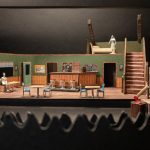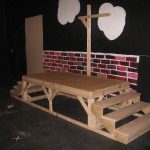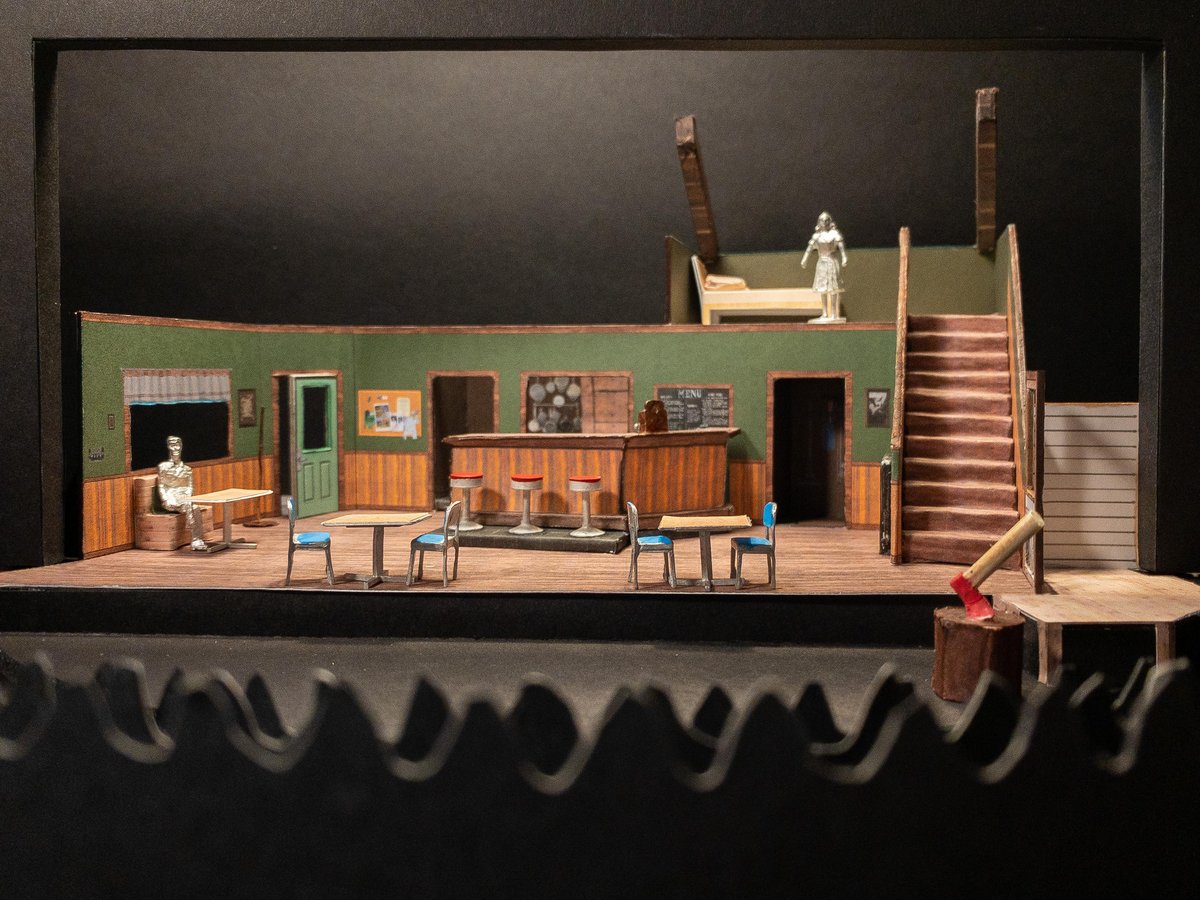
Ever found yourself trying to describe a complex idea—a new business strategy, a challenging recipe, or even a home renovation—and wishing you could just show someone? That’s precisely the power a scenic design model brings to the world of theatre, film, and live events. These tangible, scaled-down representations of a stage or set aren’t just pretty miniatures; they are indispensable tools that transform abstract concepts into concrete, collaborative blueprints. They allow designers, directors, and an entire production team to literally walk through a future world, identifying potential triumphs and preventing costly missteps long before a single flat is built.
At a Glance: Why Scenic Design Models Matter
- Visualize & Test: Models bring 2D drawings to life, helping you see how spaces will feel, how actors will move, and how lighting will play.
- Collaborate Effectively: They act as a universal language, allowing directors, designers, and crew to share ideas and make decisions together.
- Refine & Innovate: Test different layouts, sight lines, and transitions inexpensively, encouraging creative exploration.
- Prevent Costly Mistakes: Catch design flaws or logistical challenges early, saving time and money during construction.
- Educational Tool: Fantastic for learning key design concepts like stage levels, movement flow, and balance in a hands-on way.
What is a Scenic Design Model, Really?
At its heart, a scenic design model is a three-dimensional, scaled-down replica of a theatrical set or environment. Think of it as a dollhouse for a play, but far more functional and purpose-driven. It’s a critical step in the design process, allowing everyone involved to gain a tangible understanding of the physical space, sight lines, and potential challenges before any full-scale construction begins.
These models aren’t just for Broadway; they’re used in everything from high school plays to major film sets, providing a common ground for discussing and refining the “world through which you perceive things happening,” as noted by visionary director Richard Foreman. They are a designer’s secret weapon for ensuring that the final stage environment not only looks stunning but also functions flawlessly for the narrative and the performers. You might be surprised at the depth and detail involved when you explore model theatre design more closely.
Why Models Aren’t Just Miniatures: The Power of Visualization
Imagine trying to direct a scene when you can only see the set in your mind’s eye or on a flat blueprint. Difficult, right? That’s where the magic of a scenic design model comes in. These models bridge the gap between imagination and reality, offering unparalleled benefits for a production.
For starters, they provide interactive, representational models that allow for dynamic exploration. You can move miniature furniture, test different levels, and even simulate actor movement. This hands-on approach helps answer crucial questions: Can the audience see the critical action from every seat? Is there enough space for that dramatic sword fight? Will the set changes happen smoothly in the dark?
Models are also powerful brainstorming tools. In the early stages, they let designers and directors quickly map out ideas, even for specific contexts like UIL State One-Act Play Contests. Modular pieces found in some tabletop model sets simplify collaboration, allowing concepts to be tested and refined with ease. This iterative process is invaluable for developing custom layouts that truly serve the artistic vision. Many professionals will tell you that to really understand a stage layout, you need to dive into stage design models yourself.
Beyond the Blueprint: A Historical Perspective
The art of creating stage environments has a long and fascinating history. From the basic props of ancient Greece’s outdoor amphitheaters, scenic design began its evolution. The Renaissance brought significant advancements, with improved stage equipment and the integration of drawing perspectives, leading to more complex and realistic sets.
The real shift towards the interpretive and expressive use of scenery, and thus the need for better visualization tools like models, arguably gained momentum with the New Stagecraft Movement in the early 20th century. Inspired by European pioneers like Adolphe Appia and Edward Gordon Craig, American designers like Robert Edmond Jones embraced simplified realism, abstraction, and mood-driven environments. They moved away from merely decorating the stage to creating symbolic worlds that deeply influenced the audience’s perception.
Following this, Poetic Realism, championed by designers such as Jo Mielziner and Boris Aronson, further emphasized emotional tone over strict realism, often utilizing soft lighting, scrims, and fragmented sets. These historical shifts highlight a continuous drive towards more sophisticated and abstract scenic concepts, making the ability to visualize and test these ideas through models more important than ever.
The Anatomy of a Stage World: Key Elements You’re Modeling
When you’re building a scenic design model, you’re not just assembling cardboard; you’re constructing a miniature universe. Each element within that universe plays a critical role in supporting the narrative and emotional tone of the production. Understanding these components is fundamental to creating an effective model. If you’re keen to understand the nuances, you might want to consider exploring scenic design elements in more detail.
- Set Pieces: These are the physical structures that define the spatial environment—platforms, walls, doors, windows, and large furniture. In a model, these are meticulously scaled to reflect the story’s time, location, and atmosphere. They establish the physical boundaries and focal points.
- Props: Objects used by actors are crucial for establishing setting, enhancing narrative, revealing character, and advancing the plot. In models, miniature props—even simple placeholders—help to gauge how much space they’ll occupy and how they’ll interact with the actors.
- Backdrops: Whether painted backings or digital projections, backdrops create depth, perspective, and establish the overall mood. In a model, these can be represented by scaled drawings or even simple swatches of color to convey atmosphere. Modern technology allows for dynamic, evolving backdrops, which designers often visualize in their models.
- Lighting: While you can’t always perfectly replicate lighting in a physical model, you can plan for its effect. Understanding how light will fall on your set pieces, create shadows, and define focal points is critical. Advances in lighting control over color, intensity, and movement are always considered.
- Functionality: A beautiful set is useless if it doesn’t work. Models are vital for testing practicality:
- Accessibility: Can actors easily move on and off stage?
- Sight Lines: Can the audience see everything they need to?
- Entrances and Exits: Are they clear and functional?
- Scene Changes: How will elements move and transform?
- Safety: Are there any hidden hazards?
Balancing artistic design with these practical considerations is fundamental, and a model is the best place to test these theories. - Scenic Art and Painting: This involves the highly detailed aesthetic finish. While a white model focuses on form, a final, rendered model will indicate textures, faux finishes, and painted details. These artistic touches, whether traditional trompe l’oeil or modern digital projections, are what bring the designer’s vision fully to life.
From Concept to Concrete: The Scenic Designer’s Toolkit & Process
Modern scenic designers act as co-creators, influencing everything from the production’s physical space and blocking to its pacing and emotional tone. Their journey from script to stage is a meticulous process, heavily reliant on models to communicate their vision. It’s a deep dive into how an entire stage is planned, and to truly grasp the nuances, you’ll want to explore scene design elements in action.
1. Script Analysis: The Foundation of Every Design
Before any drawing or model takes shape, the designer performs a thorough read-through of the script. The first pass is for overall story flow and understanding the narrative. Subsequent reads are for granular detail: noting specific visual design requirements, identifying necessary props, understanding scene changes, and feeling the emotional arc. Many designers use color-coding to highlight elements like props, lighting cues, costume needs, and color palettes, ensuring comprehensive coverage and a deep understanding of the playwright’s world.
2. Ideation & Sketching: Nurturing the Core Vision
With the script firmly in mind, the designer begins to brainstorm. This involves creating small, illustrative sketches to visualize different scenes, exploring various angles, and comparing potential layouts. This early stage is highly collaborative; designers seek opinions from directors and other departments, emphasizing teamwork to refine initial concepts. It’s about getting raw ideas down, not perfect drawings.
3. Drafting the Vision: Initial Drawings and Renderings
Once a general direction is established, the designer moves on to rough drawings, or renderings, of each scene. At this point, the focus is on creative visualization rather than immediate, precise detail. These sketches are crucial for sharing the evolving vision with the wider creative team, offering a glimpse into the spatial relationships and atmospheric qualities being considered. These preliminary drawings often set the stage for more detailed work.
4. The “White Model”: Your First 3D Blueprint
This is where the scenic design model truly comes into its own. Following initial approvals, the designer creates a white model. This is a measured, scaled model, typically built using neutral materials like white cardstock or foam core. It includes small architectural details, scaled furniture, and all key structural elements.
The “white model” is critical because it forces everyone to focus on form, scale, and function without the distraction of color or texture. It serves as the final revision point before construction drawings begin, allowing the team to test sight lines, actor movement, and scene changes in three dimensions. Multiple versions might be created for discussion, allowing for rapid iteration and problem-solving. It’s an essential step, helping everyone to explore set design models in their purest form.
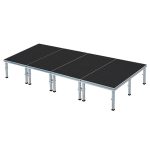
- Tabletop Model Sets: These are particularly useful for educational settings and early conceptual brainstorming. Recent upgrades to some sets feature durable PVC plastic for longevity and improved performance, often with a matte finish to reduce glare, making them practical for hands-on learning and collaborative exploration of key concepts like stage levels and movement flow.
5. Bringing Color to Life: The Final Rendering
Once the white model is approved, the final, highly detailed, full-color rendering is produced. This stage involves adding textures, painting details, and specific color palettes that bring the set to life. This finished model is an invaluable communication tool, helping other departments (costumes, lighting, props) understand the final aesthetic and how their work will integrate. It’s also often used during rehearsals, allowing actors and directors to familiarize themselves with the environment before stepping onto the constructed stage.
Models in the Modern Era: Trends & Technology
While physical scenic design models remain indispensable, modern trends and technological advancements are continually shaping how designers work.
One significant trend is the integration of spectacle in productions, often featuring larger-than-life visuals, mechanized scenery, and intricate special effects. Kinetic sets, like those envisioned by David Mitchell, exemplify this. Models are crucial for planning such complex movements and ensuring technical feasibility.
Simultaneously, many designers explore minimalism and abstraction, creating symbolic, suggestive environments rather than strictly realistic ones. Here, models help convey the mood and conceptual power of a simplified space. The evolving collaborative role of designers, giving them a more equal voice in shaping a production’s vision and narrative, reinforces the need for clear, shared visualization tools like models.
Today, digital tools increasingly complement physical models. Computer-Aided Design (CAD) software allows for precise 2D drawings and 3D virtual models, which can be rendered with sophisticated lighting and texture. These digital models can even be walked through virtually using VR/AR technologies. However, the tactile experience and immediate collaborative nature of a physical model often remain unmatched, particularly in the initial and refinement stages.
Mastering Your Mini-World: Best Practices for Model Building
Whether you’re a seasoned professional or an aspiring student, a well-crafted scenic design model can make or break a design presentation. Here are some best practices:
- Precision is Key: Work to scale. Use an architect’s scale ruler and measure meticulously. Even small inaccuracies can throw off the entire perception of space.
- Keep it Clean: Especially with white models, neat cuts, clean glue lines, and smudge-free surfaces are paramount. A messy model suggests a messy thought process.
- Modular Thinking: If your set has moving parts or scene changes, design your model with modularity in mind. This allows you to demonstrate transitions and test different configurations easily.
- Consider the Audience: Remember that your model is a communication tool. Ensure it’s well-lit (if presenting physically), easy to transport, and clearly conveys your ideas from various angles.
- Detail for a Purpose: While the final rendered model is detailed, a white model should focus on form and function. Don’t add unnecessary ornamentation that distracts from the core spatial concept.
- Label Clearly: Use small, neat labels for elements, especially during early white model stages, to remind collaborators of specific materials or functions.
- Practice Presentation: Know your model inside and out. Practice explaining your design choices, demonstrating movements, and addressing potential questions.
Common Questions About Scenic Design Models
What scale is typically used for scenic design models?
Common scales include 1/4″ = 1′-0″ (meaning 1/4 inch on the model represents 1 foot on the actual stage) or 1/2″ = 1′-0″. The choice often depends on the size of the actual stage and the level of detail required.
What materials are commonly used to build models?
White models often use foam core, cardstock, illustration board, or bristol board. For final, colored models, designers might use wood, plastic, fabric swatches, or even 3D printed elements. Newer tabletop sets often utilize durable PVC plastic.
How do scenic designers represent lighting in a model?
While full lighting simulation is complex, designers often use small LED lights or even simply indicate lighting positions and directions with arrows on the model base or overhead grid. The goal is to convey the effect of lighting on the set’s form and mood.
Are digital models replacing physical models?
Not entirely. While digital models (CAD, 3D renderings, VR walkthroughs) are powerful tools for precision, visualization, and sharing, physical models offer a unique tactile experience and hands-on collaborative process that many designers and directors still find invaluable, especially in the early stages of design. They often work in tandem.
What’s the difference between a “white model” and a “final rendered model”?
A white model is typically monochrome (often white or light gray), focusing on form, scale, and spatial relationships. It’s used for functional testing and initial approvals. A final rendered model adds full color, texture, and intricate details, providing a complete visual representation of the finished set’s aesthetic.
Your Stage Awaits: Next Steps for Aspiring Designers
Understanding the power and process behind scenic design models is a critical step for anyone interested in theatre, film, or event design. These miniature worlds are where ideas truly take shape, where collaboration flourishes, and where the foundational problems of a production are solved long before the curtain rises.
If you’re an aspiring designer, start building! Grab some foam core, a ruler, and a craft knife. Begin by modeling a simple room, then move on to a scene from a play you love. The hands-on experience of translating a 2D concept into a 3D reality is the best teacher. For educators and students, exploring modular tabletop model sets can provide an excellent starting point for practical learning. The skills you develop in precision, visualization, and problem-solving through model building will serve you well, no matter where your creative journey takes you.

- Scenic Design Models Essential for Visualizing and Refining Stage Layouts - May 17, 2026
- Portable Set Design Simplifies Dynamic Stages for Any Event - May 16, 2026
- Get Stage Pieces for Quick, Professional Event Setups - May 15, 2026