When planning an event, the stage isn’t just a platform; it’s the focal point, the heart of the action. Achieving that polished, professional look quickly and efficiently hinges on selecting the right stage pieces. These aren’t just planks and posts; they’re engineered components designed to assemble seamlessly, ensuring your event runs smoothly, safely, and makes a lasting impression. Whether you’re orchestrating a school play, a corporate presentation, a church service, or a large public festival, understanding the individual elements that make up a versatile stage system is key to a successful setup.
At a glance: Mastering Your Stage Piece Selection
- Differentiate Stages vs. Risers: Understand their unique purposes and how they complement each other.
- Prioritize Modularity: Learn how connectable stage pieces offer unparalleled flexibility for diverse events.
- Focus on Safety Features: Identify essential safety components like guardrails, non-slip surfaces, and secure locking mechanisms.
- Evaluate Ease of Setup & Mobility: Discover systems designed for quick, tool-free assembly and one-person operation.
- Assess Durability & Materials: Understand why commercial-grade construction ensures longevity and heavy-duty performance.
- Consider Essential Accessories: Recognize how skirting, ramps, and storage caddies enhance both functionality and aesthetics.
Building Blocks of Brilliance: Understanding Core Stage Pieces
At its heart, a stage system is a collection of robust, interlocking components designed for adaptability. The terminology can sometimes be a bit fluid, but generally, we distinguish between stages and risers based on their primary function.
A stage typically refers to a larger, elevated platform used for performances, presentations, or ceremonies where a broad, single-level surface is desired. Think of a main performance area for a band or speaker.
A riser, on the other hand, is generally a tiered platform, designed to elevate multiple individuals in rows, enhancing visibility for groups like choirs, orchestras, or for audience seating. Risers are all about creating distinct levels to ensure everyone can see and be seen. While some systems offer single-level decks that can be used as either, the distinction often lies in their intended, multi-tiered configuration.
Both stages and risers are built from several key pieces:
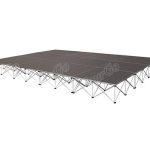
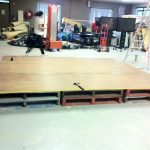
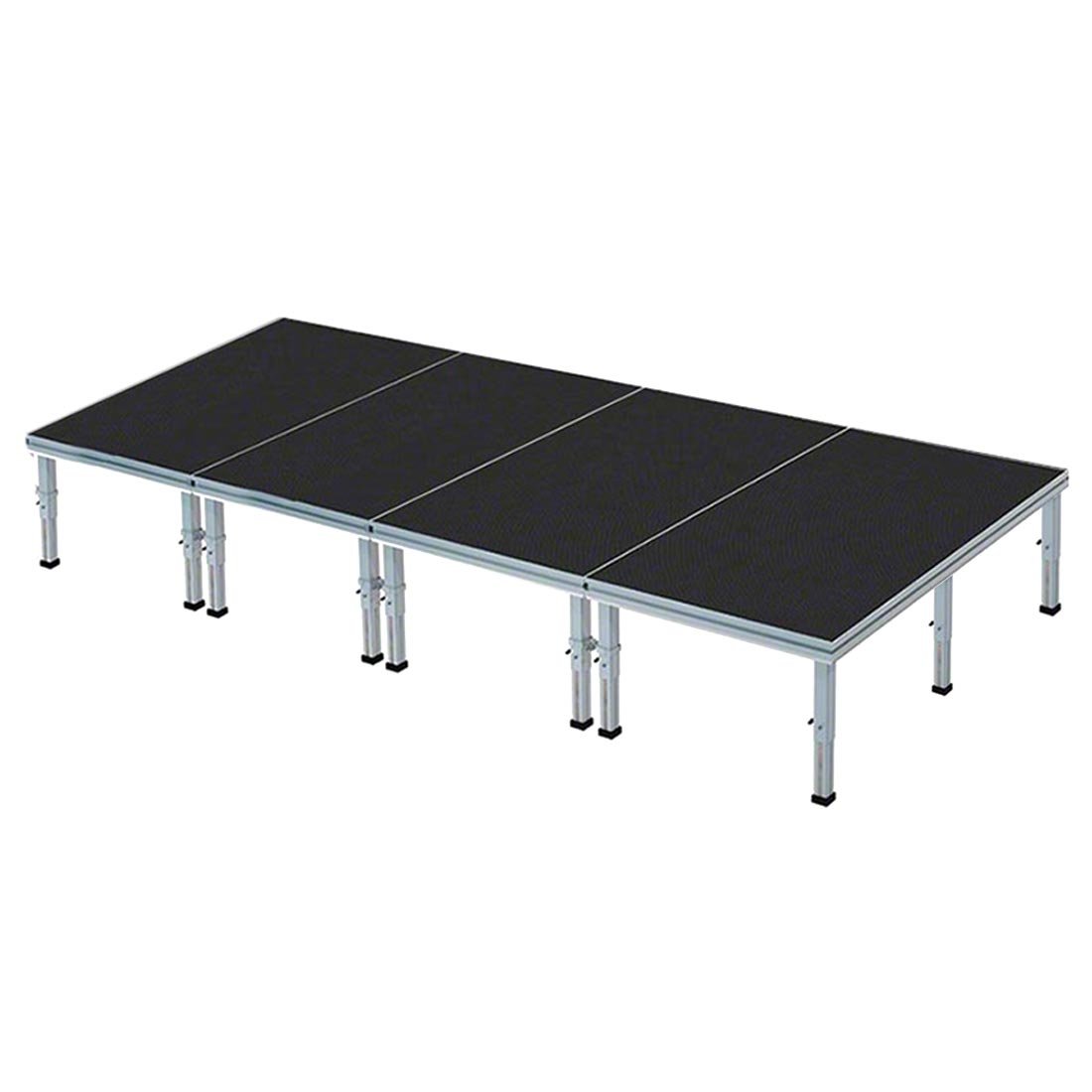
- Deck Panels: These are the actual walking surfaces, typically made from high-grade plywood with a durable, slip-resistant finish. They come in various modular sizes (e.g., 4’x8’, 4’x4’) allowing for flexible configurations.
- Support Frames/Legs: These provide the elevation and stability for the deck panels. They can be fixed-height, adjustable, or feature clever folding designs for quick setup and compact storage.
- Connection Hardware: The mechanisms that securely join deck panels to each other and to the support frames. Modern systems often boast tool-free locking systems for rapid assembly.
These core components form the structural integrity of your performance space, but it’s the additional stage pieces and accessories that truly elevate its functionality, safety, and aesthetic appeal.
Why Your Event Deserves Purpose-Built Stage Pieces
Opting for specialized, high-quality stage pieces isn’t just about having a platform; it’s about investing in a solution that delivers critical benefits for any event organizer.
Versatility for Every Vision
The beauty of modern stage pieces lies in their modularity. Imagine a system where 4’x8’ or 4’x4’ deck panels can be connected in almost infinite ways. This means the same set of stage pieces can form a small speaking podium today and a sprawling multi-level stage for a full band tomorrow. This adaptability is invaluable for venues like schools, churches, or community centers that host a wide range of events, from award ceremonies to talent shows. You’re not buying a single stage; you’re investing in a dynamic performance infrastructure.
Uncompromising Safety Standards
When people are elevated, safety becomes paramount. Reputable manufacturers design their stage pieces with rigorous safety in mind, meeting or exceeding industry standards for distributed load ratings. This means the stage can safely support significant weight, whether it’s a choir, heavy equipment, or enthusiastic performers. Key safety features often include:
- Slip-resistant surfaces: To prevent falls, even in high-traffic or energetic performance scenarios.
- Secure locking mechanisms: Ensuring that connections between decks and frames remain stable throughout an event.
- Durable, commercial-grade materials: Built to withstand constant use and movement without compromising structural integrity.
Effortless Setup and Teardown
Time is money, especially during event setup and strike. The best stage pieces are engineered for maximum mobility and simplicity, allowing for rapid deployment and dismantling without requiring specialized tools or highly trained personnel. Many systems feature:
- Built-in casters or wheels: For easy transport of folded units.
- Tool-free locking systems: Simplifying the connection of decks and frames.
- Folding leg designs: Allowing risers and smaller stages to collapse compactly for storage, often enabling one-person operation.
This ease of use significantly reduces labor costs and setup times, letting your team focus on other critical event logistics. For example, a single staff member can often deploy a mobile folding stage in minutes, a drastic improvement over traditional, labor-intensive staging.
Built to Endure: Long-Term Durability
Investing in industrial-grade stage pieces from established suppliers like National Public Seating (NPS) or SICO means you’re acquiring furniture designed for heavy-duty use in high-traffic environments. These are not flimsy, temporary solutions. Their products are subjected to rigorous quality control testing and built with commercial-grade materials that ensure long-term durability. This focus on robust construction translates to a lower total cost of ownership, as your stage pieces will withstand years of repeated use, transport, and storage, making them safe for schools, auditoriums, and other demanding venues.
Expanding Your Stage: Essential Accessories and Their Roles
While decks and supports form the backbone, a comprehensive set of stage pieces includes a range of accessories that enhance both functionality and the audience experience.
Safety Barriers: Guardrails and Handrails
Elevated platforms, especially those accessible to the public or children, demand safety barriers. Guardrails are crucial for the back and sides of stages and risers, preventing accidental falls. Many are modular, easily attaching to deck edges without tools. Handrails for steps and ramps provide additional support, particularly important for ADA compliance and for individuals with mobility challenges. Some systems also offer chair stops, which are small barriers along the back edge of a riser to prevent chairs from sliding off.
Access and Egress: Steps and Ramps
Getting onto and off the stage must be safe and easy for everyone.
- Steps: Available in various heights (single or multi-level), often with integrated handrails, steps provide standard access. They should be sturdy, slip-resistant, and securely attached to the stage.
- ADA-Compliant Ramps: For events requiring accessibility for all, ADA-compliant ramps are non-negotiable. These ramps have specific slope requirements and must include handrails on both sides to ensure safe passage for individuals using wheelchairs or with other mobility needs.
Aesthetics and Branding: Skirting, Draperies, and Backdrops
These stage pieces transform a utilitarian platform into a polished presentation space.
- Skirting: Fabric panels that attach to the front and sides of the stage or risers, concealing the understructure (legs, wires, storage) and creating a clean, professional look. Black skirting is a common choice, but many colors are available to match event themes or branding.
- Draperies and Backdrops: Beyond skirting, full drapery systems or custom backdrops can define the performance area, improve acoustics, or serve as a canvas for event branding and visuals.
Transport and Storage: Caddies and Dollies
Managing multiple stage pieces efficiently is key. Transport caddies or dollies are purpose-built wheeled carts designed to store and move deck panels, frames, guardrails, and skirting compactly. They protect your investment during transport and storage, prevent damage, and make setup/teardown even faster, often enabling one person to move a significant number of components. SICO’s Insta-Theatre, for example, is a mobile theater system that consolidates many stage pieces into one compact, easily transportable unit.
Choosing Your Stage Pieces: A Practical Playbook
Selecting the right stage pieces involves more than just picking a size; it requires a thoughtful assessment of your specific needs, constraints, and long-term goals.
1. Assess Your Event & Venue Needs
- What type of events will you host? One-off presentations, frequent concerts, theatrical productions, choral performances, award ceremonies?
- Who is your audience/performers? Children, seniors, large groups, individuals with disabilities? This heavily impacts safety features and ADA compliance.
- What is the venue size and layout? How much space do you have for the stage itself, and for storage when it’s not in use?
- How often will the stage be set up and taken down? Daily, weekly, monthly, or rarely? This drives decisions about mobility and ease of assembly.
2. Prioritize Mobility and Setup Efficiency
If you’re frequently moving or reconfiguring your stage, systems designed for quick, tool-free assembly are paramount. Look for features like:
- Integrated casters/wheels: For easy transport of folded units.
- Tool-free locking mechanisms: To connect decks and frames quickly and securely.
- One-person operation: For mobile folding stages, which can drastically reduce labor needs.
3. Focus on Uncompromised Safety
Never compromise on safety. Ensure your chosen stage pieces meet or exceed industry standards for load capacity and feature:
- Non-slip surfaces: For all deck panels.
- Robust locking systems: To prevent accidental disassembly.
- Guardrails: For any elevated platform, especially on sides and rear.
- ADA-compliant ramps and handrails: If accessibility is required.
4. Consider Durability and Longevity
Think of your stage pieces as a long-term investment. Commercial-grade materials and construction, like those offered by NPS and SICO, are designed to withstand years of heavy use in demanding environments. While initial costs might be higher, the longevity and reliability often lead to significant savings over time compared to frequently replacing less durable options.
5. Plan for Customization and Future Expansion
Choose a modular system that allows for easy expansion or reconfiguration as your event needs evolve. This includes:
- Interchangeable deck sizes: To create various stage footprints.
- Adjustable height options: For multi-functional use.
- A wide range of compatible accessories: Such as additional guardrails, steps, ramps, and skirting options.
For a broader understanding of how these individual pieces fit into a full raised stage platform system, including comprehensive benefits and integration into various event types, you’ll find immense value in our main guide. Read the full raised stage guide.
Quick Answers: Your Stage Piece FAQs
What’s the fundamental difference between a stage and a riser?
A stage is typically a larger, single-level elevated platform used for main performances or presentations. A riser is generally a tiered system, designed to elevate multiple people in rows (like a choir or audience) to improve visibility across different levels. While many portable stage systems can create both, the tiered structure is the defining feature of a riser.
How long does it typically take to set up a portable stage?
Many modern portable stage systems are designed for rapid deployment. With tool-free locking mechanisms, folding frames, and built-in casters, a basic stage can often be set up by 1-2 staff members in minutes. Larger, more complex configurations will naturally take longer, but the emphasis on efficiency means significantly less time than traditional, heavy-duty staging.
Are portable stage pieces safe for heavy-duty use?
Yes, reputable manufacturers like NPS and SICO engineer their stage pieces to meet or exceed rigorous industry standards for distributed load ratings. They use commercial-grade, durable materials, secure locking mechanisms, and slip-resistant surfaces, making them safe for heavy use in schools, auditoriums, and public venues.
Do I need special tools to assemble stage pieces?
Generally, no. A key benefit of modern, high-quality portable stage pieces is their tool-free design. Components often connect using intuitive, built-in locking mechanisms or simple hand-tightened fasteners, allowing for quick setup and teardown without specialized equipment.
Can stage pieces be used outdoors?
Many portable stage systems are designed for both indoor and outdoor use. However, it’s crucial to check the manufacturer’s specifications. Outdoor-rated stage pieces typically feature weather-resistant surfaces and components built to withstand varying environmental conditions without degradation or loss of structural integrity.
Elevate Your Event with Purpose-Built Stage Pieces
In the fast-paced world of event management, efficiency, safety, and visual appeal are non-negotiable. By understanding and strategically choosing your stage pieces, you’re not just assembling a platform; you’re crafting an experience. From the modularity of the deck panels to the crucial safety of guardrails and the polished finish of skirting, each component plays a vital role in creating a professional, versatile, and secure performance space.
Prioritize systems that offer ease of setup, robust durability, and comprehensive safety features. Focus on solutions that can adapt to changing event needs, offering maximum return on your investment. When you equip yourself with the right stage pieces, you empower your team to transform any venue into a dynamic stage, ready to deliver unforgettable performances and presentations with speed and confidence.

- Constructing A Stage Builds Your Own Sturdy Performance Platform - June 5, 2026
- DIY Stage Platform Construction Is Easy for Any Event - June 4, 2026
- Simple DIY Portable Folding Stage Ideas for Events - June 3, 2026