When planning an outdoor event, the thought of a grand, complex stage can be daunting. But often, what you truly need is something nimble, reliable, and quick to deploy: a small outdoor stage. These compact powerhouses aren’t just scaled-down versions of larger platforms; they’re purpose-built solutions designed for maximum impact with minimum fuss, transforming any open space into a vibrant performance or presentation area in minutes.
At a Glance: What You’ll Discover About Small Outdoor Stages
- Unmatched Versatility: How compact stages adapt to diverse outdoor event needs.
- Rapid Deployment: The secret behind setting up a professional stage in minutes, not hours.
- Robust & Reliable: Key features that make these stages durable and safe for outdoor use.
- Smart Design: How modularity and mobility simplify transport and storage.
- Practical Applications: Real-world scenarios where small outdoor stages excel.
- Making the Right Choice: Essential considerations for selecting your ideal platform.
The Unsung Hero: Why Small Outdoor Stages Deliver Big Impact
Imagine transforming a park gazebo, a school quad, or even a backyard into a focal point for entertainment, speeches, or ceremonies. This is where the small outdoor stage shines. Unlike bulky, fixed structures, these platforms are engineered for agility, allowing event organizers, schools, and community groups to elevate their offerings without the logistical nightmare. They bridge the gap between impromptu ground-level gatherings and full-scale concert productions, providing a professional, safe, and visible platform where one might not typically exist.
The demand for flexible, temporary outdoor venues has never been higher, and a small outdoor stage meets this need head-on. It’s not just about providing a raised surface; it’s about creating a dedicated performance zone that commands attention, enhances acoustics, and ensures everyone has a clear view, all while being able to pack up and disappear as quickly as it appeared.
Defining “Small Outdoor Stage”: Beyond Just Footprint
When we talk about a “small outdoor stage,” we’re not just referring to a minimal footprint, though that’s certainly a characteristic. We’re describing a category of portable platforms meticulously designed for:
- Ease of Management: Often requiring just one or two staff members for setup and dismantle.
- Rapid Assembly: Tool-free operations are standard, allowing full deployment in minutes.
- Portability: Lightweight components, built-in wheels, and compact folding designs for effortless transport.
- Outdoor Resilience: Constructed from commercial-grade materials that withstand varying weather conditions.
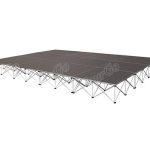
- Modular Versatility: Panels that connect to form various shapes and sizes, typically ranging from a single 4’x3′ platform (like the Victory Display model) up to configurations like 8’x12′ or 12’x16′ for small bands or larger presentations.
Companies like SICO have perfected this engineering, offering systems such as Mobile Folding Stages and Tri-Height Stages that exemplify these core principles. The emphasis is on “engineering for simplicity,” ensuring that mobility and versatility don’t come at the expense of stability or safety.
Essential Considerations for Your Small Outdoor Stage
Choosing the right small outdoor stage involves more than just picking a size. It requires a thoughtful evaluation of several key factors to ensure it meets your specific event needs, safety standards, and logistical capabilities.
Portability and Setup Speed: The “Minutes, Not Hours” Advantage
This is often the primary driver for opting for a small outdoor stage. Look for features that guarantee swift and easy deployment:
- Single-Operator Design: Many quality systems, like SICO’s Mobile Folding Stages, are designed for one person to maneuver and set up independently.
- Tool-Free Assembly: Locking mechanisms and connection points that don’t require wrenches or drills. SICO’s modular stages, for instance, feature intuitive, tool-free locking.
- Built-in Mobility: Integrated casters or wheels allow the folded stage unit to be rolled into place easily. This is crucial for minimizing strain and maximizing efficiency, especially for schools or venues with multiple event spaces.
- Folding Frames: Designs where legs and frames fold compactly (like SICO’s folding stages or the Victory Display’s hinged top) drastically reduce setup time and simplify storage.
Durability and Weather Resistance: Built for the Elements
An outdoor stage must be able to stand up to more than just the weight of performers; it needs to brave the elements.
- Commercial-Grade Materials: High-quality aluminum or steel frames and robust decking materials ensure longevity. These materials are chosen not just for strength but also for resistance to rust and corrosion.
- Slip-Resistant Surfaces: Decking should feature a textured or non-skid surface to prevent accidents, especially when wet.
- Load Capacity: Ensure the stage can safely support the expected weight of performers, equipment (speakers, instruments), and any props. Look for distributed load ratings that meet or exceed industry standards.
- Stability Mechanisms: Secure locking mechanisms and sturdy leg designs are paramount for stability on potentially uneven outdoor surfaces.
Safety Features: Non-Negotiable for Public Events
Safety is paramount, particularly for public events or those involving children. A reputable small outdoor stage system will offer:
- Guardrails: Essential for any elevated platform, especially when performers are moving or the audience is close. ADA guardrails offer enhanced safety.
- Steps and Ramps: Easy, safe access to the stage. For public events, ADA-compliant ramps are often a legal requirement and always a best practice for inclusivity.
- Secure Locking Mechanisms: To prevent accidental collapse or disconnection of modules.
- Weight Distribution: Proper engineering ensures the stage’s load capacity is evenly distributed and can handle dynamic movement.
Versatility and Modularity: Adapting to Your Vision
The beauty of many small outdoor stages lies in their adaptability.
- Configurable Footprints: Modular panels (available in various dimensions from brands like SICO) can be connected to create stages of different sizes and shapes, from a simple solo performance space to a platform for a small band or panel discussion.
- Adjustable Heights: Systems like SICO’s Tri-Height Stages offer multiple height options, allowing you to tailor the stage elevation to the event, audience sightlines, and specific performance needs.
- Integration with Accessories: The ability to easily add skirting, backdrops, chair stops, or even full theatre systems (like SICO’s Insta-Theatre®) expands the stage’s utility.
Storage and Transport: Minimizing Footprint, Maximizing Convenience
Once the event is over, the stage needs to pack away efficiently.
- Compact Folding: The stage should fold down into a manageable size for storage in a closet, utility room, or even a vehicle trunk (as with Victory Display’s 4’x3′ model).
- Transport Caddies: For larger modular systems, specialized caddies or carts simplify moving multiple panels.
- Space Efficiency: Folding designs ensure the stage takes up minimal storage space, a critical factor for schools or venues with limited storage.
Real-World Applications: Where Small Outdoor Stages Shine
The adaptability of a small outdoor stage makes it an invaluable asset for a surprising variety of events.
- Community Festivals & Farmers’ Markets: Provide a platform for local musicians, spoken word artists, or cooking demonstrations. Imagine a 6’x8′ stage set up quickly for a local band, enhancing the atmosphere of a community gathering.
- Educational Settings: Schools can use a mobile folding stage for outdoor assemblies, impromptu performances, awards ceremonies during field day, or even a small graduation ceremony platform. The ease of setup means gym teachers or music instructors can deploy it without specialized support staff.
- Corporate Events: Outdoor team-building events, product launches, or presentations can leverage a compact stage to give speakers prominence and ensure better visibility for attendees. A 4’x8′ stage could be used for a CEO’s welcome speech at an outdoor company picnic.
- Private Parties & Celebrations: From a DJ platform at a wedding reception to a small stage for a backyard acoustic concert, these stages add a professional touch to personal events. The Victory Display 4’x3′ platform is perfect as a drum riser or DJ stage for such intimate settings.
- Houses of Worship: Outdoor services, holiday pageants, or community outreach events can benefit from an elevated platform for clergy, choirs, or speakers.
- Specialized Uses: Beyond general performance, these stages serve perfectly as drum risers, DJ booths, elevated platforms for equipment, or even as temporary display areas for products at outdoor trade shows.
Case Snippet: A small town’s “Summer in the Park” concert series faced budget constraints for large staging. They invested in two SICO Mobile Folding Stages (each 4’x8′), which could be used individually for solo acts or connected to form an 8’x8′ or 4’x16′ stage for duos and trios. Park staff could set up and dismantle the entire stage, complete with guardrails and steps, in under 15 minutes, allowing them to host multiple free concerts throughout the season with minimal overhead.
Step-by-Step: Setting Up Your Small Outdoor Stage with Ease
The promise of “easy setup” isn’t an exaggeration with modern small outdoor stages. Here’s a typical process:
- Site Preparation:
- Choose a Level Spot: While stages offer some flexibility, a relatively flat, stable surface is ideal. Clear away any debris or sharp objects.
- Measure & Mark: If you’re building a modular stage, lightly mark the desired footprint to ensure proper alignment.
- Assess Ground Conditions: For soft ground, consider using ground covers or plates under the stage feet for added stability and to prevent sinking.
- Unfold & Position:
- Roll into Place: If your stage has wheels (like SICO’s mobile folding units), roll it to the exact setup location.
- Unfold the Frame: Many stages feature intuitive folding frames that spring into position. For example, SICO stages allow for quick transitions from storage to performance-ready in minutes.
- Lock in Position: Secure any folding legs or frame sections into their open, locked positions.
- Connect Modules (if applicable):
- Align Panels: For modular systems, align the first panel, then roll or carry subsequent panels into place.
- Utilize Tool-Free Mechanisms: SICO’s locking mechanisms allow panels to be joined securely without any tools, simply by engaging a lever or clip. Ensure all connections are fully engaged.
- Adjust Height (if applicable):
- Engage Height Mechanisms: If using a tri-height stage, adjust each leg to the desired uniform height, ensuring all legs are locked symmetrically.
- Install Safety Features:
- Attach Guardrails: Securely attach guardrails around the perimeter of the stage. Many systems have slots or clamps for quick installation.
- Add Steps/Ramps: Position and secure access steps and/or ADA-compliant ramps. Ensure they are stable and free from tripping hazards.
- Finishing Touches:
- Apply Skirting: Attach stage skirting to the perimeter for a polished, professional look and to conceal the stage’s underside.
- Add Backdrops & Lighting: If needed, set up any backdrops, banners, or lighting fixtures.
Practical Tip: Always do a final walk-around to check that all locking mechanisms are engaged, guardrails are secure, and the stage feels stable before allowing anyone onto the platform. This quick check takes seconds but can prevent serious issues.
Pitfalls to Avoid & Pro Tips for Small Outdoor Stage Success
Even with the easiest-to-use equipment, a little foresight goes a long way.
Pitfalls to Avoid:
- Underestimating Wind Load: Outdoor stages can act like sails. Never underestimate wind. Always secure your stage, especially if backdrops or canopies are present. Use sandbags, water barrels, or tie-downs where appropriate.
- Ignoring Load Capacity: Just because it’s “small” doesn’t mean it’s flimsy. But every stage has a limit. Overloading with too many performers, heavy instruments, or excessive equipment is dangerous. Always know and respect the distributed load rating.
- Neglecting Accessibility: If your event is open to the public, planning for ADA-compliant ramps isn’t just good practice; it’s often a legal requirement.
- Improper Storage: Leaving a portable stage exposed to the elements or storing it haphazardly can shorten its lifespan. Always clean, dry, and store components in a designated, protected area, ideally using transport/storage caddies.
- Skipping Safety Checks: Rushing setup and foregoing the final safety check (locking mechanisms, guardrails, stability) is a recipe for disaster.
Pro Tips for Success:
- Practice Setup: Before a big event, do a dry run of the stage setup, especially if it’s your first time or new staff are involved. This builds confidence and identifies potential snags.
- Leveling Solutions: For truly uneven ground, consider bringing shims or robust leveling blocks. While many stages offer some built-in leveling, significant slopes require more direct intervention.
- Protect the Deck: For long-term use, consider adding a protective mat or carpet for very heavy equipment (like drum kits) to prevent scuffs or damage to the stage deck.
- Invest in Quality Accessories: Good quality skirting, durable guardrails, and sturdy steps not only enhance safety and aesthetics but also contribute to the longevity and professional presentation of your stage.
- Regular Maintenance: Periodically inspect all components for wear and tear, especially hinges, locking mechanisms, and the condition of the deck surface. Lubricate moving parts as recommended by the manufacturer.
Quick Answers: Your Small Outdoor Stage Questions, Answered
Q: Can one person really set up a small outdoor stage by themselves?
A: Yes, many high-quality small outdoor stages, such as SICO’s Mobile Folding Stages, are specifically engineered for single-operator setup. Their built-in casters and intuitive folding frames allow one person to move and deploy the stage quickly and efficiently without specialized tools.
Q: Are these stages stable on uneven ground outdoors?
A: While most portable stages are designed with some inherent stability and often include adjustable feet, they perform best on relatively level ground. For significantly uneven terrain, it’s best to pre-level the area or use shims under the stage feet to ensure optimal stability and safety.
Q: How do small outdoor stages handle rain and other weather conditions?
A: Reputable small outdoor stages are built with commercial-grade, weather-resistant materials (e.g., slip-resistant decking, rust-resistant frames) suitable for outdoor exposure. However, for prolonged heavy rain or extreme weather, covering the stage or dismantling it is advisable to protect electronics and prolong the life of the stage components.
Q: What is the typical lifespan of a quality small outdoor stage?
A: When constructed from commercial-grade materials and properly maintained, a quality small outdoor stage can last for many years, even with rigorous daily use. Features like secure locking mechanisms and durable surfaces contribute to their longevity and ability to withstand heavy-duty performance needs.
Q: Do I need special permits to set up a small outdoor stage?
A: Permit requirements vary significantly by location, the size/height of the stage, and the nature of the event (public vs. private). Always check with local city or county authorities, especially the building and event permitting departments, well in advance of your event to ensure compliance.
Making the Right Choice for Your Event
The value of a small outdoor stage cannot be overstated for its ability to deliver professional performance capabilities in virtually any setting. When selecting your stage, carefully consider your typical event type, the audience size you anticipate, and the specific features that will contribute most to ease of use, safety, and versatility for your team.
Investing in a well-designed, robust, and easily deployable small outdoor stage is an investment in the success and flexibility of your future events. While this guide focuses on compact outdoor solutions, understanding the broader landscape of raised stage platforms can further inform your decisions. Explore versatile stage platforms to discover more about how these essential event tools deliver mobility and performance for any setting. Choosing wisely means less setup stress, more impact, and the freedom to create memorable experiences, anywhere.

- Constructing A Stage Builds Your Own Sturdy Performance Platform - June 5, 2026
- DIY Stage Platform Construction Is Easy for Any Event - June 4, 2026
- Simple DIY Portable Folding Stage Ideas for Events - June 3, 2026