The curtain rises not just on a story, but on a world meticulously crafted by the elements of scene design. These aren’t merely decorative additions; they are the architectural vocabulary and painterly strokes that define a production’s visual narrative, influencing everything from an actor’s movement to the audience’s emotional resonance. A scene designer’s true artistry lies in their ability to select, shape, and combine these foundational components to build environments that aren’t just seen, but deeply felt.
At a Glance: Mastering Scene Elements
- Understand the Six Pillars: Grasp how set pieces, props, backdrops, lighting, functionality, and scenic art work individually and collectively.
- Connect Elements to Narrative: Learn to choose and shape elements based on a script’s period, mood, character, and plot needs.
- Prioritize Functionality: Discover why practical considerations for actors, crew, and technical demands are non-negotiable.
- Embrace Evolution: See how technology transforms traditional elements like backdrops and lighting.
- Develop a Strategic Eye: Gain insights into making intentional design decisions and avoiding common pitfalls.
- Communicate Visually: Understand the role of models and drawings in articulating your vision for these elements.
The Power of Visual Storytelling: Deconstructing Scene Elements
Every stage, screen, or performance space is a blank canvas, awaiting transformation into a tangible world. Scenic design, often referred to as stage, set, or production design, is the discipline that breathes life into this space. It’s about creating the “world through which you perceive things happening,” a deliberate act that shapes physical space, guides actor blocking, dictates pacing, and sets the overarching tone.
From the simple amphitheatres of ancient Greece to the kinetic, mechanized sets of modern spectacle, designers have continuously evolved their toolkit. The early 20th century’s American New Stagecraft movement, inspired by European pioneers, championed a move from pure naturalism to more symbolic, abstract, and emotionally resonant environments—a trend further refined into poetic realism. Today, we navigate a spectrum from grand spectacle with intricate special effects to minimalist abstraction, all while using the same fundamental building blocks. The challenge, and the art, is in knowing how to wield these elements to serve the narrative, evoke emotion, and transport the audience.
The Foundational Six: Core Elements of Scene Design in Practice
A truly compelling visual story hinges on the expert integration of several key elements. Let’s break down each one, exploring its unique contribution and the nuanced decisions involved in its application.
1. Set Pieces: Defining the Spatial Environment
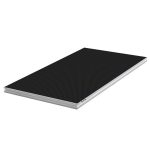
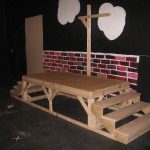
Set pieces are the physical structures that anchor your scene – walls, platforms, stairs, doors, windows, furniture. They are the tangible boundaries and points of interaction within your created world. These elements immediately establish the time, location, and atmosphere of a production.
- Practical Decisions:
- Scale and Proportion: Does a grand staircase suggest opulence or impending doom? How does the height of a wall make a character feel trapped or free?
- Materiality and Texture: Distressed wood might imply age or neglect, while polished chrome speaks to modernity or sterility. These choices profoundly impact atmosphere.
- Flexibility: Can a set piece serve multiple locations or functions across scenes? Think about a versatile archway that becomes a doorway, a window, or even a symbolic portal with a change in lighting or a prop.
- Case Snippet: For a production of Death of a Salesman, designer Jo Mielziner famously used a skeletal, fragmented house structure. This wasn’t a fully realistic home, but rather a set of suggestive outlines, conveying the fragility of Willy Loman’s life and memory, highlighting the emotional tone over mere physical representation.
2. Props: Enhancing Narrative and Revealing Character
Props are the movable objects actors use within the set. While often small, their impact is immense. They establish setting, enhance the narrative, reveal character, advance the plot, and even symbolize themes. From a wilting bouquet to a meticulously organized desk, every prop tells a story.
- Practical Decisions:
- Actor Interaction: Props must be designed and selected with the actors’ movements and dialogue in mind. A heavy prop might impede a quick exit; a fragile one could break during a dramatic gesture.
- Period and Authenticity: A period piece demands careful research into historically accurate items, but sometimes a slight anachronism can be used deliberately for symbolic effect.
- Symbolic Weight: Does a recurring object carry a deeper meaning? Consider the handkerchief in Othello or the “rosebud” sled in Citizen Kane.
- Budget and Availability: Sourcing or creating props can be time-consuming and expensive. Collaboration with the prop master is critical for early identification and budgeting.
3. Backdrops: Creating Depth and Dynamic Worlds
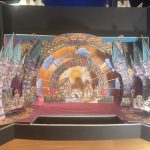
Backdrops are the elements that define the background of the stage, creating depth, perspective, and mood. Historically, these were intricately painted canvases, often employing techniques like trompe l’oeil to create illusions of vast landscapes or architectural grandeur. Today, digital projection offers dynamic, evolving backgrounds that can shift instantly with the narrative.
- Practical Decisions:
- Perspective and Illusion: How do you create the illusion of distance or a specific environment on a two-dimensional surface? Understanding forced perspective is key for painted backdrops.
- Mood and Atmosphere: A stormy sky projected onto a backdrop immediately sets a dramatic, foreboding tone, while a vibrant cityscape implies energy and modernity.
- Technological Integration: For digital backdrops, consider projector placement, screen materials, and content resolution. The ability to animate or change a background mid-scene offers incredible storytelling potential, but requires careful synchronization.
- Case Snippet: Modern musicals often utilize immense LED screens as backdrops, allowing for rapid scene changes and immersive, fantastical environments that would be impossible with traditional painted scenery. Think of the dynamic projections in productions like Frozen or Wicked.
4. Lighting: Shaping Perception and Emotion
Lighting is perhaps the most ephemeral, yet most powerful, of the scenic elements. It’s not just about illumination; it’s about setting tone, establishing ambiance, directing focal points, and manipulating audience emotion. Technological advancements have exponentially expanded control over color, intensity, and movement.
- Practical Decisions:
- Direction and Angle: Light from above can be dramatic, from below eerie, from the side sculptural.
- Color Temperature: Cool blues and greens often evoke night, sadness, or introspection, while warm oranges and yellows suggest daytime, comfort, or passion.
- Intensity and Focus: A single, sharp spotlight can isolate a character, indicating importance or vulnerability, while a soft, diffused wash can create a dreamlike state.
- Movement and Effects: Automated fixtures allow for dynamic chases, sudden changes, and atmospheric effects like flickering fire or rippling water, all contributing to the narrative.
5. Functionality: The Unseen Backbone of Design
While often invisible to the audience, the functionality of a set is paramount. A beautiful set is useless if it doesn’t allow actors to move freely, if crew can’t manage transitions, or if it poses safety risks. Sets must be practical, considering accessibility for performers, sightlines for the audience, efficient entrances and exits, and adherence to all technical specifications and safety codes.
- Practical Decisions:
- Actor Blocking: The set must facilitate the director’s vision for actor movement without creating awkward or dangerous pathways.
- Scene Changes: How quickly and quietly can elements be moved or reconfigured? Are there hidden tracks, casters, or flying systems?
- Accessibility: Are there ramps for platforms? Are doors wide enough? Are steps designed for safe ascent and descent, even in dim lighting?
- Sightlines: Every audience member, regardless of seat, should have a clear view of the action. Designers must consider this from the earliest sketches.
- Structural Integrity: This is non-negotiable. All set pieces must be safely constructed and able to withstand the stresses of performance.
6. Scenic Art and Painting: Adding Detail and Illusion
Scenic art involves the detailed painting and finishing of all scenic elements, from vast backdrops to intricate props and textures. This discipline brings surfaces to life, creating illusions of age, material, or distance using traditional techniques like trompe l’oeil, faux finishes (e.g., marbling, wood graining), and texture application. Today, it often includes preparing surfaces for digital projection.
- Practical Decisions:
- Artistic Vision: The scenic artist translates the designer’s vision into painted reality, requiring a keen eye for detail and mastery of various painting techniques.
- Scale and Perspective: Painting on a large scale requires understanding how colors and details will read from a distance. A brushstroke that looks crude up close can appear perfectly realistic from the audience.
- Durability: Paints and finishes must withstand handling, cleaning, and the rigors of performance.
- Collaboration: Close communication with the scenic designer and technical director ensures the painted elements integrate seamlessly with the overall design and construction.
Weaving the Tapestry: Integrating Elements for Cohesive Design
No element exists in isolation. The true magic of scenic design emerges when these components are thoughtfully combined, creating a holistic environment that resonates with the play’s core message. A designer might use a stark, minimalist set (set pieces) paired with harsh, directional lighting (lighting) to emphasize a character’s isolation, while a vibrant, lush painted backdrop (scenic art/backdrops) combined with intricate, period-specific props (props) could transport an audience to a bygone era.
The interplay is constant. A functional staircase (set piece) might be designed with a specific material (scenic art) to evoke a certain mood, then dramatically lit (lighting) to draw attention to a pivotal entrance or exit (functionality). The dialogue between these elements is what gives a design its depth and narrative power.
The Designer’s Toolkit: Visualizing Elements Before the Build
Before any lumber is cut or paint is mixed, designers meticulously plan and communicate their vision for these elements. This is where tools like drafting and model making become invaluable.
Drafting, using both traditional methods and CAD software like Vectorworks or AutoCAD, provides precise measurements and construction details for every set piece, prop placement, and backdrop specification. Ground plans show the layout from above, front elevations show specific elements, and section views reveal internal structure.
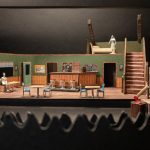
Crucially, models allow designers to showcase spatial relationships and design elements in three dimensions, bridging the gap between concept and reality. These scaled miniatures, often evolving from “white models” for early exploration to detailed, color-rendered versions, help communicate the visual story to the entire production team—from technical director to prop master. They allow for critical adjustments before costly construction begins, ensuring every element is precisely envisioned and understood. For a deeper dive into how these physical representations aid in translating abstract ideas into concrete forms, refer to this Essential guide to scenic models.
Strategic Decisions: A Playbook for Element Selection
Making informed choices about each element is critical. Here’s a quick playbook:
- Script First, Always: Every design decision must stem from a deep understanding of the script. What period is it? What’s the core conflict? What are the key emotional beats?
- Define Your Concept: Before detailing individual elements, establish an overarching visual concept. Is it realistic? Abstract? Minimalist? Poetic? This guides all subsequent choices.
- Prioritize Impact: Which elements will have the greatest impact on the audience’s understanding and emotional response? Focus resources and creative energy there.
- Embrace Constraints: Budget, venue size, technical capabilities, and timeline are not limitations but frameworks. Learn to design creatively within them.
- Collaborate Continuously: Your design interacts with costumes, lighting, sound, and direction. Constant communication prevents conflicts and fosters synergy.
- Avoid Redundancy: Every element should serve a purpose. If a prop or set piece doesn’t advance the narrative, reveal character, or establish mood, reconsider its necessity.
- Test and Refine: Use models and early mock-ups to test ideas, especially for complex functional elements or sightline challenges. Iterate based on feedback.
Quick Answers: Common Questions on Scene Elements
Q: Do I need all six elements in every production?
A: Not necessarily. A minimalist production might rely heavily on lighting and a single, symbolic set piece, eschewing elaborate backdrops or numerous props. The key is intentionality and effectiveness in storytelling, not checklist completion.
Q: How much realism is required for set pieces and props?
A: It depends entirely on the director’s and designer’s concept for the production. Some plays demand hyper-realism, while others thrive on abstraction, where elements only suggest reality, allowing the audience’s imagination to fill in the blanks. The goal is consistent stylization within the production’s world.
Q: Can one element compensate for weaknesses in another?
A: To some extent, yes. Powerful lighting can sometimes compensate for a simple set, or strong performances can elevate a less-than-perfect design. However, a truly cohesive production strives for excellence across all elements. Relying too heavily on one element to carry the entire visual load can lead to an unbalanced or underdeveloped aesthetic.
Q: How important is functionality compared to aesthetics?
A: Functionality is equally, if not more, important. A set can be visually stunning but if it’s unsafe, hinders actor movement, or prevents smooth scene transitions, it fails its primary purpose. Aesthetics and functionality should be designed in tandem, each informing the other.
Crafting Worlds, One Element at a Time
The art of scene design is a sophisticated dance between imagination and practicality. By understanding and deliberately wielding the core elements of set pieces, props, backdrops, lighting, functionality, and scenic art, you gain the power to not just dress a stage, but to build an entire world. Each decision, from the texture of a wall to the color of a light, contributes to the emotional landscape and narrative clarity of a production. Begin by dissecting your script, then methodically consider how each of these elements can be shaped to articulate your unique visual story, ensuring that every detail serves the dramatic truth.

- Elements Of Scene Design Define A Productions Visual Story - May 20, 2026
- Model Theatre Design Guides Students In Scenic Presentation Skills - May 19, 2026
- The Essential Elements of Scenic Design for Theatrical Worlds - May 18, 2026