The moment the house lights dim and the first chord strikes, the stage isn’t just a platform—it’s the beating heart of the live experience. But behind every jaw-dropping visual and every perfectly balanced sound mix lies a meticulously executed concert stage set up. This isn’t just about assembling pieces; it’s a strategic orchestration that transforms a bare space into an immersive world, ready to amplify the performers and captivate every single audience member. Get it wrong, and the entire production falters. Get it right, and you create indelible memories.
At a Glance: Essential Takeaways for Concert Stage Set Up
- Strategic Blueprinting: Every setup begins with a clear understanding of the event’s purpose, performer needs, and venue limitations.
- Modular Construction: Modern setups emphasize efficiency, safety, and adaptability for various stage elements, from structures to technical gear.
- Integrated Systems: Lighting, audio, and visual components aren’t isolated; their synchronized setup is key to a cohesive experience.
- Safety First, Always: Rigorous checks, fire protocols, and clear emergency plans are non-negotiable before a single audience member arrives.
- Rehearsal is Key: Beyond soundcheck, full technical rehearsals ensure all elements—from effects to performer cues—are perfectly timed.
- Dynamic Management: On-the-fly adjustments and clear communication are vital during the live event to address unforeseen challenges.
Beyond Assembly: Why a Professional Stage Set Up Changes Everything
A concert stage isn’t merely a space for performers; it’s a crucial storytelling canvas. The way a stage is set up directly impacts the show’s energy, enhances audience engagement, and reinforces the event’s overall theme and branding. Think about it: sleek LED strips precisely positioned and programmed during setup can signal high energy for an EDM show, while the careful placement of reclaimed wood and warm string lights crafts intimacy for an acoustic folk concert. This detailed preparation, explored further in our guide to Master concert stage design, is where abstract creative concepts become tangible, unforgettable experiences.
Without a thoughtful and professional approach to concert stage set up, even the most brilliant design concept can fall flat. It’s the difference between a functional platform and an immersive environment.
Phase 1: Blueprinting Your Concert Stage Set Up (Pre-Production)
Before the first truss is lifted, extensive planning ensures every component serves a purpose and fits seamlessly. This phase dictates the entire flow of the on-site build.
Defining Your Canvas: Event Purpose and Performer Needs
The very first step in any stage setup is understanding the why and who. What’s the genre of music? How many performers will be on stage? Will there be extensive movement, or is it a more stationary act?
- Genre Dictates Detail: A solo artist might only require a minimalist platform, a microphone, and a monitor. A full rock band, conversely, demands space for multiple instruments, drum risers, amplifier backlines, and various vocal positions. For a 20-person orchestra, you’re looking at 600+ sq ft, requiring careful tiered riser setups and extensive microphone placement.
- Special Moments, Special Setups: Planning for specific show elements, like a hidden lifting platform for a guest’s dramatic entrance or clear overhead space for pyrotechnics, dictates the structural requirements and equipment placement long before setup day. Imagine the logistical headache if a pyrotechnics setup only finds out on-site that the ceiling truss isning strong enough!
- Audience Experience: A bright, open layout with vibrant colors is ideal for a family-friendly pop concert, influencing the types of screens and props you’ll set up. Edgy, darker visuals for adult electronic music might lead to more dramatic lighting fixtures and less visible structural elements.
Sizing Up the Space: Stage Dimensions and Architectural Considerations
The chosen venue—and its inherent limitations—heavily influences your concert stage set up.
- Performer Footprint: You need adequate space not just for performers, but also for their instruments, monitor wedges, and any essential stage props. A common guideline is at least 200 sq ft for a 5-piece band, allowing for movement and separation. Underestimating this leads to a cramped, unsafe, and visually messy stage.
- Venue Constraints are King:
- Indoor Venues: Ceiling height is a major factor, dictating how high you can fly lighting trusses, LED screens, or scenic elements. Are there existing rigging points, and what’s their weight capacity?
- Outdoor Venues: Weather protection becomes paramount. Any structure, especially tall ones, must be engineered to withstand potential wind loads. Fabric backdrops, for instance, need robust rigging to prevent them from becoming sails in high winds. Always check local building codes and wind ratings.
- Shape Options and Their Setup Implications:
- Classic Proscenium: The traditional “theater style” setup, where the audience faces one direction. This simplifies sightlines but can feel distant. Setup focuses on a clear frontal presentation.
- T-Shaped or Thrust Stages: These extend into the audience, offering closer interaction but introducing challenges for lighting and sound coverage from multiple angles. Cabling runs for monitors and microphones need to be carefully planned to avoid tripping hazards.
- Circular Setups (e.g., In-the-Round): Offering 360-degree audience views, these create an incredibly intimate experience but demand meticulous planning for sightlines, speaker placement (to avoid feedback), and performer entries/exits from multiple points. Every piece of equipment must be considered from all angles.
- Dome Structures (e.g., Shelter Dome): Innovative solutions for outdoor events. These offer robust protection from weather (waterproof fabric, wind-rated frames) and provide immersive sightlines. Their modular assembly systems significantly cut down setup time, often by half, reducing labor costs and venue downtime. They also feature custom access tunnels to backstage areas and multiple utility ports, streamlining the connection of lighting, sound, and power systems. Customization options like LED strip accents or canopy extensions can be integrated during the initial assembly.
Phase 2: Bringing the Vision to Life (On-Site Construction & Integration)
This is where the blueprint transforms into a physical reality. Precision, safety, and coordination are paramount.
Crafting the Visual Core: Set Pieces and Backdrops
The main scenic elements define the stage’s character. Their construction and placement require careful handling.
- The Main Backdrop:
- LED Screens: These are typically modular panels, assembled piece by piece on site. Rigging them requires structural support (trussing, ground support towers) and careful weight distribution calculations. Signal and power cabling must be neatly routed and secured.
- Fabric Backdrops: Often custom-printed, these need secure rigging points (batons, truss), tensioning systems to ensure a smooth, wrinkle-free appearance, and sufficient clearance from lighting to prevent heat damage or fire hazards.
- 3D Scenery: Whether it’s custom-built props or pre-fabricated elements, each piece needs stable support, secure anchoring to the stage, and clear pathways around it for performers and crew.
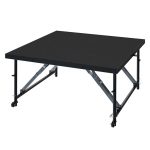
- Props and Architectural Features: Risers (drum risers, keyboard platforms) must be stable, level, and securely fastened. Scaffolding for multi-level sets requires trained personnel for assembly and rigorous safety checks. Thematic objects add flair but must not obstruct sightlines or create trip hazards.
- Technical Hideaways: Key equipment like mixing consoles, lighting boards, and special effects machines (smoke, confetti) need dedicated, accessible spaces that are out of the audience’s view but within easy reach for technicians. Plan for cable runs that are protected and clearly labeled.
- Performer Flow: Entry and exit points—be it hidden side tunnels, rotating flank doors, or hydraulic lifts—must be installed with safety in mind. Testing these mechanisms repeatedly during setup is crucial to ensure smooth, accident-free transitions.
The Power of Light: Strategic Lighting Setup
Lighting is more than illumination; it paints the mood. Its setup involves precise placement and intricate cabling.
- Lighting Fixture Placement:
- Spotlights: Typically mounted on front trusses to highlight solo performers. Aiming and focusing are done during setup.
- Wash Lights: These flood the stage with color and are positioned on overhead trusses, side ladders, or ground positions. Their setup involves careful angling to ensure even coverage without creating unwanted shadows.
- Laser Lights: Require specialized rigging for safe projection zones, often on overhead trussing or dedicated stands, ensuring lasers don’t hit audience members’ eyes directly.
- Defining Lighting Zones:
- Front Washes: Positioned to illuminate performers’ faces and frontal movements. Set up requires adjusting beam angles and intensity.
- Backlights: Crucial for separating performers from the background and adding depth. These fixtures are usually placed behind the performers and aimed forward.
- Floor Lights: Placed at stage level, providing an upward glow for dramatic effects or to highlight scenic elements.
- Control System Integration: The DMX controller, the brain of your lighting system, is connected to all fixtures via DMX cables. This setup involves patching (assigning channels to fixtures) and pre-programming light changes and scenes to sync seamlessly with music beats and different performance segments. This programming is often done off-site and refined during on-site setup and rehearsal.
Precision Sound: Audio Equipment Setup
Clear, balanced audio is non-negotiable. Proper placement and connection of all audio components prevent feedback and ensure optimal sound quality.
- Speaker Placement for Coverage:
- Line Array Speakers: Rigged above the stage, these are angled to provide even sound distribution across the audience area. Their setup involves calculating throw distances and coverage patterns.
- Monitor Speakers: Positioned on stage, facing the performers, allowing them to hear themselves and the band. In-ear monitors (IEMs) are increasingly popular, reducing on-stage clutter and feedback potential.
- Feedback Prevention During Setup: Microphones should be positioned as far as possible from main speakers and monitors. During setup, testing for feedback is an iterative process of adjusting microphone gain, speaker volume, and equalization. Utilizing noise-cancelling technology in microphones and a well-tuned sound system are essential. Wireless microphones and instruments require careful frequency coordination to avoid interference, with charging stations for all wireless packs prepped backstage.
- Cabling Strategy: All audio cables must be neatly run, taped down, and protected with cable ramps in high-traffic areas to prevent tripping hazards and damage. A clean cable management system is a hallmark of a professional setup.
Visual Storytelling: Screen and Projection Setup
Visuals complement the music, from lyrics to abstract graphics.
- Screen Layouts:
- Large LED Walls: For stadiums or large venues, these are assembled from modular panels, requiring robust structural support and power distribution. The setup involves aligning panels perfectly for a seamless image.
- Projection Surfaces: For smaller venues or specific artistic effects, projectors need careful placement (front, rear, or overhead) to achieve the desired throw distance and image size without obstructing views. Calibration for brightness and color is vital.
- Interactive Tools Integration:
- Ground Projection: Requires overhead projectors and sensors to detect audience movement, projecting reactive visuals. The setup involves precise alignment of sensors and projectors to the stage area.
- AR Filters: Integrating augmented reality elements (virtual stage props on phone cameras) is more about software and network setup, ensuring stable Wi-Fi and content delivery systems that performers can interact with.
Elevating the Spectacle: Special Effects Deployment
Special effects (SFX) transform a performance into an unforgettable spectacle. Their setup is highly technical and safety-critical.
- CO2 Cannons: These require securing CO2 tanks backstage or off-stage, running high-pressure hoses to the stage-mounted cannons, and ensuring clear ‘dump zones’ where the CO2 dissipates safely. Always test with a clear stage.
- Stage Flame Machines: Common in rock and EDM, these need careful placement away from flammable materials (curtains, props, performers’ hair) and require secure fuel lines (often propane or custom fluid). Emergency shut-off systems must be installed and tested during setup. A designated fire marshal should be on site.
- Confetti Blasters: Require loading canisters (CO2 or compressed air), positioning the blasters for optimal spread over the audience or stage, and clearing paths for their operation. Consider biodegradable confetti for outdoor events.
- Fog Machines: Essential for creating atmosphere and enhancing light beams. Proper placement ensures even fog distribution without obscuring performers or vital equipment. Adequate ventilation should be considered, especially in enclosed spaces, to prevent excessive accumulation.
- Safety Protocols: For all special effects, a detailed safety brief for all crew and performers is mandatory. Ensure fire extinguishers are easily accessible near SFX equipment, and clearly mark safety zones.
Phase 3: The Critical Checks & Management (Post-Setup & Live)
Once everything is built, the final, crucial steps ensure safety and smooth operation.
Safety First: Rigorous Checks and Protocols
A professionally executed concert stage set up prioritizes safety above all else. This isn’t just a checklist; it’s a culture.
- Fire Safety Protocols: Inform all personnel (performers, crew, venue staff) of fire extinguisher locations and specific fire safety procedures, especially when flame machines or pyrotechnics are used. Establish clear “no-go” zones for flammable materials.
- Emergency Procedures: Develop a comprehensive plan for both indoor and outdoor events. This includes clearly marked escape routes (which must be kept clear at all times), designated assembly points, and communication protocols for various scenarios (medical emergency, power outage, severe weather).
- Final Safety Checks: Before any audience enters, conduct a thorough inspection.
- Structural Integrity: Inspect all trusses, rigging points, risers, and platforms for firmness and secure connections.
- Electrical Safety: Verify all electrical connections are secure, cables are undamaged, and power distribution is balanced. No exposed wires.
- Clear Pathways: Ensure all emergency exits, performer entry/exit points, and crew pathways are completely clear of obstructions.
- Barriers: Check that safety barriers separating the stage from the audience are correctly installed and robust.
- First Aid: Confirm first aid kits are fully stocked and easily accessible.
Rehearsal is Non-Negotiable
A flawless show is a rehearsed show. This extends beyond musical practice.
- Technical Run-Throughs: Grant performers ample time to rehearse on the fully set-up stage. This includes comprehensive sound tests for every instrument and vocal microphone, light cue rehearsals (ensuring timing and intensity are correct), and full special effects rehearsals. Are the confetti blasts hitting at the right crescendo? Is the fog creating the desired ethereal effect without choking performers? These questions are answered here.
Dynamic Stage Management During the Concert
Even after the perfect setup, the live event requires constant vigilance.
- Continuous Monitoring: Stage managers and technical crew continuously monitor all equipment, performers, and crowd dynamics. This means checking sound levels, light intensity, and the readiness of special effects.
- Real-time Adjustments: Be prepared to make swift adjustments to lights, sound, or visuals as needed. A performer might step out of their spotlight, or a microphone might pick up unexpected feedback. Quick communication and problem-solving are key.
- Seamless Communication: Stage managers use radios or headsets to maintain constant communication with performers, lighting operators, sound engineers, and backstage crew, ensuring everyone is synchronized and ready for any eventuality.
Your Practical Playbook for Concert Stage Set Up
Thinking about your next event? Here’s a quick decision tree and some actionable tips.
Scenario-Based Setup Decisions
| Factor | Small Acoustic Gig (Cafe/Bar) | Mid-Sized Club Show (Band) | Large Festival/Arena (Major Production) |
|---|---|---|---|
| Stage Size | Small platform, minimal risers (drummer only) | Modular risers for drums/keys, clear movement space (200-400 sq ft) | Large custom stage, multi-level platforms, extended runways (600+ sq ft) |
| Lighting Setup | Few wash lights, couple spotlights, simple DMX controller | Front/back washes, spots, perhaps moving heads, more complex DMX | Extensive trussing, dozens of moving heads, lasers, full automation |
| Audio Setup | PA system, wedge monitors, wired mics | Line arrays, side fills, IEMs for performers, wireless mics | Multiple line array hangs, full monitor world, redundant systems |
| Visuals | None or simple backdrop banner | Small LED wall or projection for band logo/VJs | Massive LED screens, ground projection, AR integration, pyro |
| Special Effects | None | Fog machine, maybe CO2 cannons for key moments | CO2, flames, confetti, cryo jets, pyrotechnics |
| Setup Crew Size | 1-2 (sound tech, lighting tech) | 3-5 (stage manager, audio, lighting, backline) | 15-50+ (multiple departments, riggers, specialty techs) |
| Setup Time (approx.) | 1-3 hours | 4-8 hours (including soundcheck) | 1-3 days (pre-rig), plus 10-24 hours show-day install |
| Key Safety Focus | Cable management, stable platform | Rigging points for lights, clear exits, electrical | Structural integrity of all elements, complex emergency plans |
Implementation Tips for a Smooth Setup
- Detailed Load-In Plan: Create a precise schedule for equipment arrival and staging. Knowing where each truck parks and what goes where first saves hours.
- Pre-Rigging (If Possible): For larger shows, pre-rigging lighting and video elements in the warehouse or off-site saves significant time on-site.
- Label Everything: All cases, cables, and equipment should be clearly labeled. This speeds up both setup and tear-down.
- Dedicated Teams: Assign clear responsibilities (e.g., “Lighting Team,” “Audio Crew,” “Stage Hands”) with designated leaders.
- Tools and Spares: Ensure all necessary tools (wrenches, tape, multi-tools) and spare parts (bulbs, fuses, cables) are readily available.
Quick Answers to Common Concert Stage Set Up Questions
How long does a typical concert stage setup take?
It varies wildly by scale. A small club gig with basic sound and lights might take 2-4 hours. A mid-sized production with a full band, moderate lighting, and a small LED screen could be 6-10 hours. Large arena or festival stages, with extensive trussing, multiple screens, and complex special effects, can require 1-3 days for structural setup and rigging, followed by another full day for technical integration and fine-tuning.
What’s the most common safety pitfall during stage setup?
Overlooking rigging and electrical hazards. Incorrectly secured trussing, overloaded rigging points, and poorly managed electrical cables (exposed wires, untaped runs) are frequent causes of accidents. Always prioritize certified riggers and electricians, and conduct thorough final safety checks.
How can I integrate new tech like AR filters or interactive elements into a stage setup?
Integration starts in the design phase. For AR, you’ll need stable, high-speed network infrastructure, precise camera tracking systems, and dedicated technicians to manage the virtual overlay. Interactive elements like audience-controlled LED panels require robust software integration, user-friendly interfaces (e.g., app-controlled), and reliable wireless communication, all built into the initial stage design.
What are the main cost considerations for a professional concert stage set up?
The biggest cost drivers are labor (skilled technicians, riggers, stagehands), equipment rental (trusses, lighting fixtures, LED screens, sound systems, SFX machines), and transportation. Custom fabrication for unique set pieces or large-scale scenic elements also adds significantly. Pre-planning and efficient logistics can help manage these costs.
Your Actionable Blueprint for a Flawless Live Show
Crafting an unforgettable live performance starts long before the audience arrives. It hinges on a meticulously planned and executed concert stage set up. From defining the event’s purpose to orchestrating the placement of every speaker, light, and visual element, each step contributes to the immersive experience. By prioritizing safety, embracing detailed planning, and fostering seamless team communication, you’re not just assembling a stage—you’re building a world where artists connect deeply with their audience, creating powerful, lasting memories. The commitment to a professional setup is the commitment to an extraordinary show.