More than just backdrop and furniture, scenic design creates the very world a play inhabits—a physical embodiment of story, emotion, and theme. Understanding the core elements of scenic design isn’t just about identifying components; it’s about grasping how each piece contributes to an overarching theatrical language, shaping audience perception and enriching the narrative. It’s the silent storyteller, defining where, when, and how life unfolds on stage, acting as a powerful “architecture of emotion.”
At a Glance: Mastering the Scenic Landscape
- Deconstruct the World: Learn how set pieces, props, backdrops, lighting, functionality, and scenic art combine to form a cohesive stage environment.
- Beyond Aesthetics: Understand that each element serves practical, narrative, and emotional purposes, going far beyond mere decoration.
- Collaborative Vision: Grasp how these elements are not isolated but must harmoniously interact with direction, lighting, sound, and costume design.
- Practical Application: Gain insights into the decision-making processes for material choices, safety, spatial dynamics, and technological integration.
- Strategic Impact: Learn how to consciously manipulate these elements to guide audience focus, evoke specific moods, and reinforce thematic resonance.
The Foundation: What Makes a Stage World Stand
Before delving into the intricate dance of design, it’s crucial to acknowledge the transformation of scenic design itself. From ancient Greek amphitheaters with their rudimentary props to the intricate perspective sets of the Renaissance, and later to the “New Stagecraft” championed by visionaries like Robert Edmond Jones, who moved towards simplified realism and symbolic imagery, the field has constantly evolved. Today, designers like Jo Mielziner’s “poetic realism” and contemporary integration of spectacle or stark minimalism underscore a fundamental truth: scenic design is a powerful tool to “create the world through which you perceive things happening,” as Richard Foreman aptly put it. It’s about making “the invisible visible.”
Modern scenic designers operate as both artists and engineers, translating a director’s artistic vision into a functional and aesthetic physical environment. This requires a deep understanding and skillful manipulation of several key elements, each playing a vital, interconnected role in shaping the theatrical experience.
Crafting the Canvas: Essential Elements of Scenic Design
Each element of scenic design is a brushstroke on the theatrical canvas, contributing to the overall picture but also possessing unique qualities that can stand alone or merge seamlessly. Let’s unpack them.
Set Pieces: The Architecture of the Story
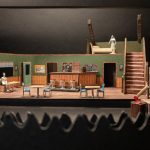
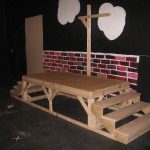
These are the fundamental, often structural components that define the spatial environment of a production. Think of them as the bones of your theatrical world. Platforms, walls, staircases, and large pieces of furniture like a grand piano or a prison cell structure are all set pieces.
Purpose in Action:
- Defining Space: Set pieces create distinct areas, dictating where scenes unfold and how actors navigate the stage. A raised platform might signify a place of power or separation; an enclosed wall suggests confinement.
- Establishing Time and Place: The architectural style, materials, and details of set pieces immediately communicate the era and location. A minimalist set with sleek lines suggests modernity, while ornate carvings might transport an audience to the Victorian age.
- Guiding Movement: Entrances, exits, and varied levels created by set pieces inherently influence actor blocking, pacing, and visual dynamics. They can create opportunities for dramatic entrances or subtle, intimate moments.
Practical Considerations: - Scale and Proportion: How large should a door be? How many steps in a staircase? These decisions impact realism, visual weight, and actor comfort.
- Materiality: The choice of materials (wood, metal, fabric, scrim, transparent plastics) influences not just aesthetics but also sound, light reflection, durability, and budget. A heavy, solid door sounds and feels different from a lightweight flat.
- Modularity and Mobility: For productions with multiple locations or scene changes, set pieces must be designed for efficient movement, storage, and reassembly. This often involves casters, hinge systems, and interlocking units.
Case Snippet: Imagine a play set in a dilapidated house. Rather than a fully built structure, a designer might use a few skeletal walls, a sagging door frame, and a strategically placed, broken window. These elements, though incomplete, convey decay and vulnerability more powerfully than a perfectly rendered house, inviting the audience to fill in the gaps.
Props: The Intimate Details of Character and Narrative
Props are the movable objects handled by actors on stage. They are the details that bring a world to life, often revealing more about a character or situation than dialogue alone.
Purpose in Action:
- Establishing Setting: A vintage telephone versus a smartphone, a stack of dusty books versus a gleaming laptop – props instantly contextualize the scene’s era and specific environment.
- Enhancing Narrative: A letter received, a weapon drawn, a cup of tea offered – props are crucial for advancing the plot and can be central to key moments.
- Revealing Character: A meticulous character might have a perfectly organized desk, while a chaotic one might be surrounded by scattered papers and forgotten mugs. Props are physical extensions of a character’s inner life.
- Symbolizing Themes: A wilting flower might symbolize lost hope, a specific piece of jewelry an heirloom of betrayal. Props can become powerful visual metaphors.
Practical Considerations: - Actor Interaction: Props must be safe, functional, and durable enough for repeated use. A prop sword needs to be balanced for stage combat, a teacup easy to handle.
- Period Accuracy: Research is vital to ensure props are historically appropriate. This might involve sourcing antiques, custom fabrication, or careful modification.
- ‘Hero Props’ vs. Background Props: Some props are central to the story and require significant attention to detail and placement, while others fill the background to create a sense of realism.
Case Snippet: In a suspenseful play, a character slowly unwraps a small, intricately carved wooden box. The design of the box, the way it catches the light, and the tension of its opening become central to the scene, drawing the audience into the unfolding mystery.
Backdrops: The Horizon of Imagination
Backdrops are the painted or digitally projected flat scenery at the rear or sides of the stage, creating depth, perspective, and establishing mood. They are the sky, the distant city, the interior wall, or the abstract landscape.
Purpose in Action:
- Creating Depth and Perspective: Traditional painted backdrops use techniques like trompe l’oeil to create the illusion of three-dimensional space on a two-dimensional surface. Digital projections can offer dynamic, layered effects.
- Establishing Mood and Atmosphere: A stormy sky backdrop immediately sets a foreboding mood, while a bright, pastoral scene evokes tranquility. Color palette and artistic style are key here.
- Dynamic Evolution: Modern technology allows for projections that change seamlessly, transforming a setting from day to night, summer to winter, or from a realistic scene to an abstract representation, all within seconds.
Practical Considerations: - Painting Techniques: Scenic artists employ various techniques, from traditional canvas painting to creating faux finishes (simulating wood, marble, stone) directly on flats. Scale and distortion, especially from audience perspective, are critical.
- Digital Projection: Offers immense flexibility and can be more cost-effective for complex or numerous scene changes. Considerations include projector lumens, throw distance, surface material (seamless white cyc, projection screens, textured surfaces), and mapping software.
- Material Selection: Cycs (cycloramas), scrims (translucent fabric), and painted canvas flats all interact differently with light and projections, offering distinct visual properties. A scrim, for example, can be opaque when lit from the front and transparent when lit from behind.
Case Snippet: For a production of “A Midsummer Night’s Dream,” a backdrop might begin as a lush, realistic forest. As the magical elements take hold, the projections could subtly shift, distorting the trees into fantastical shapes and hues, creating a surreal, dreamlike atmosphere without needing to physically change a single set piece.
Lighting: Sculpting with Illumination
Often considered a separate discipline, lighting is an utterly inseparable element of scenic design. It breathes life into the set, shaping perception, guiding attention, and deeply influencing emotional responses.
Purpose in Action:
- Setting Tone and Ambiance: Warm, soft light suggests intimacy; harsh, cool light evokes tension or sterility. Lighting immediately communicates the emotional landscape of a scene.
- Defining Focal Point: A spotlight on an actor or specific prop draws the audience’s eye, emphasizing its importance.
- Revealing and Obscuring: Light can highlight architectural details or textures on set pieces, or it can plunge areas into shadow, creating mystery or suggesting unseen dangers.
- Indicating Time and Place: The color, intensity, and angle of light can accurately portray dawn, midday, twilight, or the artificial glow of a city street.
Practical Considerations: - Color Temperature and Gels: Lighting designers use colored gels or LED fixtures to create a vast spectrum of hues, each impacting the perception of the set and costumes.
- Intensity and Direction: The brightness and angle of light (front, side, back, top, bottom) drastically alter how objects and actors appear, creating shadows and depth.
- Movement and Automation: Modern lighting fixtures can change color, shape, and direction automatically, allowing for dynamic transitions and spectacular effects that interact directly with moving scenery.
- Interaction with Set Materials: Scenic designers must consider how light will interact with every surface – will it reflect, absorb, or glow? A glossy floor will reflect light differently than a matte one, impacting visual depth and potential glare.
Case Snippet: In a stark drama, a single, low-angled light source across a grimy stage floor might cast long, distorted shadows of the set pieces, creating a sense of unease and isolation, visually reinforcing the characters’ internal struggles.
Functionality and Safety: The Unseen Choreography
Beyond aesthetics, a successful scenic design must be inherently practical and safe. This element is the meticulous engineering that allows the theatrical magic to happen without incident.
Purpose in Action:
- Accessibility and Flow: Sets must accommodate actors, crew, and possibly stage machinery. Are there clear paths for entrances and exits? Can actors move freely without obstruction?
- Sight-Lines: Every seat in the house should have a good view of the primary action. Scenic designers constantly consider how set pieces might obstruct views, making adjustments for height and placement.
- Scene Changes: If the set needs to transform, the design must facilitate quick, smooth, and silent transitions, often involving integrated track systems, wagons, or flying scenery.
- Safety Standards: Compliance with fire codes, weight loads, stability, non-slip surfaces, and secure rigging are paramount. This protects actors, crew, and audience alike.
Practical Considerations: - Actor Traffic Flow: How will actors move from backstage to their entrances? Are there designated waiting areas?
- Masking: Ensuring that backstage areas, technical equipment, and inactive set pieces are hidden from audience view through strategic placement of flats, curtains, or lighting.
- Structural Integrity: Every platform, wall, and piece of flying scenery must be engineered and built to withstand the stresses of performance and human interaction.
- Sound Absorption/Reflection: Materials can significantly impact acoustics. Scenic choices must consider how they might muffle or amplify sound. For a deeper understanding of planning and visualizing these complex interactions, exploring how different design approaches translate into physical representations can be invaluable. The process often involves detailed models, which are essential for refining stage layouts and ensuring all elements work in concert. For more on this, you might find our Scenic design models guide particularly helpful.
Case Snippet: For a musical with rapid costume changes and multiple ensemble numbers, the scenic design might incorporate a hidden crossover beneath the stage or strategically placed “quick-change booths” built into the set walls, ensuring seamless transitions unseen by the audience.
Scenic Art and Painting: Texturing the Theatrical World
Scenic art is the specialized painting and finishing work applied to set pieces and backdrops, bringing them to life with texture, realism, or abstraction. It’s the artistry that transforms raw materials into believable environments.
Purpose in Action:
- Creating Detail and Realism: Using techniques like trompe l’oeil to paint architectural details, wood grain, stone textures, or cracks and decay directly onto flats.
- Establishing Mood and Stylization: A textured, distressed wall might evoke poverty or age, while a smooth, reflective surface suggests modernity or luxury. The style of painting (realistic, impressionistic, abstract) aligns with the overall artistic vision.
- Integrating with Projections: Scenic painting can provide a base layer of texture or color for digital projections to map onto, enhancing the illusion or creating complex, multi-layered visual effects.
Practical Considerations: - Scale and Perspective: Artists must account for how paint will look from a distance, adjusting brushstrokes and detail accordingly. Painting a tiny brick pattern that will be seen by hundreds of people is a specialized skill.
- Aging and Weathering: Techniques like washes, glazes, and dry brushing are used to simulate wear, rust, dirt, and general aging, adding authenticity to period sets.
- Faux Finishes: Skillful artists can convincingly replicate the look of marble, granite, brick, wood, and other expensive or heavy materials using paint on lightweight surfaces.
- Collaboration with Lighting: Colors and textures behave differently under stage lights. Scenic artists work closely with lighting designers to ensure their work reads correctly and enhances the intended mood.
Case Snippet: A designer needs a castle wall. Instead of building it from heavy stone, the carpenter builds a large wooden flat. The scenic artist then paints it with intricate stone textures, moss, and shadows, even incorporating painted cracks and crumbling mortar, making it appear ancient and imposing.
Weaving the Elements: A Collaborative Playbook for Design Mastery
Understanding each element is only half the battle. True mastery comes from orchestrating their interplay, a process deeply rooted in collaboration and iterative refinement.
From Script to Spatial Language: The Initial Spark
The scenic design journey begins with intensive script analysis. A designer reads the script multiple times, not just for literal locations but for emotional journeys, the core atmosphere, and potential visual metaphors. This forms the bedrock for initial production meetings with the director and other artistic team members. Here, the directorial concept is discussed, and the designer begins to sketch rough visual ideas, floor plans, or digital concept renderings, exploring how the elements of scenic design can serve the narrative.
Refining the Vision: The Art of Detailed Documentation
Once a concept takes shape, it evolves into comprehensive floor plans, elevations of every scenic element, and 3D models (physical or digital). This is where the spatial language of the production truly takes form. Detailed design drawings, including a basic floor plan for stationary elements, a composite floor plan for moving pieces, and front elevations for all set pieces, become the blueprint. This meticulous documentation communicates effectively with every member of the production staff, from the master carpenter to the lighting designer.
The Unseen Partnership: Designers as Co-Creators
No element of scenic design exists in a vacuum. It’s a dynamic interplay, a collaborative symphony:
- With the Director: The designer’s primary partner, interpreting the story’s emotional and thematic essence, aligning every scenic choice with the directorial concept.
- With the Lighting Designer: The set is their canvas. Scenic elements must be strategically placed, and materials chosen based on how they reflect, absorb, or glow under light. A glossy floor can create dazzling reflections, while a dark, matte surface might absorb light, creating pools of shadow.
- With the Sound Designer: Coordination is required for elements like hidden speakers, hollow floors that might resonate sound, or moving scenery that could create unwanted noise. Materials might also obfuscate or distort sound.
- With the Costume Designer: Set and costume share a color palette and stylistic coherence. Clashing aesthetics between the environment and the characters within it can distract or undermine the story.
- With the Master Carpenter: This lead set builder translates the designer’s technical drawings into buildable structures. They interpret the designs, select materials, plan construction, and solve practical challenges, often finding creative solutions for budget or structural constraints. In smaller productions, this role might even be combined with the scenic designer.
Case Snippet: A scene calls for a character to appear trapped in a small room. The scenic designer crafts walls that are slightly askew, painted in dull, oppressive colors (scenic art). The lighting designer then uses harsh, directional light to cast long, unsettling shadows (lighting) and emphasizes the grimy texture of the walls. A single, heavy, rusted metal chair (prop) and a bolted, unopening door (set piece) complete the sense of confinement. The sound designer adds a low, humming drone to further heighten the feeling of entrapment, ensuring the materials of the set don’t block the sound. Each element reinforces the same narrative beat.
Quick Answers: Your Scenic Design FAQs
Q: What’s the biggest mistake new scenic designers often make?
A: Overlooking functionality and safety. While aesthetics are vital, a beautiful set that isn’t practical for actors, safe for crew, or efficient for scene changes is ultimately a failure. Always prioritize the unseen infrastructure.
Q: How do you balance realism with abstraction in design?
A: The key is to serve the narrative. Sometimes, hyper-realism is necessary; other times, a more abstract approach allows for greater symbolic weight or focuses on mood. Designers like Jo Mielziner defined “poetic realism,” using suggestive, fragmented sets to prioritize emotional tone over strict photographic accuracy. Ask what the story needs more: a mirror to reality or a lens of emotion?
Q: Is digital scenic art (projections) replacing traditional painting?
A: Not entirely. Digital projection is a powerful tool that offers dynamic possibilities and flexibility, especially for multiple locations or quick changes. However, traditional scenic painting offers unique textures, depth, and a handcrafted quality that projections often can’t replicate. Many contemporary productions use a blend of both, with projections enhancing painted surfaces or providing dynamic backgrounds.
Q: How important is collaboration in scenic design?
A: Collaboration is absolutely critical – it’s a team sport. No single designer creates a production alone. The scenic designer’s choices profoundly impact lighting, sound, costumes, and even actor blocking. Constant communication and a shared artistic vision with the director and other designers are paramount for a cohesive and impactful show.
Bringing It All Together: Your Actionable Checklist for Design Mastery
The elements of scenic design are your toolkit. Mastering them means not just understanding each tool, but knowing when and how to use them together to build a compelling world.
- Read and Re-Read the Script: Identify not just physical locations but also the emotional journey, thematic core, and potential visual metaphors.
- Prioritize Functionality and Safety: Before a single aesthetic decision, ensure your design is practical, safe, and allows the production to flow seamlessly.
- Think Interactively: Consider how each element will interact with others. How will light hit this texture? How will an actor physically engage with that prop or set piece? How will sound carry within this space?
- Sketch, Model, Refine: Don’t be afraid to iterate. Create rough sketches, develop detailed plans, and build physical or digital models to visualize and test your ideas.
- Communicate Constantly: Your vision only becomes reality through clear, consistent communication with the director, technical team, and other designers. Build strong collaborative relationships.
- Research Relentlessly: Whether it’s historical accuracy, material properties, or emerging technologies, continuous research will enrich your designs and expand your practical solutions.
By approaching scenic design with this comprehensive understanding, you move beyond merely decorating a stage. You become a world-builder, crafting an environment that doesn’t just look good, but actively participates in the storytelling, guiding the audience’s experience and making the invisible heart of a play beautifully visible.